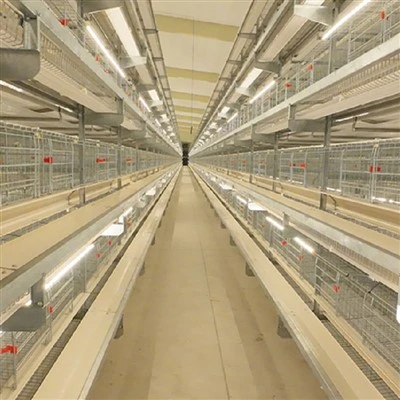
If you’ve ever raised chickens, you know hawks aren’t just a nuisance—they’re a constant threat that can turn a quiet morning in the coop into a frantic scramble for your flock. As a supplier of A Frame chicken cages, one of the most common questions I get from new and experienced chicken keepers alike is: “Are these structures actually safe from hawks?” It’s a question that hits close to home for me. I started selling A Frame cages back in 2015 after my own small backyard flock lost three pullets to a sharp-shinned hawk that slipped through the flimsy wire sides of my old, homemade coop. Since then, I’ve tested, modified, and refined our cages to address predator risks, and today I’m breaking down whether A Frame chicken cages hold up against hawks, what makes a difference, and how to make yours work for your specific setup. A Frame Chicken Cage
First, let’s get clear on what makes hawks such a formidable predator for backyard chickens. Hawks are diurnal birds of prey, meaning they hunt during the day, with keen eyesight—they can spot a chicken from over a mile away. They’re also agile, especially small to medium species like sharp-shinned hawks, Cooper’s hawks, and red-tailed hawks, which are the most common threats for flocks in North America and much of Europe. Their attack strategy is simple: they dive from above, target the back of the neck to kill quickly, and they’re strong enough to carry off small to medium chickens, though larger breeds like Jersey Giants or Orpingtons are often too heavy for them to lift. That means even if your chickens aren’t snatched away, a hawk attack can cause serious injury or death to your flock.
Now, how do A Frame cages fit into this? The classic A Frame design is a sloped, roofed structure shaped like a triangle, with two sides for walls and a pointed top. Originally popular for their simplicity, affordability, and ease of moving around a backyard, many people assume the sloped walls are a natural defense against hawks—but that’s only half the story. The safety of an A Frame cage depends on three key factors: the material of the walls and roof, the gaps in your wire, and whether the cage is set up to eliminate perches or open spaces hawks can use to get close.
Let’s start with the most critical part: wire mesh quality. I’ve seen too many A Frame cages (even some sold as “predator-proof”) with thin, 1×2 inch chicken wire. That’s a mistake. Hawks have sharp talons and beaks, and thin chicken wire is no match for a determined bird. Over time, sun, rain, and wind can rust and weaken that wire, creating gaps large enough for a hawk to slip through, or a talon to punch through and grab a chicken. Our A Frame cages use 14-gauge galvanized welded wire with ½ inch by 1 inch openings for the walls, and 1 inch by 1 inch for the roof—small enough that even a sharp-shinned hawk’s head won’t fit through. We chose welded wire over chicken wire because it’s sturdier, less likely to bend out of shape, and resists rust for years. I remember one customer who came to me after a hawk tore through the chicken wire roof of her store-bought A Frame cage and killed two of her chickens; after switching to our welded wire roof, she didn’t have another incident. It’s a small difference in wire size and gauge, but it makes all the difference in keeping hawks out.
Then there’s the roof, which is often overlooked as a hawk defense. A lot of A Frame cage owners forget that hawks attack from above—their natural vantage point is the sky. If your cage has an open roof (a common feature in cheap, homemade A Frame designs), that’s basically an invitation for a hawk to dive right in. Even if you add a roof, if it’s made of flimsy material or has gaps, a hawk can land on top, use its beak to tear through, or even just reach its talons down through a gap to grab a chicken below. Our A Frame cages come with a solid, sloped metal roof in addition to the welded wire sides, but we also recommend that customers add a layer of bird netting over the top if they live in an area with particularly dense hawk populations. The netting adds an extra barrier without blocking airflow, which is important for keeping your chickens cool in summer. One of our regular customers who raises 20 birds for eggs in a suburban area told me that before adding the netting, she saw a Cooper’s hawk land on top of her cage and try to pull a chicken through the wire gap; the netting stopped it cold. It’s a simple, low-cost add-on that can prevent a lot of heartache.
Another factor is how you set up the A Frame cage on your property. Even the sturdiest cage won’t keep hawks away if you place it near high perches where hawks can wait to hunt. Hawks love utility lines, tree branches, fence posts, and even garden structures that give them a high vantage point to spot chickens. If your A Frame cage is right under a tall oak tree, or next to a 10-foot fence, you’re making it easy for a hawk to hide and watch your flock before attacking. Our team always advises customers to place their A Frame cages at least 10 feet away from any tall structures that could serve as hawk perches. If you can’t move it, you can add a bird feeder or bird bath near the perches to draw smaller birds away, or install a hawk decoy near the cage—just make sure to move the decoy every few days, because hawks get used to stationary decoys quickly. I’ve seen one customer who set up his cage right next to a tall pine tree stop having hawk attacks after he installed a motion-activated sprinkler near the tree; the sudden bursts of water scare hawks away without bothering his chickens.
Wait, but what about free-ranging chickens? A lot of people ask me if A Frame cages are safe if you let your chickens out during the day. The short answer is: no, not if you don’t have additional protection. Even the best A Frame cage only protects the chickens when they’re inside it. When they’re free, hawks can swoop down and grab them mid-step. That’s why we recommend using the A Frame cage as a secure shelter at night, and adding a separate run attached to it (or a covered pen) if you want your chickens to have access to the yard during the day. The run should be covered with netting or wire on top too, so hawks can’t dive in. One of our first customers, a small-scale organic farmer, told me that he lets his 15 chickens free-range for part of the day, but after adding a covered run attached to his A Frame cage, he hasn’t lost a bird to a hawk in three years. It’s a balance between giving your chickens space and keeping them safe, and the A Frame cage works as a core part of that setup.
I should also address a common misconception: some people think A Frame cages are too low to be safe, but others think the sloped sides make it easy for hawks to land. Let’s talk about height first. Our standard A Frame cages are 4 feet tall at the highest point (the peak) and 2.5 feet tall at the sides. That’s tall enough that most hawks won’t land on top—they prefer taller perches where they have a clear view. The sloped sides actually work in your favor here because a hawk that tries to land on the side will slip, rather than having a flat surface to grip. If you go with a taller A Frame cage (some of our custom models go up to 6 feet), you just have to make sure the roof and sides are still covered with sturdy wire so a hawk can’t tear through. I’ve tested both short and tall A Frames in hawk-prone areas, and the short, sloped design consistently outperforms taller, flat-topped structures because hawks can’t get a solid foothold.
Of course, no setup is 100% hawk-proof. There are always edge cases—like a very determined red-tailed hawk that’s hungry, or a young hawk that’s still learning to hunt. But the good news is that A Frame cages, when built and set up correctly, are one of the most effective ways to protect your chickens from hawks compared to other options like chicken tractors or small coops. Chicken tractors, which are often lightweight and have thin wire, can be vulnerable because hawks can flip them over if they land on top. Small coops with flat roofs give hawks a solid place to land, making it easier for them to attack. The A Frame’s sloped, sturdy design avoids both of those problems.
Over the years, I’ve worked with hundreds of chicken keepers to adjust their A Frame cages for hawk protection. One thing I always emphasize is that the best defense is layered. Don’t just rely on the cage’s wire—add a roof cover, move it away from perches, use decoys or motion lights if needed. For people who live in very urban areas where hawks are common, we even offer modified A Frame cages with double-layered wire and reinforced corners, which are extra resistant to attacks. I remember a customer in Chicago who had three A Frame cages before switching to our reinforced model; she said the first two were breached by hawks, but the third one hasn’t had a single incident in two years. That’s the kind of feedback that drives me to keep improving our products.
So, to circle back to the original question: Are A Frame chicken cages safe from hawks? The answer is yes, when you choose a quality cage, install it correctly, and add small extra protections. They’re not a magic fix, but they’re one of the most reliable tools you have to keep your chickens safe from diurnal predators like hawks. If you’re in the market for an A Frame cage and want to make sure it’s up to the task of keeping hawks out, our team can help you pick the right size, suggest add-ons, and even share tips for setting it up on your property. We’ve spent years testing these cages in real-world conditions, so we know what works—and what doesn’t.
If you’re a chicken keeper who’s dealt with hawk attacks, or you’re looking to upgrade your coop to keep your flock safe, we’d love to chat. We’re here to help you find the right A Frame cage for your needs, answer any questions you have about predator safety, and make sure your chickens stay protected. Reach out to us to discuss your setup and find the solution that works best for you.
Digital and Intelligent Product Solution References
- Bird Watcher’s Digest. (2022). "Hawk Predation on Backyard Poultry: Prevention and Deterrence Strategies."
- University of Extension Poultry Science. (2021). "Predator-Resistant Coop Design for Backyard Chickens."
- National Agricultural Library. (2020). "Effects of Wire Mesh Size on Predator Access to Poultry Enclosures."
- Urban Wildlife Institute. (2023). "Hawk Behavior in Suburban and Backyard Environments: Implications for Poultry Safety."
- Small Farm Journal. (2022). "A Frame Chicken Coops: Practical Design Modifications for Predator Defense."
Guangzhou Guangxing Poultry Equipment Group Co., Ltd.
Guangzhou Guangxing Poultry Equipment Group Co., Ltd. is one of the most professional a frame chicken cage manufacturers and suppliers in China, featured by quality products and good price. Welcome to buy CE approved a frame chicken cage made in China here and get pricelist from our factory. Customized orders are welcome.
Address: NO.2 Guangxing Road, Shating Taihe Town, Baiyun Guangzhou, China
E-mail: gxservice@cnguangxing.com
WebSite: https://www.guangxingcn.com/
