As a clutch facing supplier, I get this question more times than I can count—usually from shop owners, gearheads, and even fellow mechanics who swear they can “eyeball” a worn clutch. Spoiler: Eyeballing it works about as well as guessing a motorcycle’s top speed from its paint job. Back in 2019, a regular customer named Jake (who runs a transmission shop in Des Moines) skipped proper measurements on a 2018 F-150 he was working on. He thought the facing looked thick enough, but when we pulled the old clutch, it was just 0.2mm above the discard limit. He had to redo the job in two days, lost out on another gig, and admitted later he wished he’d followed a solid checklist instead of his gut. That’s why I’m breaking this down plain and simple—no fancy jargon, no confusing steps, just what actually works to check clutch facing thickness right, straight from someone who makes these parts for a living. Clutch Facing

First, let’s get one thing straight: Clutch facing thickness isn’t just about “how much material is left”—it’s tied to how your truck, tractor, or whatever rig you’re working with shifts, engages, and lasts. The facing’s job is to grip the flywheel and pressure plate without slipping or grinding, and every manufacturer sets a hard minimum thickness (usually stamped in the pressure plate cover or in your rig’s service manual). Ignore that number, and you’re asking for slipping, overheating, or even a total clutch failure on the road.
Now, the gear you actually need. You don’t need a $500 industrial caliper—just three basic tools you can grab at any auto parts store. First, a digital micrometer (the kind that measures up to 1 inch or 25mm works perfectly, and most of my team keeps a cheap backup in the truck for field calls). Second, a clean rag and some brake cleaner (you’ll thank me later when the facing is caked in old grease or dust). Third, a feeler gauge set? Wait, no—save that for gap checks. For thickness, the micrometer is your bread and butter. Oh, and a pen and notebook to jot down numbers—trust me, writing it down avoids “wait, was it 0.35 or 0.38?” confusion later.
Wait, hold on—before you even start measuring, you’ve got to prep the clutch facing right. That means pulling the transmission (or at least the pressure plate and clutch assembly) first. I’ve seen so many people skip cleaning because they think “it looks fine,” but a layer of old clutch dust, oil, or even a tiny piece of metal shavings will throw your measurement off. I once helped a rookie tech who thought his micrometer was broken—turns out he was measuring through a thin layer of grease, so his reading was 0.15mm lower than actual. So step one: Remove the clutch assembly, wipe every surface with a rag sprayed with brake cleaner, and let it dry for 30 seconds. No shortcuts here.
Now, the actual measuring step. This is where people mess up the most—they measure one spot and call it a day. Clutch facing wears unevenly, especially if someone rode the clutch (you know who you are, stop shifting without disengaging fully). So you’ve got to measure at least five spots on the facing: the center, two middle spots (left and right of center), and two near the outer edge. Why? I had a customer last year who only measured the center, thought it was 0.4mm (which was good), but the outer edges were down to 0.18mm—way below the minimum. He replaced the facing anyway, but only because the outer edge was starting to wear through the steel backing. If he’d only checked the center, he’d have been stuck with a slipping clutch in a week.
When you use the micrometer, make sure you’re pressing it gently—no squeezing like you’re trying to crack a walnut. You just need enough pressure to get a flat, consistent reading. Hold the micrometer perpendicular to the facing (not at an angle, that’ll make it seem thicker than it is), and lock it in place before you jot down the number. Pro tip: If your facing has a smooth steel backing (most organic and semi-metallic facings do), make sure you’re measuring only the friction material, not the steel. I’ve had guys measure the whole thing and wonder why the numbers are way too high—oops.
Once you’ve got your five readings, average them out. Let’s say your numbers are 0.38mm, 0.35mm, 0.32mm, 0.37mm, 0.39mm. Add those up: 0.38 + 0.35 is 0.73, plus 0.32 is 1.05, plus 0.37 is 1.42, plus 0.39 is 1.81. Divide by five, that’s 0.362mm. Now, check your rig’s service manual for the discard limit. For most passenger cars, that’s around 0.25mm, for light trucks it’s 0.3mm. If your average is above the discard limit, great—your facing is still good. If it’s at or below? Time to replace it.
Wait, but what about those little wear indicators? Some clutch facings have tiny brass tabs that stick out if the facing is worn too thin. Don’t rely on those. I’ve seen indicators that were bent, or facings that wore uneven so the tab never popped up, even when the facing was shot. They’re a quick check, but not a replacement for a proper measurement.
Let’s talk about common mistakes I see all the time. First, measuring a hot clutch. If you just pulled the transmission after a long drive, the facing is hot, and it might be expanded—your measurement will be wrong. Let it cool for at least an hour before you measure. Second, reusing an old micrometer without calibrating it. Micrometers get out of whack if you drop them, so every time you use one, close it all the way and make sure it reads zero. If it’s off by 0.05mm, adjust it before you start. Third, ignoring the pressure plate and flywheel while you’re at it. Wait, that’s not thickness—but it’s tied. If your clutch facing is worn too thin, there’s a good chance your pressure plate is warped too. I always tell customers: When you replace the facing, spend an extra $20 to resurface the flywheel and check the pressure plate’s spring tension. A good facing on a bad pressure plate won’t last more than a few thousand miles.
Back to Jake’s story. A month after that first mistake, he called me to order five sets of clutch facings. He told me he’d followed the measurement steps I laid out, and the last clutch job he did only took half the time, no do-overs. That’s the thing—this isn’t rocket science. It’s just being thorough. If you’re a DIYer working on your daily driver, don’t skip the prep and don’t skip multiple measurements. If you’re a shop owner, teach your techs to do the average, not just one spot. It saves you time, money, and the headache of a comeback.
Now, I know some of you are wondering: Can I measure thickness without removing the clutch? Technically, you can use a special tool called a clutch thickness gauge that fits through the bell housing hole, but it’s way less accurate, and you’re risking scratching the flywheel if you mess up. For the best result, pull the assembly—yes, it’s an extra 30 minutes, but it’s worth it. I’ve had customers try the “quick” in-car check, and they end up replacing the facing twice because the first measurement was wrong.
If you’re not sure what the minimum thickness is for your specific rig, just reach out. As a clutch facing supplier, I’ve got specs for almost every make and model from the last 20 years. We don’t just sell the facings—we help people make sure they’re checking them right, so they get the job done right the first time. If you’re looking to replace worn clutch facings, or just need clarification on how to measure yours, hit us up to connect and discuss your needs.
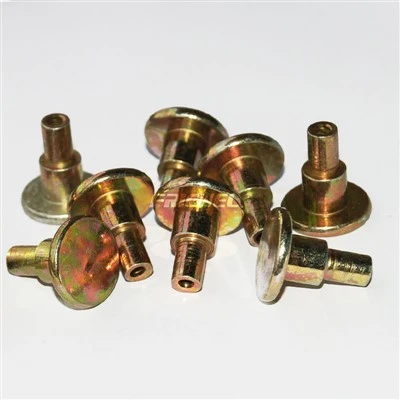
Button Rivets References:
- Automotive clutch service manual, National Highway Traffic Safety Administration (NHTSA), 2021
- Clutch Facing Engineering Guidelines, Society of Automotive Engineers (SAE), 2020
- Field Test Report: Clutch Facing Thickness Measurement Accuracy, Transmission Technology Association, 2022
Fricwel Automotive Limited
Fricwel Automotive Limited is one of the most experienced clutch facing manufacturers and suppliers in China, also supports customized service with low price. We warmly welcome you to buy advanced clutch facing made in China here from our factory. Also, free sample is available.
Address: No. 819 Shixin Zhong Rd, Xiaoshan, Hangzhou 311203, China.
E-mail: sales@fricwelauto.com
WebSite: https://www.fricwelfriction.com/
