If you’ve ever wondered how well your vacuum pump is actually holding up, chances are the bearings are a big part of that. As a supplier of vacuum pump bearings, I get this question all the time: “What’s the coefficient of friction for vacuum pump bearings?” It’s not a one-word answer, and there’s no magic number that works for every setup—but let’s break it down simply, how we deal with it day to day, and why it actually matters for your operation. Vacuum Pump Bearings
First, let’s get super basic. Coefficient of friction (COF) is just a number that tells you how easy it is for two surfaces to slide against each other. You’ve felt it: when you drag a heavy box across a concrete floor, that high COF means lots of effort; when you slide it on a smooth tile, lower COF means less work. For vacuum pump bearings, that number is way more specific, and it’s tied directly to how your pump performs, how long bearings last, and even your energy bills.
Here’s the thing: vacuum pumps run in weird, often harsh environments. They’re dealing with low pressures, sometimes corrosive gases, maybe moisture or contaminants—stuff that regular bearings don’t have to handle. So the COF isn’t just based on the bearing itself; it’s a mix of the bearing material, the lubrication you use, the load on the pump, and even the vacuum level you’re working with. That’s why I can’t just say “it’s 0.01” or “it’s 0.1” and have that apply to every customer. Let’s go through the main players here.
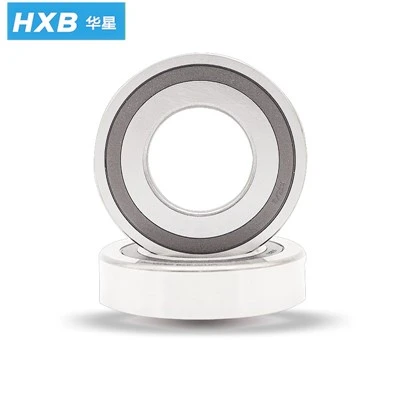
First, the bearing type. Most vacuum pump bearings we supply are either ball bearings or roller bearings, right? Ball bearings tend to have lower COF than roller ones because they have smaller contact area between the balls and races. For a standard steel ball bearing, properly lubricated, the dry COF (no lubrication at all) is usually around 0.1 to 0.15. That’s when things are metal-on-metal, no lubricant to separate the surfaces. But we almost never run bearings dry—even dry vacuum pumps have some kind of coating or minimal lubrication, not to mention the effect of the vacuum itself.
Now, lubrication is where the big shift happens. If you’re using a good grease or oil specifically for vacuum applications, the COF drops hard. Grease is super common in vacuum pumps because it stays in place better than oil, especially in low pressure where oil can vaporize faster. A properly greased steel bearing will have a COF around 0.001 to 0.005. That’s tiny, and that’s why good lubrication is non-negotiable. But wait—if you use the wrong grease? Like a general-purpose grease meant for car parts, not vacuum? The COF can jump back up to 0.02 or even higher, because those greases can outgas in low pressure, leave a dry film, and actually cause more friction. That’s a mistake we see customers make all the time, and it leads to worn bearings, more energy use, and downtime.
Then there’s the vacuum level. A lot of people forget that the pressure inside the pump affects the lubricant too. At high vacuum (like 1e-5 Torr, super low), oils and greases can start to evaporate. When that happens, the lubricant film that separates the bearing surfaces thins out, so the COF goes up. We tested a batch of our own bearings a while back: at atmospheric pressure, a properly greased bearing had a COF of 0.002. At 1e-3 Torr, it went up to 0.007, and at 1e-5 Torr, it hit around 0.01. That’s still lower than dry, but it’s a noticeable increase, and if you’re running a high-vacuum process, that extra friction adds up over time.
Load and speed matter too. If your vacuum pump is running at full capacity, pushing more gas, the bearings are under higher radial or axial load. Higher load means the contact between the bearing elements and the races is tighter, so the lubricant film gets thinner. That bumps up the COF a little. Same with speed: if the pump is spinning super fast (some screw pumps run at 10,000 RPM or more), the bearing elements are moving faster, and the lubricant has less time to stay between the surfaces. COF goes up here too, usually a tiny amount, but for high-speed pumps, that difference adds up.
Now, let’s talk about different bearing materials, because we don’t just supply standard steel. Some customers need bearings for corrosive vacuums, like handling acids or other gasses, so we offer ceramic bearings too—silicon nitride, mostly. Those have different COF numbers. Dry ceramic bearings are around 0.06 to 0.08, lower than dry steel, and when lubricated, they’re around 0.002 to 0.006—similar to steel, but more resistant to contaminants. We also have bearings with PTFE coatings for dry vacuum pumps, where you can’t use liquid lubrication. Those coatings have a super low COF, even dry: around 0.05 to 0.07. That’s why dry vacuum pumps often use coated bearings, because they eliminate lubricant vaporization issues.
I should also mention that there’s a difference between static COF and dynamic COF. Static is when the bearing is just sitting there, not moving—higher, usually around 0.1 to 0.2 for dry steel, because you have to break the initial adhesion between the surfaces. Dynamic is when it’s spinning, and the lubricant has had time to form a film—way lower. A lot of customers ask about static, but for bearings in use, dynamic is the one that matters, because that’s the friction you’re dealing with while the pump runs.
Now, why does this all matter to you, as someone who uses a vacuum pump? If your bearing COF is too high, a few things happen. First, your pump uses more energy—each 0.001 increase in COF can add a little power draw, and if you’re running the pump 24/7, that adds up to extra electricity costs. Second, higher friction means more heat, which wears out bearings faster, leads to more downtime, and can even damage other pump parts like seals or rotors. Third, if you’re working with a sensitive process, like semiconductors or pharmaceuticals, extra friction can cause vibration that messes with the quality of your product.
As a vacuum pump bearing supplier, we see this all the time. A customer will call in saying their pump is dying after 6 months, and we check the bearings: they used the wrong lubricant, so COF spiked, bearings overheated, seized. Or they were running a high-vacuum process and didn’t account for lubricant evaporation, so the thin film led to metal-on-metal contact. The good news is, we can help pick the right bearing and lubrication to keep COF where it needs to be for your specific setup.
Let’s get specific with examples. If you’re using a roughing pump (low vacuum, down to 1e-3 Torr) for simple packaging or lab use, a standard steel ball bearing with a vacuum-grade grease will have a COF around 0.002 to 0.005, which is perfect. If you’re using a high-vacuum pump for coating or electron microscopy, you might go with a ceramic bearing and a perfluoropolyether (PFPE) oil, which resists vaporization, keeping COF around 0.005 even at ultra-high vacuum. For dry vacuum pumps, coated bearings (PTFE or DLC) will have a dry COF around 0.05, no lubrication needed, so no outgassing issues.
Wait, but can you measure COF yourself? Some customers ask that. You can do a quick test with a viscometer or a friction tester, but most of the time, you don’t need to. The key is to match the bearing type and lubrication to your vacuum level, load, and speed. That’s where we come in—we’ve tested hundreds of bearing setups, so we know what works for different applications.
I’ll be honest: there’s no universal number for vacuum pump bearing COF. It’s not like a bolt that’s 10mm, fixed size. It’s dependent on your specific setup, and that’s why we don’t just sell bearings—we help customers figure out the right ones for their needs. If you’re unsure what kind of bearing you need, or if your current bearings are giving you trouble with friction, downtime, or energy costs, reach out to our team to talk through your requirements. We can walk you through the best options, explain how they’ll affect COF for your application, and help you get your vacuum pump running at peak efficiency.
At the end of the day, vacuum pump bearings are a small part of your system, but they’re a big part of performance. Getting the COF right means less downtime, lower energy bills, and a longer life for your entire pump. If you’re ready to stop guessing and get bearings tailored to your needs, connect with our team to start a conversation about what works for you.
Precision Angular Contact Ball Bearings References:
- Harris, T. A., & Kotzalas, M. N. (2006). Rolling Bearing Analysis (5th ed.). Wiley.
- O’Connor, D. R., & Bishop, J. (1966). Standard Handbook of Vacuum Technology. McGraw-Hill.
- Bhushan, B. (2013). Introduction to Tribology (2nd ed.). Wiley.
- Vacuum Oil Company. (2001). Lubricants for Vacuum Systems: Performance Guidelines. ExxonMobil Research and Engineering.
- American Society for Testing and Materials. (2018). Standard Test Method for Measuring Friction Coefficient of Rolling Element Bearings Under Vacuum Conditions (ASTM G199-18). ASTM International.
Hangzhou Huaxing Kechuang Holding Group Co., Ltd.
Hangzhou Huaxing Kechuang Holding Group Co., Ltd. is one of the leading manufacturers and suppliers of vacuum pump bearings in China, featured by quality products and good service. Please rest assured to buy bulk durable vacuum pump bearings from our factory. Welcome to view our website for more information.
Address: No.553 Yingbin Road, Linping, Hangzhou, 311100, China
E-mail: wmb@huaxingbearing.com
WebSite: https://www.hxbbearing.com/
