Hey folks, let’s cut to the chase – if you’re running a farm, managing a small orchard, or even tending to a community garden, wasting pesticides is a huge pain. I’ve seen it time and again on the formulations side (that’s the stuff we mix and ship to you, right?), and here’s the thing: too little product means you’re fighting pests all season, too much burns crops, blows off into neighboring fields, and hits your wallet way harder than it should. Last month, a customer hit me up saying they’d been over-applying their insecticide by 2x because they were mixing with a random bucket, no measuring. Wasted $800 in product, plus they damaged a section of their tomato rows. Total avoidable mess. Pesticide Formulations

So today, I’m breaking down exactly how to measure pesticide formulations right – no fancy lab gear required, and no confusing jargon. As a guy who’s been in formulations for 10 years, I know we make products that work only when you use them the way they’re designed. Let’s dive in.
First off, let’s clear up a mix-up that trips so many people up: “pesticide formulations” aren’t the same as the raw active ingredient. That’s the stuff we turn into liquids, powders, granules, or even ready-to-spray mixes. Each comes with its own measuring hack, and if you treat all of them the same, you’re gonna mess up. For example, a liquid concentrate (LC) is way different than a wettable powder (WP) or a granule. I get why it’s confusing – the label’s numbers are always in units you don’t use every day, like ounces per gallon or pounds per 1,000 sq ft. But labels are non-negotiable here – that’s the law, and it’s there for a reason.
Let’s start with liquid formulations, since those are the most common folks I work with ask about. Most liquid concentrates come in bottles with cap measures, right? Wait, stop – don’t just pour the whole cap. Some caps hold 1 oz, some hold 2 oz, and if you don’t check the label’s mixing rate, you’ll overdo it. Here’s the step-by-step I walk new customers through: Grab your spray tank first – don’t measure straight into the tank later, because sloshing means you’ll never get an exact amount. Let’s say your label says you need 3 fluid ounces of insecticide per 10 gallons of water. That’s your target. Now, use a dedicated measuring cup – not a kitchen one, not a random plastic cup from your shed, a cup that’s only for pesticides. Mark the line for 3 fl oz right on it, so you don’t have to guess. If you’re mixing a smaller batch, like 1 gallon, it’s 0.3 fl oz – use a syringe or a small measuring spoon for that, because teaspoons and tablespoons work here (1 fl oz = 6 teaspoons, so 0.3 fl oz is about 2 teaspoons). Pro tip for us: we add built-in measurement markings on our concentrate bottles now, but always double-check against the label, because some formulations are thicker and the cap marking might be off a tiny bit. A friend of mine runs a vineyard and swears by a small inline flow meter for his big spray rigs – it clips onto the hose, tells him exactly how much product’s going through, no guesswork. Works for him, saves him from blowing grapes off the vines.
Next up, powder and granule formulations. These are the ones where I see the most mistakes. Powders like wettable powders (WP) or water-dispersible granules (WDG) don’t mix as easily as liquids, so measuring wrong means some parts of your tank get too much, some too little. Granules are even trickier because they’re supposed to spread evenly on soil, not get clumped up in a corner. For powders: the label will tell you pounds per 100 gallons or ounces per 5 gallons. Use a kitchen scale? Wait, no – a small, dedicated scale for pesticides, because kitchen scales can be off by a few grams. If you don’t have a scale, use a measuring scoop that’s the exact amount the label calls for. For example, if your label says 1 oz of WP per 10 gallons, get a scoop that’s marked 1 oz, fill it level (don’t pack it down, that adds extra weight) and dump it in. Pro move here: mix the powder with a small amount of water first to make a slurry, then pour that into the spray tank. That way, no clumps sink to the bottom and you get even distribution. For granules, forget just dumping a handful – that’s a fast track to over-application. Granule labels are usually pounds per acre, so if you’re treating a 1/4 acre plot, you need 1/4 of that amount. We sell small handheld spreaders for home gardeners – they have a dial to set the exact amount, so you just crank it along the row and it drops the right dose. I’ve seen folks dump granules from a cup and end up with a dead zone and an over-dosed zone 10 feet away. Wasteful, and bad for the soil.
Now, let’s talk about the one everyone messes up: ready-to-use (RTU) pesticides. These are the ones that come already mixed, like a spray bottle for aphids on roses. You might think, “oh, it’s ready, just spray!” but no – even RTUs have a rate. Don’t just hold the bottle close and douse the plant. Check the label: most RTUs tell you how many inches of spray to apply per leaf, or how many squirts per plant. A customer last season was spraying their houseplants with an RTU spider mite spray, and they were squirting 5x more than needed because they thought “more is better.” Ended up with white residue on their leaves and the mites developed resistance by the end of the month. Resistance is a real thing, by the way – too much product means pests survive, evolve, and the next time around, nothing works. That’s a big one for long-term use.
Wait, also, let’s not forget calibration. This is the step people skip, and it’s the whole reason their measuring is off. Calibrating your sprayer – whether it’s a small backpack or a big farm rig – means making sure the amount of product going out matches what you’re measuring. How do you do it? For small sprayers: fill your empty sprayer with water, spray it over a set area (say, 1000 sq ft), then measure how much water’s left. If you used 1 gallon for that area, and your label says to use 2 oz of pesticide per 1000 sq ft, you add 2 oz to that 1 gallon. If you used 1.5 gallons, add 3 oz – simple as that. For big rigs, you can do the same: drive a set distance on your farm, measure how much fuel/water you used, adjust the flow rate of your product accordingly. We always tell new customers to calibrate once a month, especially if they’re using different nozzles or the sprayer’s been sitting for a while. Nozzle wear changes how much spray comes out, so that small plastic tip getting a little scratched can throw everything off.
Let me share a quick horror story from our formulations team. A peach orchard client was using our new fungicide, and they were measuring the concentrate with a plastic cup they used for fertilizer. The cup held 1.5 oz instead of the 2 oz the label called for, so they were under-applying by 33%. Their trees got brown rot, lost 30% of their crop, and they blamed the product for being bad. We went out, tested their cup, found the mistake, swapped their measuring tool, and this season they cut their fungicide use by 25% and had no rot. That’s the power of correct measurement – not just saving money, but saving your crop.
Now, what about common tools people use wrong? Let’s address the kitchen spoon myth: 1 tablespoon is 0.5 fl oz, right? So if you need 1 fl oz, that’s 2 tablespoons. But if your powder is really fine, like a dust, a tablespoon might hold more volume than a liquid tablespoon, so it’s better to use weight for powders. Same with a regular cup – a liquid cup is 8 fl oz, but a dry cup is different, so don’t mix those up. We sell measuring cups and syringes specifically for pesticide use, super cheap, and they’re marked clearly so you don’t mix units. No more guessing.
Also, safety side note: if you’re measuring pesticides, you need to wear gloves and eye protection, obviously, but also, don’t measure over your food or water source. A tiny spill can contaminate something, so do your measuring on a hard surface that’s easy to clean, far from your well or your vegetable garden.
Wait, let’s wrap this up with a quick checklist so you don’t forget. 1. Always check the label first – it’s your bible. 2. Match your formulation type to the right tool: liquid = dedicated measuring cup/syringe, powder = scale/leveled scoop, granules = calibrated spreader. 3. Calibrate your sprayer/spreader every time you use it, or at least once a month. 4. Don’t skip the slurry step for wettable powders to avoid clumps. 5. For RTUs, follow the spray rate, not just “douse the plant.”
Here’s the thing: we make our formulations to work as intended, and correct measurement isn’t just about saving money – it’s about protecting your plants, your soil, and even the beneficial bugs like bees that you need in your garden. Too many folks write off pesticides as a “necessary evil” and just wing it, but with the right measuring, it becomes a targeted tool, not a waste.
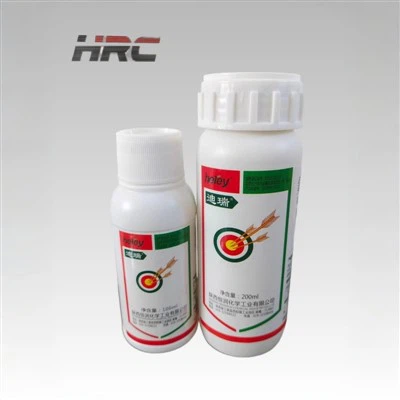
If you’re still unsure, or you’ve had bad experiences measuring and want to get it right, we’re here to help. Whether you’re a home gardener with a backpack sprayer or a commercial farm with a full rig, we can walk you through your specific product and your setup, no jargon, no hassle. Reach out to our team to chat through your needs, get custom tips, and make sure you’re using our formulations the way they’re meant to be used. Don’t let bad measurement ruin your crop – let’s get this right together.
Insecticide References
- Agriculture and Agri-Food Canada. (2021). Best Management Practices for Pesticide Measurement and Application.
- U.S. Environmental Protection Agency. (2022). Pesticide Labeling Requirements for Correct Dosage Calculation.
- University of California Statewide IPM Program. (2020). Calibration Methods for Small-Scale Pesticide Application Equipment.
Shaanxi Hengrun Linong Biotechnology Co., Ltd.
We’re well-known as one of the leading pesticide formulations manufacturers and suppliers in China, featured by quality products and low price. Please rest assured to buy discount pesticide formulations from our factory. Welcome to view our website for more information.
Address:
E-mail: sales@hengrunagro.com
WebSite: https://www.hengrunagro.com/
