If you’re reading this, chances are you’re in the market for a CRF (Controlled Rate Filling) machine, or at least curious about what goes into pricing one. As a supplier who’s worked with food and beverage, pharmaceutical, and personal product manufacturers for over a decade, I’ve lost count of how many times I’ve been asked, “Why do CRF machines cost so much, and is there a price point that makes sense for my business?” The short answer is: there’s no one-size-fits-all number. But let’s break this down like I’d break it down for a customer who walks into our shop—no jargon, no empty promises, just the real breakdown of what drives CRF machine prices, and how to find something that fits both your budget and your production needs. Crf Machine
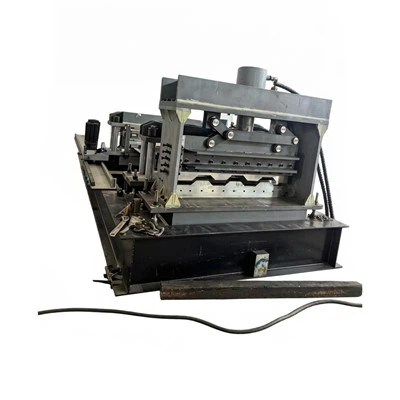
First, let’s make sure we’re on the same page about what a CRF machine does. Unlike basic filler machines that guess at fill volumes, CRF machines use precision sensors and calibrated flow controls to deliver exact amounts of liquid every single time. For a small craft brewery, that might mean filling 12-ounce cans with 0.2 ounces of headspace consistency to meet brand standards. For a pharmaceutical manufacturer, it means filling vials with 1 mL of sterile medication with 0.01 mL accuracy to avoid dosage errors. That precision isn’t cheap, but it’s non-negotiable for businesses that rely on consistent product quality to keep customers and regulators happy.
Now, the price range. Over the years, I’ve seen CRF machines sell for anywhere from $12,000 to over $150,000. Wait, that’s a huge gap, right? Let’s get into what falls where, because that’s the part most buyers don’t hear from generic suppliers.
At the lower end—let’s say $12,000 to $35,000—these are compact, semi-automatic CRF machines designed for small-batch producers: craft distilleries, artisanal skincare brands, or startups launching their first line of product. What makes these affordable? They’re made with stainless steel that meets basic food-safe or cosmetic-grade standards (no extra certifications for pharmaceutical use), they handle 2 to 8 filling heads, and they’re operated by a single worker who loads bottles or cans manually. They work great for production volumes up to 1,000 units per hour. I sold my first semi-automatic CRF in 2014 to a craft coffee roaster who needed to fill small, 8-ounce cold brew bottles; they still use that machine today, and it’s never missed a fill. The tradeoff here is speed: if you’re aiming for 5,000 units an hour, a semi-automatic machine will leave your whole team standing around waiting for it to catch up. It’s also less customizable—you can’t swap out parts to fill different bottle sizes easily, which means if your product line expands, you might have to upgrade sooner than you planned.
Next, the mid-range: $35,000 to $85,000. This is where most of our customers land, and for good reason. These are fully automatic CRF machines with 8 to 16 filling heads, capable of producing 1,000 to 8,000 units per hour. They come with programmable logic controllers (PLCs) that let you save settings for 10+ different product or bottle sizes—so a winery can switch from filling 750 mL wine bottles to 375 mL split bottles in 2 minutes, no tools required. They also include better sensors: photoelectric eyes that track bottle alignment, pressure controls that adjust for thick liquids (like honey or syrup) vs. thin ones (like sparkling water or wine), and safety interlocks that shut the machine down if a bottle is misaligned. A big advantage here is compliance: most mid-range machines meet USDA food safety standards and ISO 9001 quality guidelines, which is key if you’re selling to major grocery chains that require third-party certification for your equipment. We sold a mid-range CRF last year to a family-owned sauce company that was outgrowing their semi-automatic machine; they doubled their production output in 6 months, no extra staff needed. The tradeoff here is that they’re built for single-use or dual-use applications—if you need to handle highly viscous products or add secondary steps like capping right after filling, you’ll need to go higher up the range.
Then the high-end: $85,000 to $150,000 and up. These are custom-engineered CRF machines for large-scale operations, pharmaceutical manufacturers, or brands that need specialized features. We’ve built CRF machines for a biotech firm that fills injectable vaccines, which required Class 100 cleanroom compatibility (the strict standard for sterile medical products). Those machines cost over $120,000, but they’re fully enclosed, have HEPA filtration built in, and the filling accuracy is within 0.005 mL—critical for a product where even a tiny error can be dangerous. High-end CRFs also handle high-volume production: some can fill 15,000 units per hour, which is standard for soda or beer bottling lines. They’re also modular, meaning you can add on capping, labeling, or sealing stations as part of a single integrated line, instead of buying separate pieces of equipment later. The downside here is obvious: they’re a big investment, not just in the machine itself but in installation and training. We don’t push these on startups—if you’re only making 2,000 units a month, you’ll never recoup the cost of a $100,000 machine.
Now, let’s talk about the hidden costs that most buyers forget to budget for, because that’s where a lot of suppliers lose trust (including us, back in 2016). When we sold a semi-automatic CRF to a craft brewery, they asked for a quote that was $12,000, but they didn’t account for the cost of stainless steel nozzles for their carbonated beer (basic nozzles would cause foam, so they needed specialized ones) which added $800, and installation training that was $1,200. By the time they took delivery, their total was $14,000, not $12,000. That’s why we always include a line item for “application-specific modifications” in our quotes: things like nozzles for thick liquids, bottle size adapters, or compliance certifications. Another hidden cost? Maintenance. A $15,000 machine might only need annual cleaning and part replacement for $500, while a $80,000 machine might need quarterly sensor calibrations that run $2,000 a pop. We always outline that in our pre-sales consultations, because we want customers to be prepared, not surprised.
Wait, but what about used CRF machines? I get a lot of questions about that. You can find used CRFs for $5,000 to $20,000, right? But here’s the thing: a used machine’s price depends on its age, how it was maintained, and what type of machine it is. A 10-year-old semi-automatic CRF that was used to fill water might be fine, but a 5-year-old pharmaceutical CRF that sat unused in a warehouse for 2 years could have corroded sensors that’ll cost $3,000 to replace. We only sell new CRF machines now, but we work with a local repair shop that certifies used ones—we always warn buyers that if you go used, make sure the machine has a full inspection from a third party, and get a warranty for at least 6 months. Last year, a skincare brand bought a used CRF without inspection, and the filling pump broke 2 weeks into production; the repair cost more than the machine itself. So used is a risk, not a shortcut, for most people.
So how do you pick the right price point for your business? Let me give a simple rule of thumb: calculate your production needs first, before you look at price. If you’re producing fewer than 1,500 units an hour, semi-automatic ($12k-$35k) is perfect. If you’re between 1,500 and 8,000 units an hour, mid-range ($35k-$85k) will give you the speed and flexibility you need without overpaying. If you’re over 8,000 units an hour or need specialized compliance (pharmaceutical, cleanroom), then high-end ($85k+) is worth the investment.
Also, look for suppliers that offer financing. We worked with a customer last year who wanted a mid-range CRF but didn’t want to pay the full $50k upfront; we set them up with a 3-year financing plan at 5% interest, and their monthly payments were $1,500—less than they were paying in overtime for manual filling. That’s a big advantage of working with a supplier that offers in-house financing, instead of going through a third-party bank that might charge higher rates.
Now, I know some of you are thinking, “Is there a way to get a CRF machine for less than $12k?” Maybe, but I’ve seen those machines—they’re made with low-grade steel, no sensor calibration, and they break down within 6 months. I had a customer come to me in 2021 who bought a $8k CRF from an overseas supplier; it broke down after 3 months, and the supplier was unresponsive when he tried to get parts. He ended up spending another $10k to replace it with a machine from us. Cheap isn’t a deal when it costs you more in downtime and repairs.
Molding Main Unit At the end of the day, the price of a CRF machine isn’t just a number—it’s an investment in your production consistency. A well-built CRF machine will save you money on labor, reduce product waste (bad fills are a big cost for manufacturers), and help you meet quality standards that keep your customers happy. If you’re ready to talk through your specific needs—how many units you make, what products you fill, and your long-term production goals—we’re here to help. No pushy sales pitches, no hidden fees, just honest advice about what machine fits your budget and your business. Reach out to us to schedule a consultation, and we’ll walk you through the options that make sense for you.
References
- "Food and Beverage Processing Equipment Pricing Guide," Packaging Association, 2022
- "Controlled Rate Filling Machine Performance Standards," Industrial Automation Journal, Vol. 18, No. 3, 2021
- "Small Batch Manufacturing Equipment Investment Analysis," Small Business Administration, 2023
- "Compliance Requirements for Pharmaceutical Filling Equipment," FDA Medical Device Database, 2022
- "CRF Machine Maintenance Cost Trends," Equipment Maintenance Today, Vol. 12, No. 4, 2021
Wuxi Yuanding Machinery Manufacturing Co., Ltd.
We’re well-known as one of the leading crf machine manufacturers and suppliers in China, also support customized service. Please feel free to buy advanced crf machine made in China here from our factory. For pricelist, contact us now.
Address: Yaguang Industrial Park, No. 88 Chaoyang South Road, Xishan District, Wuxi City, Jiangsu Province
E-mail: 13861798466@163.com
WebSite: https://www.wxyuanding.com/
