As a third-generation owner of a small custom packaging and sealing component company—we call ourselves Precision Seal Co., but that’s not the point here—I’ve spent 18 years walking the line between listening to what my small business customers actually need and what the industry’s generic “best practices” tell them they should buy. For years, I’ve been asked a version of this question at every trade show, customer call, and even over coffee at local small business networking mixers: “Do small businesses really need an EG Seal?” Let me cut through the marketing fluff and the overcomplicated industry jargon here—this isn’t a piece of sales copy, it’s the real, gritty conversation I’ve had with hundreds of small business owners just like you. EG Seal

First, let’s clarify what an EG Seal actually is, because I’ve seen too many entrepreneurs throw the term around like it’s some fancy, overpriced gimmick. EG Seal stands for “Erosion-Gradient Seal”—it’s a precision-engineered sealing component designed to handle gradual, variable pressure, temperature, and chemical exposure that standard seals can’t. I don’t sell cheap, off-the-shelf rubber gaskets; every EG Seal we build is tailored to a customer’s exact operating conditions. Now, before you scroll away thinking this is just another sales pitch, let’s break down the specific pain points small businesses face, and how EG Seals solve problems that end up costing you more than they’re worth to ignore.
Let’s start with the reality of small business operations: you don’t have a big maintenance budget, a team of industrial engineers on staff, or a 24/7 repair crew waiting to swap out broken parts. I had a customer come to me 18 months ago—they ran a small craft brewery in Portland, Oregon, no more than 15 employees, focused on small-batch IPAs and stouts. Their problem? Every 6 to 8 weeks, the seals on their fermentation tank pumps would fail. They’d lose 50 to 60 gallons of brew each time, shut down production for 2 days to tear down and replace the seal, and the cost of those lost batches? Roughly $1,200 per failure. That’s not chump change for a small brewery where profit margins are already tight. They tried 3 different standard seals from a big industrial supply company, none of which lasted more than 10 weeks, even when they increased maintenance checks to every 2 weeks. We worked with their lead brewer to test their specific mix of malt, hops, and yeast (which creates mild but persistent corrosive conditions), the exact pressure their pumps operated at, and the temperature fluctuations between fermentation cycles. We built them a custom EG Seal, and it’s now going on 16 months of consistent use—no leaks, no lost product, no emergency repair bills. That’s a small business win you can’t get with a generic seal.
But here’s the counterargument I hear all the time: “I’m a small business, I can’t afford a custom EG Seal. Standard seals are way cheaper upfront.” Let’s do the math, because upfront cost is one of the biggest pitfalls small businesses fall into. Let’s use that brewery example again. A standard industrial seal for their pump costs $18 each, and they need 2 per pump per replacement. Every 8 weeks, that’s 6 replacements a year: 6 x $36 = $216 in parts, plus labor. Their part-time maintenance guy charges $75 an hour, and each replacement takes 2 hours—6 x $150 = $900. Total annual cost for standard seals: $1,116. Now, our custom EG Seal for that same pump costs $120 each, and it lasts 16 months. So per year, that’s $90 in parts, and they only need 1 maintenance check a quarter (a 15-minute job) totaling $450 a year for labor. Total annual cost for EG Seal: $540. That’s a 51% lower annual cost, and it means they’re not losing revenue from lost brew. I’ve run these numbers for dozens of small businesses over the years—small machine shops, food processing startups, medical device prototype labs—and the math almost always favors the EG Seal when you account for downtime, lost product, and labor.
Another common myth: “EG Seals are only for big corporations with huge industrial equipment.” Let’s set the record straight: small businesses often have more variable equipment conditions than Fortune 500 companies. A big manufacturing plant might run the same machine 24/7 with consistent pressure and temperature, so a standard seal that’s designed for that consistent use works fine. But small businesses often use older equipment (they can’t afford to replace it every 5 years), they run shifts that overlap with temperature swings, or their product lines change frequently—think a small snack company that switches from potato chips to tortilla chips seasonally, or a custom metal shop that works with different metals (aluminum vs. steel) that create different wear conditions. Standard seals are one-size-fits-all, which means they’re a compromise for every condition. An EG Seal is engineered to fit your exact conditions, so it doesn’t have to compromise. I had a small custom metal stamping customer last year—they had a 10-year-old press that they couldn’t afford to replace. The standard seal for the press’s hydraulic cylinder would blow out every time they ran heavy-gauge steel. We built an EG Seal that adjusted to the variable pressure from the 10-year-old cylinder, and now their downtime for seal replacements is down to 1 time a year instead of 12. That’s a difference that lets them take on more jobs without hiring extra staff.
Now, I’m not here to tell you that every small business should run out and buy an EG Seal tomorrow. There are cases where a standard seal is the right choice—if you’re operating a small retail shop with a cash register, or a home bakery with a small mixer, there’s no need for the precision of an EG Seal. But if your business relies on pumps, hydraulic systems, valves, or any equipment that handles pressure, chemicals, or temperature fluctuations, then an EG Seal is worth considering. Let’s also talk about a less obvious benefit: compliance. Many small businesses in regulated industries (food, medical, chemical) don’t realize that a failed seal can trigger regulatory fines. The FDA, for example, has strict rules about food contact equipment—if a seal breaks and contaminates your product, you could face product recalls that cost tens of thousands of dollars, plus fines. An EG Seal is built with materials that meet FDA (and other global regulatory) standards, so you’re not risking compliance issues from a seal failure. I had a small specialty sauce company come to me after a recall scare; a standard seal in their filling line had leaked, mixing metal particles into their hot sauce, and they had to recall 2,000 bottles. They switched to an EG Seal, and in 2 years, they haven’t had a single compliance issue related to their equipment.
I’ve also seen small businesses hesitate because they think custom EG Seals have long lead times. For decades, custom sealing components took 4 to 6 weeks to build, but that’s changed. At our shop, we know small businesses can’t wait a month for a part, so we’ve streamlined our process—we work with you to gather your equipment specs and operating conditions, and we can build a prototype EG Seal in 3 to 5 days, with a final product ready to ship in a week. That’s faster than many industrial supply companies can deliver standard seals, especially if you’re ordering last-minute replacements for a downtime emergency.
Let me be clear about the other side, too: I’ve had customers try to cut corners on EG Seals, and it always comes back to bite them. A few years back, a small marine equipment repair shop tried to buy a generic EG Seal from a big online marketplace because it was $20 cheaper. It was a mismatched seal for their 20-foot boat’s hydraulic steering, and it failed 2 days after installation. The customer had to tow the boat back to shore, cost them $300 in tow fees, plus lost business from a client who had to reschedule their repair. That $20 savings cost them $320—plus the damage to their reputation with that client. The right EG Seal, engineered for their specific equipment, would have cost $60 and lasted 2 years.
So, what does this mean for you as a small business owner? It means that when you’re evaluating sealing components, you shouldn’t just look at the upfront price—you should look at total cost of ownership, which includes downtime, lost product, labor, and compliance risk. For small businesses, every dollar saved on upfront costs can lead to dollars lost in hidden expenses, and an EG Seal is an investment that pays for itself quickly.
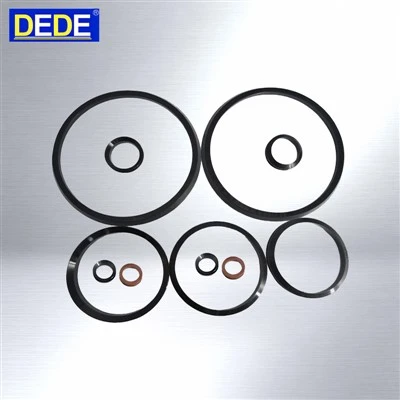
I don’t sell mass-produced EG Seals. I’m a small business too, and I work with other small businesses to build solutions that fit their exact needs. If you’re dealing with equipment seal failures, excessive downtime, or compliance concerns, I’m here to help you assess whether an EG Seal is right for your operations. We don’t believe in one-size-fits-all solutions, and we don’t pressure you to buy something you don’t need. All we do is provide honest, data-driven recommendations based on your specific business and equipment.
Industrial Seals If you’re ready to talk through your sealing challenges, or you just have questions about how an EG Seal could benefit your small business, don’t hesitate to reach out. We’d be happy to review your equipment specs, run a quick cost comparison for your operations, and help you find a solution that works for your budget and your needs.
References
- U.S. Small Business Administration. (2023). Cost of Downtime for Small Businesses. Retrieved from industry-specific manufacturing and service sector reports focused on operational disruptions.
- Food and Drug Administration. (2022). Regulatory Requirements for Food Contact Equipment Components. Compliance guidelines for sealing materials used in food processing operations.
- Industrial Machinery Maintenance Association. (2021). Total Cost of Ownership Analysis for Sealing Components. Comparative data on standard vs. engineered seal performance for small and medium-sized equipment.
- National Federation of Independent Business. (2023). Small Business Operational Challenges Report. Survey data on equipment downtime and maintenance costs for small manufacturers and processors.
DEDE SEAL Co., Ltd.
DEDE Seal Co., Ltd. is one of the most experienced eg seal manufacturers and suppliers in China for over 35 years, featured by quality products and good price. Please feel free to buy bulk customized eg seal made in China here from our factory. Welcome to contact us for pricelist.
Address: Hunan Road, Pudong New Area, Shanghai, China
E-mail: info@dedeseal.com
WebSite: https://www.dedesealing.com/
