If you’ve ever invested in a piece of industrial equipment, you know that downtime isn’t just an annoyance—it’s a direct hit to your bottom line. That’s why when customers reach out to us asking, “How long does it take to install an exhaust heat recovery system (EHRS)?” they’re rarely just curious; they’re crunching numbers, weighing disruptions against long-term energy savings, and trying to avoid stalling their operations. As a provider who’s been working on these systems for years, I don’t give a one-size-fits-all answer. The time it takes depends on a handful of key factors—none of which are arbitrary, all of which tie back to how your facility runs, what your existing setup looks like, and what you actually need the EHRS to do. Let’s break this down honestly, no sales fluff, just real talk about what to expect. Exhaust Heat Recovery System
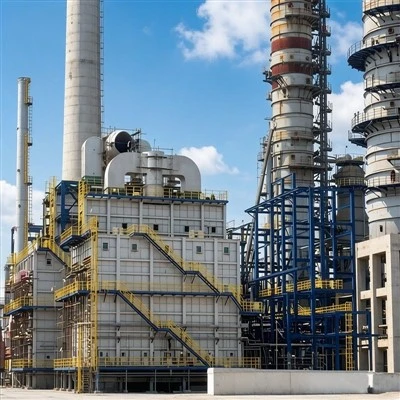
First, let’s start with the basics: what an EHRS installation even involves, at a high level, to set the stage. An exhaust heat recovery system pulls waste heat from your engine, furnace, or generator’s exhaust stream, captures it, and converts it into usable energy—think heating for your facility, preheating combustion air, or even powering auxiliary equipment. Unlike swapping a broken part, this isn’t a 20-minute job. We’re talking about coordinating with your maintenance team, inspecting your current exhaust piping, modifying or adding ductwork, installing heat exchangers, hooking up controls, testing leaks, and training your staff to run it safely. Each step adds time, and skipping any doesn’t just create delays later—it creates safety risks or inefficient performance.
Now, the biggest variable here is your pre-existing infrastructure. That’s the single biggest thing that changes install time. Let’s say you’re a small workshop with a 50-kilowatt backup generator, and your exhaust piping is right where it needs to be—no tight corners, no shared ducts, no corrosion that would require fixing before we even mount the EHRS. For a job like that, a standard, off-the-shelf EHRS? We’re looking at 2 to 3 days, max. That’s usually an easy install: we roll in, drop the heat exchanger in line with your existing pipe, hook up the wiring for the controls, run a quick pressure test to make sure there are no exhaust leaks (which is non-negotiable—carbon monoxide is no joke), and walk your lead maintenance tech through how to check it weekly.
But if you’re a larger operation? Say a food processing plant with a 500-kilowatt boiler, or a trucking depot with a fleet of 10 diesel generators running 24/7? That’s a whole different ballgame. If your existing exhaust system is old, corroded, or routed through tight spaces (like under a loading dock or between storage tanks), we can’t just drop a unit in. We have to first do a full site assessment—usually a half-day to a full day of measuring pipes, checking for structural clearance, testing exhaust gas composition (to make sure the heat exchanger material won’t corrode over time), and making sure the EHRS won’t interfere with other equipment, like your air filters or safety shutoffs. Then, we have to fabricate custom ductwork if needed, which adds another 1 to 2 days of lead time before we even show up to install. And if your facility runs nonstop—no scheduled downtime—we might have to split the install into shifts: working after hours or on weekends, which stretches the timeline another 2 to 3 days. For a full custom EHRS on a large, older facility? We’re talking 7 to 10 days total, not including the initial assessment.
Another big factor: custom vs. standard equipment. Most of our customers either go with our pre-engineered EHRS models, which we’ve tested to work with common engine and boiler sizes, or custom-built units for unique setups. Standard units are cheaper and faster to install because we can pre-fabricate all the parts ahead of time, so once we’re on site, it’s just aligning pipes and hooking up controls. Custom units, though, require us to design the heat exchanger, ducting, and controls specifically for your exhaust stream and energy needs—say you need the EHRS to preheat water for your cleaning process, which means we have to size the heat exchanger to handle that specific water flow. That design phase alone adds 3 to 5 days to the project, and then fabrication takes another 2 to 3 days, so install time goes up by at least a week. We always tell customers to go with standard if it fits, because not only is it faster, it’s cheaper too.
Then there’s downtime tolerance. Wait, I know I mentioned this earlier, but it’s worth calling out because it’s a make-or-break for many operations. If you can shut down your equipment for 8 hours straight, we can do a standard EHRS install in a single day—no splitting shifts, no waiting around for access. But if you can’t afford to shut down, we can do a parallel install: we’ll run a temporary exhaust line alongside your existing one, so you keep your equipment running while we hook up the new EHRS. That adds time because we have to build that temporary line, and coordinate with your team to switch over gradually, but it’s a game-changer for places where every hour of downtime costs thousands. We did a job last year for a pharmaceutical plant; they can’t shut down their boilers for more than a weekend, so we split the install into 3 weekend shifts: Friday night, Saturday, and Sunday, and we had it fully operational by Monday morning. That was about 5 total days of work, spread over 3 weekends, which was way better than the 10-day job we would have done if they could shut down for a week.
Don’t forget about permits and inspections. This is the part that a lot of customers overlook, and it can add 1 to 2 weeks of delays if you’re not on top of it. Exhaust systems are regulated by OSHA, local building codes, and environmental agencies—you can’t just install a heat exchanger without making sure it meets emissions standards and safety requirements for exhaust leaks. Some cities have fast-track permits for industrial equipment, but others require a full inspection plan, which means we have to submit drawings, wait for a city engineer to review, and then have a final inspection after install. We always help our customers with this—we’ve got a list of required documents for every location, so we can speed it up—but it’s still a step that adds time. Last quarter, a customer in a coastal city got held up because their permit application needed an extra review for air quality; that pushed their install back 10 days, even though our work on our end was done in 3 days.
Now, let’s talk about what happens after install, because that’s part of the process too, right? It’s not just “install the unit and leave.” We do a functional test: we run the EHRS at full load, check for leaks, make sure it’s capturing the amount of heat we designed it for, and train your team. For standard units, that test is usually 2 hours, and training is 1 hour. For custom units, we might do a 4-hour test to adjust the controls to match your specific energy needs, so you’re not wasting heat or underperforming. That adds another day to the total timeline, but it’s crucial to make sure the system works as promised.
Wait, let’s make this concrete with a couple of real examples, so it’s not just vague numbers. First example: A 10-person commercial bakery in Ohio, with a 100-kilowatt natural gas boiler. Their exhaust piping was already routed along the back wall of the kitchen, clear of any other equipment. They went with our standard EHRS model, which is designed to work with boilers that size. We did a site check-in, confirmed the fit, installed the unit during a single weekend (48 hours total, including the test and training), and had it up and running by Monday. Their total downtime was 36 hours, because we worked Saturday and Sunday during their slow period. Second example: A 24/7 logistics warehouse in Texas, with four 300-kilowatt diesel generators for backup power. Their exhaust pipes were old, rusted, and routed under a concrete slab that we couldn’t easily access. They went with a custom EHRS, because they needed the system to power their warehouse lighting when the grid went out. We spent two days doing the site assessment, fabricated custom ductwork over the next four days, then installed it in 7 days, splitting shifts between after work and weekends so they never turned off their generators. Total timeline from first call to full operation: 14 days. That’s a big difference, and it all comes down to those factors I mentioned.
A common question we get is: “Can you rush the install?” The short answer is, sometimes, but not always. If it’s a standard unit with no infrastructure issues, we can usually adjust our schedule to fit you, maybe cut a day or two off if we have a crew available. But if it’s a custom job with old piping or permit delays, rushing usually means cutting corners, which we won’t do. For example, we can’t skip the pressure test, because a gas leak would be a safety hazard, and we can’t skip the emissions check, because that would mean you’re breaking environmental rules. We always prioritize safety and long-term performance over speed, even if that means extending the timeline a little.
Now, let’s talk about what you can do to make the process go as fast as possible. First, be honest about your downtime limits. If you can shut down for a full week, say so— that lets us plan the most efficient install. If you can’t, tell us right away, so we can build a shift schedule that works. Second, give us full access to your facility during the assessment. If we can’t get under that concrete slab, or can’t look at your boiler’s piping, we can’t give you an accurate timeline. Third, make sure your local permits are handled early—we can help with paperwork, but you’re the one who has to submit it to the city. Fourth, think about what you actually need: do you need the EHRS just to heat your space, or to power equipment? If it’s the latter, that might mean a custom unit, which will take longer, but it’ll save you more energy in the long run.
At the end of the day, the time it takes to install an EHRS is a balance of what you need, what your facility already has, and how we can work together to keep your operations running smoothly. There’s no magic number, but a standard job with good infrastructure is 2 to 5 days, a custom job on an older facility is 7 to 12 days, and if you need to avoid downtime, we can adjust to fit that.
If you’re thinking about adding an exhaust heat recovery system to your facility, and you want a clear timeline tailored to your setup, reach out to us to chat through your specific needs. We’ll send a technician for a free site assessment, walk you through every step of the process, and give you an accurate estimate of how long it’ll take, no hidden fees, no sales pressure.
Petrochemical Equipment References
- Occupational Safety and Health Administration (OSHA). (2022). "Industrial Exhaust System Safety Standards." OSHA 1910.94.
- U.S. Environmental Protection Agency (EPA). (2021). "Energy Efficiency Improvement for Exhaust Heat Recovery Systems." EPA 430-R-21-005.
- American Society of Mechanical Engineers (ASME). (2020). "Standard for Heat Exchanger Design and Installation." ASME PTC 12.5.
- National Fire Protection Association (NFPA). (2022). "Industrial Boiler and Pressure Vessel Safety Code." NFPA 85.
Jiangsu Dongfang Whole-Set Equipment Manufacturing Group Co., Ltd.
We are one of the most professional exhaust heat recovery system manufacturers and suppliers in China, also support customized service. With abundant experience, we warmly welcome you to buy durable exhaust heat recovery system from our factory. If you have any enquiry about pricelist, please feel free to email us.
Address: No. 9, Industrial Park, Xinqiao Town, Jingjiang City, Jiangsu Province
E-mail: dfctwm@163.com
WebSite: https://www.dongfangequip.com/
