If you’ve ever been jolted out of sleep by a fire alarm blaring in the middle of the night or in a crowded office, you might’ve wondered what makes that sharp, urgent sound kick off so reliably—even before smoke starts to fill the room, sometimes. As someone who’s spent the last 12 years as a bimetallic strips supplier, talking to fire alarm technicians, building contractors, and small business owners about what goes into their systems, I can tell you the answer isn’t some fancy, overcomplicated tech. It’s a humble, deceptively simple little part that’s been saving lives for over a century: the bimetallic strip. Bimetallic Strips
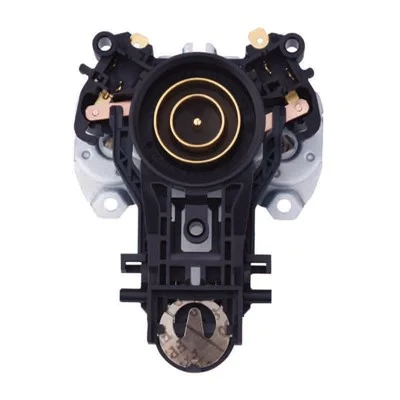
I still remember my first year in this industry, back when I was just packing boxes in a small warehouse, and a fire technician came in yelling about a batch of faulty strips that had left a local school’s alarm silent during a test. “That’s how fires start,” he’d said, “when a part that’s supposed to trigger before trouble doesn’t.” That day, I learned two things: first, that bimetallic strips aren’t just random metal bits—they’re the quiet first line of defense in so many fire alarm systems, and second, that getting them right isn’t just about making them fit; it’s about understanding exactly how they work. Let’s break that down, because when you’re talking about fire safety, understanding the small stuff matters more than you think.
To get how a bimetallic strip works, you first have to understand thermal expansion. That’s the basic rule that most metals expand when they heat up, right? If you’ve ever left a metal bike out in the sun and had it feel too tight to adjust, or seen a railroad buckled in extreme heat, that’s thermal expansion at work. The key here is that different metals expand at different rates when exposed to the same temperature change. A strip of copper, for example, will expand about 17% more than a strip of steel over the same temperature range. A bimetallic strip takes that difference and turns it into movement—movement that we can use to trigger a fire alarm.
Here’s how it’s structured, really simply: it’s two thin strips of metal, usually steel and copper or steel and brass, fused together along their entire length. They’re not just glued; they’re usually bonded through a process called roll bonding, where the two metals are pressed together under extreme heat and pressure so their atoms interlock. That means they move as one, no gaps, no give between them. When the strip is at room temperature, it’s straight, or slightly curved to a specific shape—calibrated to trigger at a precise temperature, usually around 135 to 165 degrees Fahrenheit, the sweet spot for fire alarm activation that’s hot enough to signal a developing fire but not so hot that it goes off from a toaster or a candle’s stray heat.
When heat hits the strip, one metal expands faster than the other. Since they’re stuck together, they can’t just stretch independently—they have to bend. The metal that expands slower acts as a sort of anchor, pulling the whole strip toward its side. So if our strip is steel on one side and copper on the other, copper expands faster, so the strip bends toward the steel side. That bend is the magic moment. In a fire alarm, that bend is designed to trigger a switch: when the strip curves far enough, it pushes against a small metal contact, closing an electrical circuit. That circuit sends a signal to the alarm control panel, which immediately sounds the siren and flashes the lights. No smoke needed, no waiting for particles to drift through a sensor—just heat, the earliest sign of most fires, triggering the alarm in seconds.
I’ve talked to technicians who swear by bimetallic strips because they’re so reliable in ways other early fire sensors weren’t. Before bimetallic strips became standard in the 1960s, a lot of early heat sensors used things like melting links that would break when hot, but those were one-and-done—you’d have to replace the entire alarm every time they activated. Bimetallic strips, when calibrated right, can trigger and reset (as long as the coiled strip cools back down and straightens out) multiple times, which is a huge plus for maintenance. They’re also cheaper than photoelectric or ionization smoke sensors for areas where heat is the first risk—like boiler rooms, kitchens, or attics where smoke might not build up as fast as heat.
That said, there’s a lot more that goes into making a bimetallic strip work consistently in a fire alarm than just slapping two metals together. The grade of metal matters, obviously. If you use low-grade steel that expands unevenly, the strip will bend at inconsistent temperatures, leading to false alarms or failing to trigger when it needs to. The thickness of the strips matters too—too thin, and they’ll bend from room temperature fluctuations; too thick, and they can’t bend enough to trigger the switch even at high heat. Most of the strips we supply are 0.010 to 0.020 inches thick total, calibrated with a tolerance of plus or minus 5 degrees Fahrenheit, so a technician knows exactly at what temperature their alarm will activate.
We also have to consider the environment the strip will be in. A fire alarm in a warehouse with constant temperature swings is going to need a different bimetallic strip than one in a coastal building where there’s moisture and salt air. We offer corrosion-resistant coatings that protect the bond between the two metals, so they don’t separate even after years of exposure to humidity or dust. I’ve had customers tell me their old strips from a cheap supplier started separating after two years, leading to false alarms that made their staff ignore the alarm when it actually went off. That’s the kind of failure we work hard to prevent.
Another thing that surprises a lot of people is that bimetallic strips aren’t just used for triggering the alarm—they’re also used in the alarm’s reset mechanism. Some older fire alarm systems have a manual reset button that you have to press after a fire is put out. That button often has a small bimetallic strip built into it: when you press it, you bend the strip, which realigns the electrical contact, resetting the circuit so the alarm is ready for next time. It’s the same principle, just used in a different part of the system.
Now, I know some people reading this might be wondering: with all the smart fire technology out there, like smart smoke detectors that connect to your phone, are bimetallic strips still relevant? Let me answer that. For commercial buildings, industrial facilities, and even some residential high-rise buildings, bimetallic heat sensors are still the backbone of the fire alarm system. They’re low maintenance, they don’t need power to work (a big plus if there’s a power outage during a fire—they trigger using just the heat from the fire itself), and they’re proven to work reliably in conditions where smoke sensors can’t keep up. I was at a factory last month where they had a fire in a paint booth—smoke would’ve gone to the ceiling, but the bimetallic strip in the heat sensor triggered the alarm the second the paint fumes heated the air, before any smoke reached the detector. If they’d only had a smoke sensor, the alarm would’ve been delayed, and the fire could’ve spread.
That’s not to say they’re perfect. They can trigger false alarms if there’s a very localized heat source, like a space heater blowing directly on the sensor, but proper placement—mounted away from vents, heaters, and direct sunlight—fixes that. And modern fire systems often combine bimetallic strips with smoke sensors to create a layered safety net: if one fails, the other will catch it.
As someone who’s been in this industry long enough to see the good and the bad of fire safety parts, I can tell you that the bimetallic strip is a perfect example of how the simplest parts do the most important work. You don’t see them, you don’t notice them, until they’re not there—and that’s when you realize how much they matter.
If you’re a building contractor, fire alarm technician, or facility manager looking for reliable bimetallic strips for your fire alarm systems, we’re here to help. We work with customers across all industries, from small restaurants to large industrial plants, and we can help you select the right strip grade, thickness, and calibration for your specific needs. Whether you need small batches for repair work or bulk orders for new construction, we can deliver parts that meet the exact temperature and performance standards required for fire safety systems.
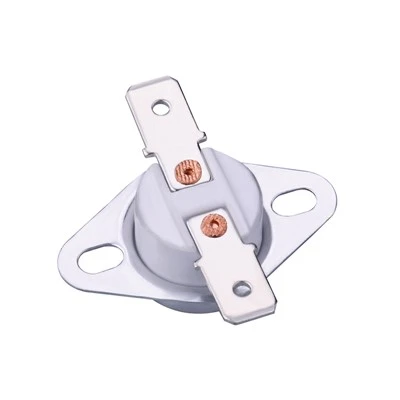
Don’t leave your fire safety to chance. A quality bimetallic strip is a small investment that can make a huge difference when it matters most. Get in touch with us today to discuss your bimetallic strip requirements and learn more about how our parts can support your fire alarm projects.
Thermal Overload Protectors References
- Heat Transfer Tutorials. (n.d.). Thermal Expansion of Metals. Retrieved from educational resources for mechanical engineering
- National Fire Protection Association. (2020). NFPA 72: National Fire Alarm and Signaling Code
- Manufacturing Process Journal. (2018). Roll Bonding of Bimetallic Strips for Industrial Applications
Yueqing Ganen Electronic Technology Co., Ltd.
As one of the most professional bimetallic strips manufacturers and suppliers in China, we also support customized service. Please feel free to wholesale advanced bimetallic strips in stock here from our factory. Welcome to contact us for quotation.
Address: No.6 yonghe 3rd Road, Chengdong Industrial Functional Zone, Chengdong Street, Yueqing City, Wenzhou City, Zhejiang Province, China.
E-mail: daiaohui@163.com
WebSite: https://www.ganensj.com/
