Hey there, if you’ve ever held a carbon fiber tube—whether it’s for a drone arm, a bike frame part, or even a lab rig—you might’ve glanced at it and thought, “Wait, why does this look so different from a metal tube or a plastic one?” As a carbon fiber tube supplier who’s been fielding questions about this stuff for 7 years now, I get it. Most folks only care about strength-to-weight ratio or how easy it is to cut, but the optical properties? That’s the part that trips up engineers, designers, and even hobbyists who end up switching from aluminum or PVC without realizing what they’re working with. Let’s break this down like I would over a coffee with a regular—no stuffy jargon, just what actually matters. Carbon Fiber Tube

First off, let’s get one thing straight: carbon fiber tubes aren’t a single material. They’re a composite, so their optical properties aren’t fixed—they change based on how we make ’em. That’s a big difference from, say, steel, which has the same look whether it’s a pipe or a sheet. Let’s start with the basics: what even is “optical property”? It’s not just color. It’s how light interacts with the material—reflection, absorption, transmission, even how it behaves when you shine something like a laser on it.
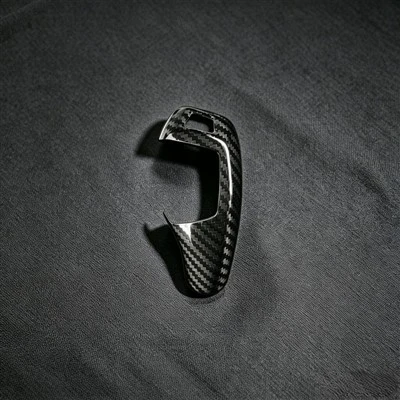
Let’s kick off with color and surface finish, because that’s what everyone notices first. Most carbon fiber tubes you’ll see are either black, or a silver-gray from the bare fiber. Wait, why black? A lot of people don’t know it’s not just a dye—we add a curing agent (usually epoxy) that’s full of carbon nanoparticles. Those little guys absorb almost all visible light, so the default is that deep, matte black you see on drone arms. But if someone orders a tube with a clear coat over bare fiber? You’ll see that woven pattern—called “weave highlight”—that looks like tiny diamonds when the light hits it just right. That’s pure carbon fiber, no extra color. I had a customer last year who was building a custom art installation and wanted those weave patterns to show through, so we used a matte clear coat instead of the standard black epoxy. He said it looked way cooler than his old aluminum tubes because it wasn’t just a flat gray.
Now, reflection. This is where it gets useful, not just pretty. Carbon fiber is what’s called a “highly absorbing material” for visible and near-infrared light. Wait, let me translate that: almost none of the light that hits the raw surface bounces back. If you hold a flashlight up to a carbon fiber tube vs. a aluminum one, the aluminum will blind you with a bright glare; the carbon fiber will just suck the light in, no bounce. That’s a huge deal for applications where glare is a problem. Think about camera equipment—if you’re using a carbon fiber tube for a follow-focus rig, you don’t want stray light bouncing off it ruining your shot. Same with telescopes or satellite components: less reflection means less interference with the light they’re supposed to capture. I’ve had a few aerospace customers tell me that’s why they switched from fiberglass to carbon fiber tubes—no glare messing with their sensor readings.
But wait, there’s a catch here: if the tube has a glossy surface (we can do that by polishing the cured epoxy), the reflection goes way up. I had a custom bike builder come in last month who wanted a glossy carbon fiber tube for a road bike frame—said matte looked too “ utilitarian” for his clients. We polished the outer layer, and now it reflects like a car body. It’s still a carbon fiber core, but the surface finish changes that optical property entirely. That’s the thing with our tubes: we can tweak the optical look pretty easily just by adjusting the outer layer.
What about transmission? That’s when light passes through the material, right? Carbon fiber tubes, in their standard form, are totally opaque. You can’t shine a light through them—they block 99.9% of visible light. But hold on, that’s because they’re thick enough, and the fiber is tightly packed. Wait a minute—if you make a super thin carbon fiber sheet, like for a phone screen protector? No, wait, even thin sheets are opaque because the carbon particles absorb light. Wait, actually, there’s a thing called “semi-transparent carbon fiber” but that’s only for very specific, thin applications—like tiny sensor windows. But for our tubes, which are usually 1mm to 50mm in diameter, transmission is zero. That’s why they’re perfect for shielding electronic components inside—no light gets in to mess with circuit boards, and no signals leak out. I’ve had a client who builds LED light fixtures use our carbon fiber tubes as housing because they don’t want the light to bleed through the tube itself. Smart guy, actually—he tried PVC first, and all the LED glow seeped out, made the whole fixture look cheap.
Now, a more niche optical property: laser interaction. A lot of our clients use lasers to cut, mark, or weld carbon fiber tubes. Wait, how does the material react to a laser? Since carbon absorbs near-infrared light (which is what most industrial lasers use), the laser energy gets absorbed really fast, which makes cutting super clean. No fraying, no melting, which is way better than plastic, which tends to bubble or burn. But here’s a thing: if the tube has a glossy outer coat, the laser reflection can cause problems. We had a customer last year who was marking our tubes with a laser, and he kept getting inconsistent marks—turns out the glossy surface was reflecting the laser back at the machine’s lens. We switched him to a matte outer layer, and the marks were perfect every time. That’s why as a supplier, we always ask customers what they’ll be using the tubes for—we’re not just selling a tube, we’re helping them avoid these little pitfalls with optical properties.
Wait, let’s not forget ultraviolet (UV) resistance. That’s an optical property too, right? How the material reacts to sunlight. Most carbon fiber tubes have a epoxy resin outer layer, and plain epoxy breaks down in UV light. If you leave a bare carbon fiber tube outside for a year, it’ll start to fade, get chalky, and lose that nice black finish. But we can add a UV stabilizer to the resin, or a clear UV-protective coat, which changes how it interacts with sunlight. I had a customer who builds solar-powered garden lights—his old PVC tubes turned yellow after 6 months, so he switched to our UV-stabilized carbon fiber tubes. Now they look brand new after 2 years. That’s optical property in action, even if people don’t always think of UV as part of it.
Let me also mention the “anisotropic” optical thing, because that’s something only folks who work with the material regularly notice. Anisotropic just means it’s different depending on direction. For carbon fiber tubes, the weave is along the length, right? So if you look at the tube end-on, the light reflects differently along the fiber direction vs. across it. You’ll see a subtle difference in brightness—like, if you hold the tube up to a light, the stripes along the length are a tiny bit darker or brighter than the ones around the circumference. It’s not obvious to a casual observer, but engineers designing parts that need to match a finish have to account for that. Last month, a yacht designer came to us because his first batch of tubes had a slight mismatch in the weave direction—we adjusted the layup for him, and now the finish is totally uniform. That’s the kind of detail that comes from knowing the optical properties inside out, not just selling a product.
Wait, let’s circle back to why this matters for you, if you’re thinking about buying carbon fiber tubes. A lot of new customers only ask about strength and weight, but if you’re using the tube for something that involves light—camera gear, lighting, aerospace, art, outdoor products—you can’t ignore the optical stuff. For example, if you’re building a drone, the optical property of low reflection will keep the camera from picking up glare, which means better footage. If you’re building a bike, the surface finish (gloss vs. matte) is just as much about look as it is about durability. If you’re building a medical device, the opacity means you can house sensors without light interference.
I’ve seen so many people make the mistake of buying a cheap carbon fiber tube from a no-name supplier, and then being surprised when the finish is off, or they have glare issues, or it fades after a few months. That’s because those suppliers cut corners on the resin, or don’t pay attention to the outer layer’s optical properties. As a supplier, we test every batch of tubes for these properties—we check reflection rates with a simple light meter, test UV resistance with accelerated sunlight exposure, and even adjust the weave for uniformity if a customer needs it. It’s not just about strength; it’s about making the material work for your specific application.
Another thing I get asked a lot: why do some carbon fiber tubes look “matte black” and others look like a gray weave? It all comes down to the resin. If we use a black epoxy with carbon nanoparticles, it absorbs all light, so the finish is matte. If we use a clear epoxy, you see the raw carbon fiber weave, which is that gray-silver because carbon fibers naturally reflect a little bit of light. The weave itself is a big part of the optical look—there’s twill weave, plain weave, unidirectional—each one reflects light a little differently. I had a photographer last year who wanted a carbon fiber tube for a background prop, and he asked for a twill weave because it had those little diamond highlights that look great in photos. If I had given him a plain weave, it would’ve looked flatter, less interesting on camera. That’s the kind of nuance that comes from knowing the optical properties, not just grabbing a tube off the shelf.
Let’s wrap this up without getting too vague. The optical properties of carbon fiber tubes aren’t one-size-fits-all—they’re customizable. You can adjust color (black, gray, or even tinted, though we don’t do that often), reflection (gloss, matte, anti-glare), transmission (totally opaque, unless it’s a super thin sheet we can make), UV resistance, and even the subtle weave highlights. The key is that as a supplier, we don’t just ship tubes—we talk to you about what you’re using them for, so we can match the optical properties you need.
If you’re in the market for carbon fiber tubes, whether for a drone, bike, art, aerospace, or anything else, don’t just ask “how strong is this?” Ask about the optical properties that matter for your project. I’ve helped hundreds of customers tweak their tubes to get exactly the look and performance they need, and I can help you too. Reach out, and we can chat through your requirements—no pressure, just honest advice from someone who’s been in this game long enough to know the ins and outs of carbon fiber tubes, including all the stuff that’s not just strength and weight.
Carbon Fiber Square Tube References
- Carbon Fiber Composites: Properties and Applications, Society of Plastics Engineers, 2021
- Optical Properties of Carbon Fiber Reinforced Polymers for Aerospace Systems, Journal of Composite Materials, Vol. 55, No. 12, 2022
- UV Degradation of Epoxy Resins for Carbon Fiber Components, Polymer Degradation and Stability, Vol. 189, 2021
Hangzhou Chengxin Composite Material Co., Ltd.
Hangzhou Chengxin Composite Material Co., Ltd.is one of the most professional carbon fiber tube manufacturers and suppliers in China, specialized in providing high quality customized service. We warmly welcome you to buy high-grade carbon fiber tube at competitive price from our factory.
Address: #713, Jinyuan Road, Fuyang District, Hangzhou City, Zhejiang Province, China
E-mail: lisa.chen@cxcomposite.com
WebSite: https://www.cxcomposite.com/
