Hey everyone, thanks for tuning in. I’m Jake, and if you’ve ever shopped for water treatment gear, you’ve probably noticed the shelves are stacked with all kinds of brands—some cost a pretty penny, others are way cheaper, and it’s hard to tell what actually separates them. As a water treatment equipment supplier who’s been in this game for 8 years, I get it; a lot of folks reach out saying, “I just need something that cleans my water, why does brand even matter?” Today, I’m breaking down exactly what differences you’re actually paying for, without the jargon that makes your eyes glaze over. Water Treatment Equipment

First off, let’s cut through the noise: not all water treatment equipment is built the same. Sure, every brand says their system “works,” but there are three core areas where they differ—build quality, tech that actually does the job, and customer support that doesn’t disappear after you swipe your card. Let’s start with build quality, because this is the stuff that keeps your system from breaking down mid-cycle. Cheap brands, usually the ones you see on big-box store end caps or random online marketplaces, use plastic parts that feel flimsy—like those filter housings that crack if you look at ’em wrong, or valves that leak after 6 months. I’ve seen clients come to us with those, saying their whole system’s out because a $2 part broke, and replacing it costs more than the entire setup would’ve if they’d just gone with a reliable brand.
Reliable brands? They use food-grade stainless steel or heavy-duty cross-linked polyethylene (XLPE) for housings—stuff that doesn’t corrode, even if your water has a little extra minerals. Valves? Most top brands use brass or high-grade PVC with reinforced seals, not the thin plastic that snaps. I remember a small café owner who bought a no-name system for their espresso machine; 3 months later, a plastic valve burst, flooded their kitchen, and they had to close for a day. The brand we recommended for them uses brass valves, and they’ve had zero issues in 2 years. That’s the kind of thing you don’t think about until it costs you thousands.
Next, let’s talk about the actual treatment tech, because that’s the whole point—clean water, right? A lot of budget brands cut corners here, and I’m not talking about “minor tweaks.” For example, reverse osmosis (RO) systems, which are super common for homes and small businesses, use membrane technology. Cheap membranes are thin, so they don’t filter out tiny contaminants like lead or microplastics as well, and they clog way faster. You’ll end up replacing them every 6 months instead of 2-3 years, which adds up over time. We’ve had a school district test a cheap brand’s RO effluent and find that it still had 12 ppb of lead—EPA’s action level is 15 ppb, so that’s basically a fail. Our standard RO systems use thin-film composite (TFC) membranes, which catch way more contaminants and last way longer.
Then there’s UV disinfection systems, which kill bacteria and viruses without chemicals. Budget brands often use low-wattage bulbs that don’t reach the required dosage to actually kill pathogens—they look like a blue light, but they’re just a night light. Top brands use 30+ watt bulbs, and even have smart sensors that track bulb output, so you know when it’s time to replace it, not just go by a 12-month timer. A lot of folks skip that sensor and end up with a bulb that’s too dim to work, then they’re like “why’s my water making me sick?” That’s not the system’s fault, that’s the budget brand’s lazy design. Also, some brands use proprietary tech for specific contaminants—like if you have hard water, a water softener with ion exchange resin that’s more porous will last longer and soften better than a dense resin that needs backwashing every week. We’ve tested that, too; a budget softener a client tried needed backwashing every 5 days, vs. our brand’s which is every 2 weeks. That saves water, too, which is a bonus for everyone.
Now, what about brand reputation? Wait, no, not just the “they’ve been around” vibe—we’re talking about real-world support. Budget brands rarely have local service, or their support is overseas, and you can never get a live person. Last month, a guy from a rural area called us panicking because his cheap RO system was leaking, and the company was based on the other side of the country; they couldn’t ship a part for a week, so his well water was undrinkable for 7 days. Brands we work with have local technicians in most areas, so if something breaks, someone’s there the next day. Also, warranties: cheap brands usually have a 1-year warranty, but it’s void if you so much as look at the system wrong. Top brands have 5-10 year warranties on parts, and they cover labor, too. I’m not gonna lie, a warranty doesn’t mean a brand is good, but if a company won’t stand behind their product for more than a year, that’s a red flag.
Wait, but hold on—does every expensive brand mean better? No, definitely not. There are premium brands that charge 2x what they should for just a name, and no extra tech. That’s why it’s not just “brand X is good, brand Y is bad” — it’s digging into what’s behind the brand. For example, a mid-tier brand we work with, they don’t have a fancy TV ad, they just build solid systems with TFC membranes and stainless steel parts, and their warranties are great. Then there’s a brand with a huge marketing budget, same parts as the mid-tier, but charge $300 more just for the logo. I see that all the time; clients come in with a name-brand system, and it’s the same internals as a cheaper one, just wrapped in a nicer box.
Another thing: compatibility. If you’re adding multiple systems, like a softener plus RO, some brands are designed to work together seamlessly, others don’t. I had a construction company come to us who bought 10 systems from a big-box brand, and the softener’s backwash cycle was throwing too much salt into the RO’s feed water, so the RO membranes clogged in 3 months. We had to replace all the membranes because the brand didn’t test their systems to work in tandem. Our go-to brands, though, test all their units for cross-compatibility, so you don’t run into that mess.
Let’s also talk about aftermarket parts, because that’s another big one. If a brand uses parts that are only made by them, you’re stuck paying their markup for replacements. Some budget brands do this on purpose—they make a $5 filter, but you have to buy it exclusively from them for $30. That’s a scam. Good brands use standard, industry-standard parts, so you can buy filters or valves from any hardware store, no markup. I remember a client who had a no-name carbon filter; he tried to buy a standard 10-inch filter, but it didn’t fit, so he had to order the brand’s custom one for $40 every 3 months. Over 5 years, that’s $800 just for filters, vs. if he’d gone with a brand that uses standard filters, he’d pay $12 a pop, so $240 total. That’s a huge difference no one tells you about.
So, what should you actually care about when picking a brand? Let’s make it simple: first, check what parts they use—housings, membranes, valves—are they standard or custom? Are they food-grade or heavy-duty, not cheap plastic? Second, ask about the warranty: is it parts only, or labor too, and is it transferable if you move or sell your place? Third, ask about service: do they have local techs, or will you be waiting on hold for hours? And fourth, skip the brands that only sell online with no physical address—if something goes wrong, you need someone to point you to.
I get it, it’s tempting to go for the cheapest option, but in water treatment, cheap usually ends up being expensive. You’re not just paying for a box that filters water—you’re paying for something that keeps your family safe, your business running, and doesn’t leave you holding the bag when it breaks. We don’t push fancy name brands just for the logo; we work with brands that check all those boxes, because we’ve tested them, seen the pros and cons, and talked to hundreds of clients about what actually works.
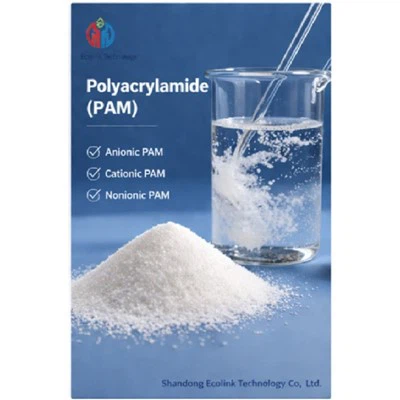
If you’re not sure what brand fits your needs—whether it’s a home system, a café, a small office, or a larger commercial setup—hit us up. We can walk through your water type, your space, and what you need, no pressure, just straight talk. Don’t guess when it comes to water that you and the people you care about are drinking—this isn’t the place to cut corners.
Anionic Polyacrylamide References:
- U.S. Environmental Protection Agency. (2022). Drinking Water Treatment Technologies. Retrieved from EPA’s Office of Water.
- Water Quality Association. (2023). Residential and Commercial Water Treatment Equipment Standards. Retrieved from WQA Technical Library.
- National Sanitation Foundation. (2021). Standard 42: Drinking Water Treatment Units—Aesthetic Effects. Retrieved from NSF International.
- Thin-Film Composite Membrane Association. (2022). Performance Guidelines for Reverse Osmosis and Nanofiltration Membranes. Retrieved from TFCA Industry Reports.
Shandong Ecolink Technology Co., Ltd.
Shandong Ecolink Technology Co., Ltd. is one of the most reliable water treatment equipment manufacturers and suppliers in China. We warmly welcome you to wholesale bulk high quality water treatment equipment from our factory. If you have any enquiry about cooperation, please feel free to email us.
Address: No. 8, Xiaying Chemical Industry Park, Aobu Road, Xiaying Town, Changyi City, Weifang City, Shandong Province,China
E-mail: sale02@ecolink-environment.com
WebSite: https://www.ecolink-environment.com/
