Hey there, if you’re scrolling this because you’re standing in a parts room, production lab, or maintenance bay staring at a half-empty spreadsheet of oil test gear and going “wait, do I actually need this?” — you’re in the right spot. I’ve been selling oil test equipment for 7 years, and I’ve talked to everyone from a guy with a 1-truck fleet in Iowa who can’t justify a $12k tool to a refinery supervisor who got burned by cheap test gear that gave him garbage data and cost him a $50k downtime hit. This isn’t a sales pitch full of jargon; it’s the real, messy, “what I actually see work” guide to picking the right stuff, no fluff. Oil Test Equipment

First, let’s cut through the noise: the biggest mistake most people make is buying gear that’s either overkill (like a lab-grade particle counter for a guy who just needs to check his hydraulic fluid before a harvest) or way too basic (a cheap viscosity tester that can’t handle cold temperatures for a Minnesota construction team). It all starts with where you’re using this thing — “use case” isn’t just a buzzword here, it’s the difference between keeping your equipment running and wasting money.
Let’s break down the most common scenarios I deal with, because most of you fall into one of these buckets. If you’re a fleet guy, farm operator, or industrial maintenance team doing on-site oil checks (not sending samples to a lab), your top needs are speed and reliability. You don’t want to wait 2 hours for a test; you need to pull a sample, hit a button, and get a read that tells you if your oil’s good or if you need to change it yesterday. For this, skip the big, clunky lab analyzers — go for portable, field-ready units. I recently sold a set of portable viscosity and water content testers to a 20-truck landscaping company in Texas that used to send all their samples out; now they run tests on-site, cut their oil-related repairs by 22% in 6 months, and saved like $800 a month on lab fees. The key here is: don’t buy a tester that’s rated for 1000 tests a day if you only do 10. You’re paying for features you’ll never touch.
On the flip side, if you own or manage a third-party testing lab, or work in oil and gas, power generation, or manufacturing where you need to meet ISO standards for your customers or regulators? You need lab-grade precision gear, no exceptions. A few years back, I had a customer at a aerospace component plant who tried to save 30% by buying a particle counter that wasn’t ISO 4406 certified. He got audited, got a non-conformity notice, and had to buy the certified unit anyway — that cost him way more than the 30% he tried to save. For these use cases, you also need to think about compatibility: can the equipment sync with your lab’s LIMS (Laboratory Information Management System) software? If you’re manually logging test results, you’re wasting so much time. I’ve started pre-selling compatibility checks for labs now, because so many people don’t realize that a $5k particle counter might not work with their existing system, and they have to shell out another $2k for adapters.
Next, let’s talk about data that matters — not just the numbers on the screen. Too often, people fixate on specs like “accuracy to 0.1%” when they don’t actually need that level of precision. For example, if you’re testing for fuel contamination in diesel oil for farm equipment, an accuracy of 0.5% is more than enough. If you’re testing for transformer oil breakdown voltage (a super critical safety thing), you need that 0.1% accuracy because a false negative could lead to a huge outage or even a fire. Another big one: ease of use. I’ve seen guys walk away from a $10k tester because it took 15 minutes to run a single test. The field guys especially hate complicated menus and too many buttons. I always push for testers with one-touch functionality, even if they cost a little more. And don’t sleep on training — even the best gear is useless if no one knows how to use it. We include free 1-on-1 training for every customer that buys a unit from us, because I’ve had too many people call back saying they “broke” their tester, only to find out they were using the wrong sample size.
Wait, let’s get into the less obvious stuff: durability and after-sales support. You’re not going to use this gear in a climate-controlled lab 100% of the time. Field guys are dragging these tools through mud, leaving them in truck beds in 100-degree Texas summers or -20-degree Minnesota winters. A tester that’s waterproof (IP67 rated, if you care) and dust-proof is non-negotiable for on-site work. And when something breaks? You can’t wait 2 weeks for a replacement part. We keep a parts warehouse in Texas and another in Illinois, so if a customer’s tester dies on a job site in Wisconsin, we can ship a replacement part same-day, no excuses. I’ve had customers tell me horror stories about buying from overseas vendors who take 4 weeks to send a part — that’s downtime that costs them thousands. Also, check for local service centers. If a unit breaks in Florida, it’s way easier to work with a tech in Orlando than one in Shanghai.
Another hidden factor: scalability. Let’s say you start small: you own a small fleet of 5 delivery trucks, and you buy a basic portable viscosity tester. Next year, you add 15 more trucks, plus a few pieces of construction equipment. Do you need to buy a whole new line of gear, or can your existing tester handle more tests, or can you upgrade it with a module for particle counting? We have a lot of modular testers that let customers add features as they grow, instead of buying all new equipment every time. That’s a huge money-saver. I had a food processing plant customer who started with just a water content tester, then added a viscosity module 2 years later, then a particle counter module 6 months after that — total cost was like half of what it would’ve been if they’d bought all three units at once.
Wait, let’s talk about testing parameters, because this is where most people overcomplicate things. You don’t need to test every single property of oil unless you’re a lab. Ask yourself: what’s the main thing I’m trying to catch? If you’re changing hydraulic fluid based on color, you’re doing it wrong — color changes are too subjective. But if you’re worried about wear in your equipment, particle counting is non-negotiable. If you’re worried about oil breaking down, viscosity testing and acid number testing are the big ones. For transformer operators, breakdown voltage and moisture content are the must-haves. Don’t buy a tester that does 10 different tests if you only need 2. You’re wasting money on features you’ll never use, and the tester will be more complicated than it needs to be.
Let me share a bad example from my early days in this business. A guy came to me 6 years ago, wanted to buy an oil test kit for his logging equipment in the Pacific Northwest. I tried to get him to talk about his use case, but he insisted on the fanciest, most expensive portable kit we had — $8,000. A year later, he called me, furious, saying the kit was useless. Turned out, the fancy kit had a particle counter, acid number tester, and a bunch of other features, but it couldn’t handle the cold temperatures he worked in (they run logging in winter, when temps are below freezing) — the display froze, and the viscosity readings were way off. I swapped it out for a smaller, cheaper kit ($3,500) that was cold-rated, and he’s been a repeat customer ever since. That’s the kind of thing I want to help you avoid — don’t let flashy specs or a high price tag make your decision for you.
Now, a quick checklist to wrap this up, so you don’t have to scribble notes: 1. Nail your use case (field vs. lab, how often you test, what you’re testing for). 2. Prioritize features you actually need, not specs that sound impressive. 3. Check durability and climate ratings if you’re using it off-site. 4. Don’t sleep on after-sales support and local parts availability. 5. Think about scalability if you plan to grow. 6. Test data sync and ease of use — if it’s a pain to log results, you won’t use it, and that’s a waste.
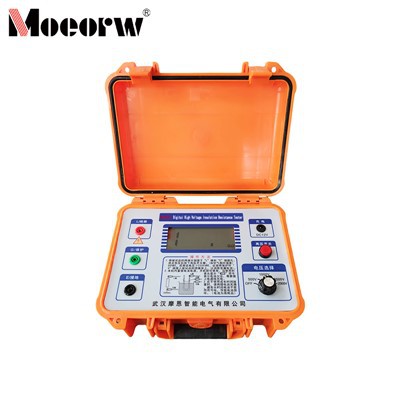
If you’re still stuck, or you want to run your specific scenario by someone who actually uses this gear every day, just reach out. We don’t do pushy sales calls, we don’t spam your inbox, we just help you figure out what works for your operation — no hidden fees, no generic recommendations.
High Current Generator References:
- International Organization for Standardization. (2017). Petroleum and related products — Lubricants, industrial oils and related products (class L) — Classification (ISO 6743-0:2017).
- Society of Tribologists and Lubrication Engineers. (2020). Field Oil Analysis Best Practices for Industrial Equipment Maintenance.
- U.S. Department of Energy. (2019). Guide to Oil Condition Monitoring for Mobile Heavy-Duty Equipment.
Wuhan Moen Intelligent Electric Co., Ltd.
As one of the most professional oil test equipment manufacturers in China, we’re featured by quality products and good price. Please rest assured to buy high quality oil test equipment in stock here and get quotation from our factory. Customized orders are welcome.
Address: Building A, No.1, Fenghuangyuan 2nd Road, Donghu New Technology Development Zone, Wuhan, Hubei, China
E-mail: info@hvhipotsystem.com
WebSite: https://www.hvhipotsystem.com/
