Hey there, I’m Mike, and for the past 12 years, I’ve spent most of my days in and around adult diaper manufacturing equipment—first as a field technician troubleshooting lines, and now as a sales lead for a company that designs and builds custom adult diaper machines for facilities large and small. If you’ve ever wondered how those machines handle waste, you’re not alone. Clients and operators ask me this all the time, usually because they’re trying to cut costs, meet EPA emissions rules, or just make their factory floors less of a mess. Today, I’m pulling back the curtain on exactly how our machines turn manufacturing scraps into something manageable (or even useful), no corporate jargon or fluff included. ADULT DIAPER MACHINE

First, let’s set a quick baseline: adult diapers aren’t just folded pieces of plastic and cotton. Each one is a layered, high-tech product that combines several materials: a top nonwoven fabric that touches skin, an absorbent core (usually a mix of wood pulp fluff and super absorbent polymer, or SAP), a leakproof back sheet, and elastic leg cuffs. When these are being put together on a production line, waste happens—every single step. The most common scrap? Off-cuts from trimming the diaper edges, misaligned products that don’t pass quality checks, leftover SAP pellets that spill during mixing, and even small bits of nonwoven that tear during handling. A typical mid-sized line might generate 300 to 500 pounds of waste every 8 hours, and if that’s just hauled to a landfill, it’s a huge waste of money and bad for the environment. That’s why waste handling is one of the most underrated, but most critical, parts of a good adult diaper machine.
Let’s walk through the process step by step, exactly as it plays out on our lines. First, the waste is captured at the source—no waiting until it piles up in a corner. Every trimming station, every product refeed chute, and every SAP mixing station has a small, sealed vacuum hood connected to a central waste collection system. This isn’t some rickety shop-vac setup; it’s a calibrated airflow system that pulls only the scrap, not good product. For example, when a machine trims the excess edges off a newly formed diaper (to make those nice, straight sides), the trim falls right into a narrow channel that’s pulled away by low-pressure air, so the trimmings don’t blow all over the line or get mixed into usable diapers. I’ve seen way too many older lines where trimmings get stuck on a guide roller, then work their way into finished products—big recalls, angry customers, lost revenue. Source capture eliminates 90% of that problem before waste even hits a bin.
Next, we separate the different types of waste. That’s non-negotiable, because you can’t recycle or repurpose a mix of nonwoven, plastic, and SAP. Our machines use two key separation stages, and we fine-tune them based on what the line is making. The first stage is a vibrating screen: as the captured waste is funneled onto a sloped screen, it shakes, letting light materials like wood pulp fluff and small nonwoven fibers sift through, while heavier items like plastic back sheet trimmings and big SAP clumps roll off the end. I remember a client in Ohio who tried a “one-bin” waste system a few years ago—they were throwing everything into a single compactor and paying double the landfill fees because the mix was considered “mixed municipal solid waste,” not just paper or plastic. After we installed our separation screens, they cut their waste hauling costs by 42% in 6 months. The second separation step is a magnetic separator, tiny little magnets that pull out any metal fragments that might have broken off from the machine blades during trimming. Those bits are dangerous—they can damage compactor blades or contaminate recycled materials—so that step is non-negotiable for any line running at a high speed (most adult diaper lines run 500 to 800 diapers per minute).
Once separated, each waste type goes to its own processing path. Let’s start with the biggest one: nonwoven fabric and plastic back sheet trimmings. These are 100% recyclable, but only if they’re clean and not contaminated with other materials. Our lines compact them first, then send them to a dedicated storage bin that’s lined to keep dirt out. Most facilities work with plastic recyclers that process this into things like plastic pallets or even new nonwoven fabric for disposable products. I’ve had clients send us photos of their recycled diaper trimmings being turned into fence posts—full circle, that’s the stuff that makes this job worth it. Then there’s the absorbent core waste: wood pulp and SAP. These can’t be recycled into plastic, but they’re highly compostable. We have options for in-line compost bins, or we can hook the system up to a facility’s existing commercial compost program. Some clients even use small amounts of the processed pulp/SAP mix as a soil amendment for local community gardens—those same gardens where people will eventually use the diapers made from this line, so it’s a small, closed loop. The smallest waste stream is the leftover SAP pellets. These are sometimes reprocessed if they’re clean—if a spill is caught immediately, we have a small vacuum attachment that can suck up loose SAP, sift it, and send it back to the mixing tank for reuse. I once had a line where we recovered 15 pounds of clean SAP a day—enough to offset the cost of a part a month, that’s not pocket change.
Now, what about the waste that can’t be separated or recycled? Misassembled diapers that fail quality checks, for example. We designed our lines to handle these differently than trimmings. Instead of sending them to general waste, we have a reject station that either grinds them up on the spot (with a quiet, low-vibration grinder that doesn’t disrupt line speed) or packs them into airtight bulk bags. Grinder blades are specially designed to cut through all layers without releasing SAP or fibers into the air, which keeps factory air quality safe. One client in Florida was worried about odor from rejected diapers, especially since they make overnight diapers with extra SAP. Our system seals the grinder chamber so no odors escape, and the bulk bags are lined so no fluids leak out—they only take the bags to landfill once a week, and the local waste company even gives them a small discount because the bags are pre-sorted and sealed.
Wait, there’s a part most people don’t talk about: the maintenance of the waste handling system, and how it ties into line uptime. If the waste system is clogged, the whole line stops. That’s a big deal—for every minute a line is down, a mid-sized facility loses about $200 in production. Our machines are designed with self-cleaning waste channels—small, pressurized air blasts that clear clogs automatically, so operators don’t have to stop the line to unclog a chute. We also add a sensor that alerts operators when a bin is 90% full, so they can swap it before it overflows. I’ve been on a line in Texas where an old client was spending 2 hours a day swapping waste bins and unclogging chutes. After we upgraded their waste handling system, that time dropped to 15 minutes a day, and their line uptime went up 12% in the first quarter.
I should also mention that different regions have different regulations. The EU has strict rules about single-use plastic waste, for example, so our European clients often add an extra processing step: they run the plastic trimmings through a decontamination unit that kills any bacteria from the diaper materials, so the recycled plastic meets EU food contact standards (even though it’s not for food, the regulations are tight). In the US, the EPA categorizes diaper waste as a non-hazardous solid, but facilities still have to meet local air quality rules for fine particles from nonwoven fibers. Our systems capture 98% of those particles, so clients don’t have to install extra air filtration equipment, which saves them tens of thousands of dollars in setup costs.
A common question I get: can we process used diapers with this system? No, that’s not what these lines are designed for. These systems handle manufacturing waste, not end-of-life used diapers. There are separate facilities for used diaper processing, and our machines are built specifically for the production phase, where all waste is clean, unused material. That’s an important distinction—operators often mix those two up, so I make sure to clarify that early in every conversation.
Let me share a recent example to make this real. A client in Illinois, a mid-sized manufacturer that makes adult diapers for nursing homes, came to me last year. They were working with a 10-year-old line that was generating 400 pounds of waste a day, hauling it to a landfill for $52 a ton, and they were also paying $1,200 a month in extra air filters because their old waste system released too many fine fibers. They wanted to cut waste costs by 30% and get rid of the monthly air filter bill. We installed a new line with our integrated waste handling system: source capture hoods, vibrating separators, on-site grinding, and a connection to their local compost program for the pulp/SAP waste. Six months later, their waste hauling costs dropped to $29 a ton, they recycled 280 pounds of plastic trimmings a week, and they no longer need to replace those air filters. They saved over $18,000 a year, which they used to upgrade their quality control station. That’s the kind of real, tangible benefit our waste systems provide, not just theoretical.
I’ve seen a lot of cheap, off-brand adult diaper machines that cut corners on waste handling. They don’t have source capture, they mix all waste together, and they don’t have separation systems. Those lines might be cheaper upfront, but the hidden costs add up fast: higher landfill fees, more downtime from clogs, higher maintenance for the line itself, even fines for not meeting local emissions rules. Our philosophy is that a good adult diaper machine isn’t just about making diapers fast—it’s about making the whole operation run smoothly, with as little waste and hassle as possible. The waste system is half the equation, and we don’t cut corners on it.
If you’re in the market for an adult diaper machine, or you’re looking to upgrade your current line’s waste handling system, I’d encourage you to ask about these specific points: source capture efficiency, separation rates for different waste materials, uptime impacts from the waste system, and compliance with local regulations. A lot of suppliers will gloss over waste handling, but it’s the part that will make or break your operation’s long-term profitability.
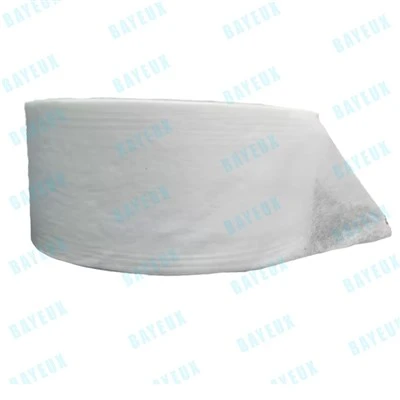
At the end of the day, adult diaper manufacturing doesn’t have to be a dirty, waste-heavy process. The right machine’s waste handling system turns what would be just trash into something that saves money, reduces environmental impact, and even supports other local industries. If you’re ready to learn more about how our waste systems can work for your facility, or if you have questions about troubleshooting an existing line, feel free to reach out to our team to schedule a consultation. We’ll walk through your current setup, show you how the waste system works in action, and help you find a solution that fits your production goals and budget.
EVA Raw Material References
- Consumer Goods Technology. (2022). "Sustainable Waste Handling in Disposable Hygiene Product Manufacturing." Retrieved from industry reports on hygiene manufacturing sustainability
- U.S. Environmental Protection Agency. (2021). "Solid Waste Management Guidelines for Non-Hazardous Industrial Wastes: Disposable Product Manufacturing." EPA Publication No. EPA-530-R-21-004
- European Chemical Industry Council. (2023). "Recycling Protocols for Nonwoven and Polyethylene Waste from Disposable Absorbent Products." CEC Industry Report for Hygiene Product Manufacturers
- International Society of Hygiene Management. (2022). "Line Uptime and Waste Handling Correlation in Mid-Size Absorbent Product Facilities." Annual Technical Conference Proceedings
Quanzhou Bayeux Industrial Co., Ltd.
Address: ROOM 805,BUILDING 3,NO,8 XIANGSHAN ROAD, XIANGSHAN COMMUNITY, QINGYANG STREET, JINJIANG QUANZHOU FUJIAN.
E-mail: yeliqun_520@163.com
WebSite: https://www.qzbayeux.com/
