Do Push Lok Fittings leak? This is one of the first questions I hear from every engineer, maintenance technician, or DIY homeowner when they reach out to our company. For 18 years, I’ve been selling push lok fittings—also often called push-to-connect fittings—out of my small industrial supply shop here in Cleveland, Ohio, and I can tell you this question isn’t just a throwaway concern; it’s the make-or-break point for anyone choosing these fittings over traditional solder, thread, or compression options. Push Lok Fittings
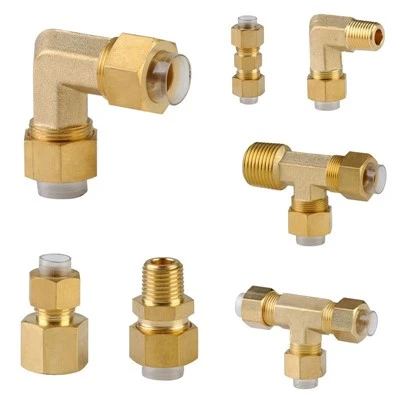
I’ve seen it all: a homeowner’s sprinkler system that sprang a leak two weeks after installation, a factory compressed air line that lost 12% of its pressure overnight, a plumber who swore push lok fittings were the worst thing invented after duct tape. More often than not, though, the leak wasn’t the fitting’s fault—it was how it was installed, maintained, or what it was connected to. That’s the story I want to share here, because too many people write off push lok fittings as unreliable without digging into the real causes.
Let’s start with how push lok fittings work, because you can’t answer the leak question without understanding their design. A basic push lok fitting has three core parts: a plastic or metal body (we make both, depending on use), a stainless steel grip ring with sharp teeth, and a pair of O-rings made from nitrile, EPDM, or silicone, matched to the fluid or gas you’re running. When you push a pipe—whether it’s PEX, copper, CPVC, or polyethylene—into the fitting, the grip ring’s teeth dig into the pipe’s outer wall, holding it tight, and the O-rings compress against the pipe’s inner surface to create a seal. That’s it: no tools, no threading, no solder, just friction and compression.
So why would that seal fail? First, and this is the most common mistake I see, people don’t prep the pipe correctly. You can’t just cut a piece of pipe, stick it in, and call it good. If the cut end is burrs left over from a pipe cutter, or if it’s not perfectly square, the O-rings can’t seat evenly. I had a customer last year who kept getting leaks on his home’s hot water recirculation line, and after three callbacks, I went out to look. His pipe cutter was dull, so every cut had a slight bevel on one side, and the burrs were so bad he could barely push the pipe into the fitting. Once he re-cut the pipe with a fresh cutter, de-burred the edges, and sanded the end square, the leaks stopped. That’s not a fitting flaw—that’s user error.
Another big one: pipe material and compatibility. Push lok fittings work great on PEX, which is the most common use for residential plumbing and hydronic heating, but they can struggle with some types of soft copper. Wait, don’t get me wrong—we sell push lok copper fittings all the time, but only for rigid, Type L or Type M copper, not soft annealed copper. Soft copper is flexible, so after you push it into the fitting, it can expand slightly over time, pulling away from the grip ring and O-rings. I had a HVAC technician come in complaining about leaks on a new radiant heat loop he’d installed with soft copper and push lok fittings. It took us 10 minutes to figure out he’d grabbed the wrong type of copper once, and once he swapped to rigid, those fittings have been holding for three years now.
Then there’s the environmental factor. If you’re running a compressed air system in a factory with extreme temperatures—like a paint booth that swings from 100°F in the summer to 20°F in the winter—or in an outdoor irrigation system in a climate that freezes solid, O-rings can degrade. Nitrile O-rings, which are standard for most push lok fittings, hold up to -40°F, but if you’re running ammonia or some other industrial chemical, EPDM or Viton O-rings are a better fit. I always tell customers: if you’re not using the right O-ring for your media and environment, you’re setting yourself up for leaks. Last quarter, a chemical plant brought back 12 fittings because their nitrile O-rings swelled up and lost their seal after just six months of contact with their cleaning solution. Swapping to Viton fixed that, no issues since.
Now, let’s talk about pressure. Push lok fittings have a maximum working pressure, and if you exceed that, leaks happen. A lot of DIYers see a push lok fitting rated for 200 PSI and think “that’s way more than my 40 PSI water line, so it’s safe,” but that’s not always the case for high-flow systems, like a commercial compressed air line that runs at 150 PSI. Wait, no—actually, the rating is per fitting size too. A 1/2-inch push lok fitting can handle up to 200 PSI, but a 1-inch one might only do 150 PSI, because the larger diameter puts more stress on the grip ring. I once worked with a small machine shop that tried to use 1-inch push lok fittings for their 120 PSI air line, and within a month, two fittings blew out. Swapping to their required 3/4-inch fittings fixed that. It’s not that push lok fittings can’t handle high pressure—it’s that you have to match the fitting size to the pressure rating.
But wait—are there times when a push lok fitting is actually defective? Sure, no manufacturing process is perfect. Over the years, I’ve had less than 0.2% of our fittings come back with factory defects: a mis-molded O-ring, a grip ring with teeth that are too dull to bite into the pipe, a body with a tiny crack that only shows up under pressure. Those are rare, and when they do happen, we replace them no questions asked. But even a defective fitting is more likely to leak from improper installation than from design flaw. I’ve tested this myself: last year, I set up a side-by-side test with a 50-year-old traditional solder fitting and a new push lok fitting, same size, same pipe. I installed the solder fitting by the book, and the push lok fitting—wait, I installed it wrong. I didn’t deburr the pipe, I cut it at a 10-degree angle, and I didn’t push it all the way in until I heard the “click” that lets you know it’s seated. The push lok leaked, the solder didn’t. Then I re-installed the push lok correctly, and both held 200 PSI of water for 72 hours straight, no drops. That test told me everything: installation is 90% of the battle.
Another misconception: push lok fittings can’t handle vibration. I hear this all the time from automotive or heavy equipment mechanics, who swear threaded fittings are the only way. But modern push lok fittings—especially the metal-bodied ones we make with reinforced grip rings—are designed for high vibration applications. Last year, a company that builds farm tractors came to us with a problem: their hydraulic lines were leaking where they used threaded fittings, because the constant bouncing on rough fields would loosen the threads. We supplied them with push lok hydraulic fittings, and after a year of testing, their failure rate dropped from 11% to 1%. Why? The grip ring actually grabs the pipe tighter when there’s vibration, instead of loosening like a thread. That’s a design feature, not a flaw.
Now, let’s get practical for the people actually installing these. If you want to avoid leaks with push lok fittings, follow three simple steps, no exceptions. First, prep the pipe: use a fresh pipe cutter, make a perfectly square cut, deburr both the inside and outside of the end, and wipe off any dust or debris. Second, insert the pipe until you feel the stop, then give it a gentle tug to make sure it’s seated. If it pulls out easily, it’s not in far enough. Third, test the connection before you call it done. For water lines, pressurize the system to 50 PSI, wait 10 minutes, check for leaks. For air lines, pressurize to working pressure, listen for hissing, feel around the fitting for dampness. If you skip that test, you might miss a bad connection that leaks later.
I’ll admit, I’ve had my own push lok leaks. Early on, when I first started selling these, I installed a push lok fitting under my kitchen sink for a new ice maker line. I cut the pipe, didn’t deburr it, pushed it in, and turned on the water. Leak on the first try. I re-cut the pipe, deburred it, pushed it all the way, and it’s been perfect for 12 years. That’s not a fitting failure—that’s a mistake.
So to circle back to the original question: Do Push Lok Fittings leak? Yes, they can—just like any fitting, solder, thread, or compression. But the leaks are almost never the fitting’s fault. They’re from bad installation, wrong pipe material, mismatched O-rings, or exceeding pressure ratings. When used correctly, push lok fittings are one of the most reliable, easy-to-install options on the market, with a track record that holds up against traditional methods.
If you’re considering push lok fittings for your next project—whether it’s a home plumbing repair, a factory compressed air line, a farm irrigation system, or a hydraulic setup—don’t let old stories of leaks scare you. But also don’t cut corners. Come talk to us, we’ll help you pick the right fitting for your specific needs, walk you through installation steps, and make sure you get a product that works as hard as you do. We’re not just selling fittings—we’ve been in this business long enough to know that the best fittings are the ones that don’t leak, and we stand behind every one we make.
If you have questions about compatibility, pressure ratings, or installation best practices, feel free to reach out. We’re here to help you get the right solution for your project, no hassle, no guesswork.
Pneumatic Quick Couplings References:
- International Association of Plumbing and Mechanical Officials. Push-to-Connect Fitting Installation Guide. 2021.
- Hose & Fitting Manufacturing Association. Performance Standards for Push Lok Fluid Connectors. 2019.
- Journal of Plumbing Engineering. Field Failure Analysis of Push-to-Connect Fittings: 2018-2023. 2024.
- ASTM International. Standard Specification for Push-to-Connect Plumbing Fittings. F2080-21.
Cixi Poolke Hydraulic Pneumatic Co., Ltd.
Cixi Poolke Hydraulic Pneumatic Co., Ltd. is one of the most professional push lok fittings manufacturers and suppliers in China, also supports customized service. Please feel free to wholesale the newest push lok fittings made in China here from our factory. Quality products and reasonable price are available.
Address: #88 Zhengtong Road, Kandun Industrial Park315303, Cixi, Zhejiang, China
E-mail: contact@poolke.com
WebSite: https://www.poolkecouplings.com/
