If you’ve ever worked with centrifugal pumps in industrial settings—whether you’re managing a chemical processing line, a municipal water treatment plant, or a food and beverage manufacturing facility—you know how critical it is for those pumps to run smoothly. I’m a centrifugal pump supplier with 12 years in the industry, and one of the most common issues I see customers face (and one that causes way more downtime and repair costs than most people realize) is air in the pump. Let me break down why that’s such a big problem, and why it’s worth addressing early before it derails your operations. Centrifugal Pump

First, let’s start with how a centrifugal pump works, because you can’t understand the problem without getting the basics right. A centrifugal pump uses an impeller—usually a set of curved blades inside a casing—to spin at high speed, creating centrifugal force. This force pushes the liquid outward from the impeller’s center, which in turn creates a low-pressure area at the impeller’s eye (the center where liquid enters). That low pressure is what draws liquid into the pump from the suction line. The whole system relies on this balance: liquid filling the impeller, the low pressure pulling more liquid in, and the consistent flow that moves through the discharge line.
Air throws that entire balance off completely. Even small amounts of air trapped in the pump, or entering through leaks in the suction line, can start a chain of problems. Let’s start with the most immediate issue: cavitation, but wait—no, not just cavitation. Wait, cavitation is a specific effect of air and vapor bubbles, but let’s not mix things up. First, when air is present, it takes up space in the impeller’s eye and the suction lines that should be filled with liquid. That means the pump can’t generate the low pressure needed to pull liquid in. So instead of a steady flow of liquid, you get a churning mix of air and liquid—usually called “air binding” or gas locking. Air binding stops the pump from moving liquid at all, sometimes even making it shut down entirely. I’ve had customers tell me their pump was running fine one minute, then suddenly it was just making a loud, high-pitched noise and no water was coming out—turns out a small leak in the suction flange had let in just enough air to lock it up.
But it doesn’t stop at air binding. Let’s talk about that cavitation I mentioned, because air is a major trigger for it. When air enters the pump, those air bubbles are carried to the discharge side, where pressure is much higher. The high pressure crushes the air bubbles suddenly, and that collapse creates tiny, high-velocity jets of liquid that slam into the impeller blades and the pump casing. Over time, that constant impact erodes the metal surfaces—pitting the impeller, wearing down the casing, and even damaging the shaft and bearings. I’ve seen pumps that were only two years old look like they’d been in service for 10 because of cavitation caused by unaddressed air leaks. The worst part? It’s not just repair costs—unplanned downtime from a failed pump can cost thousands of dollars per hour in lost production, especially in industries where deadlines are tight, like food processing or chemical manufacturing.
Another issue I see regularly is reduced efficiency. Centrifugal pumps are designed to move a specific volume of liquid at a given head (pressure). When air is mixed in, the density of the fluid being pumped drops. The impeller can’t move a gas-liquid mixture the same way it moves pure liquid—think of trying to stir a bowl of water versus a bowl of water with air bubbles; the same amount of force gives a much less consistent result. That means your pump has to work harder to get the same flow, driving up energy costs. I did a calculation last year for a customer in the municipal water sector: their pump was drawing 15% more power than its rated capacity, all because of a small air leak in the suction line. Fixing that leak brought their energy costs down by $12,000 annually. For a plant with multiple pumps, that adds up fast.
Wait, let’s clarify where that air is coming from, because a lot of customers don’t realize it’s not always a big leak. Common sources include: loose fittings on the suction line (even a tiny gap between a pipe and a flange can let in air), worn gaskets, damaged suction pipes with cracks, improper priming (a mistake people make when first starting the pump, especially after it’s been shut down), or even liquid that’s inherently gassy—like some beverages or chemical solutions that release air bubbles when they’re pressurized or heated. Another hidden source is the suction lift: if the pump is mounted too high above the liquid source, the low pressure at the impeller’s eye can draw in air from the surface, or cause the liquid to vaporize (which is often confused with air, but it’s a similar problem).
Let me share a concrete example to make this real. A customer of mine in the brewery industry reached out last spring saying their transfer pump (used to move wort from the mash tun to the fermentation tanks) was only moving half the expected volume, and the impeller sounded like it was rattling. When our service team inspected the pump, they found a 1mm crack in the suction line, right where it connected to the mash tun. That tiny crack was letting in just enough air to cause air binding and start cavitation. The customer had tried adding extra lubricant to the bearings and adjusting the motor speed, but none of that worked because the root cause was the air. Replacing the suction line and bleeding the air out of the pump fixed the problem, and the pump’s efficiency went back to its rated level. They told us later that the downtime had cost them a full batch of beer—around $8,000 in lost product—so addressing air early would have saved them a lot of money.
Now, what about if air gets into the discharge side? That’s less common, but still harmful. If air builds up in the discharge line, it can create a vapor lock there too, stopping liquid from flowing out. Or, if the air is compressed in the discharge, when it’s released, it can cause surges—sudden spikes in pressure that damage pipes, valves, and the pump’s internal components. Surges are another big cause of unplanned failures, especially in systems with multiple pumps or variable speed drives.
A lot of people mix up air-related issues with other pump problems, which is why it’s often overlooked. For example, a pump that’s underperforming might be blamed on a worn impeller, when it’s actually just air in the system. Or noise and vibration might be written off as normal wear, when it’s cavitation from air bubbles. That’s why I always tell customers to check for air first if their pump isn’t running as expected—look at pressure gauges: the suction pressure should be consistent, not fluctuating, which is a sign of air. Listen for unusual noise: a loud, rumbling sound is cavitation, a high-pitched whine is often air binding. Check suction lines for leaks, even small ones, because they’re easy to miss.
Preventing air in centrifugal pumps isn’t hard, but it requires consistent checks. First, proper priming when starting the pump—make sure all air is bled out before the pump is turned on, especially after maintenance or shutdowns. Inspect suction lines regularly for cracks, loose fittings, or worn gaskets, and replace them before they develop leaks. Ensure the pump is mounted at the correct height relative to the liquid source—avoid excessive suction lift, because that can cause both air entry and vaporization. For gassy liquids, use deaeration systems or design the system to let air escape before it reaches the pump.
But even with the best prevention, air can still find its way into the system. That’s why having a reliable supplier who can help you diagnose and fix air-related issues is so important. I’ve worked with hundreds of customers, and most of the time, air problems are easy to resolve once you know what to look for—whether it’s a seal replacement, a suction line repair, or a simple priming procedure.
I’ve seen too many businesses suffer unnecessary downtime and costs because they ignored the small red flags of air in their centrifugal pumps. It’s not a trivial issue—it’s one of the top causes of pump failure and reduced efficiency in industrial applications. Whether you’re dealing with a single pump in a small facility or a large system with dozens of units, keeping air out is key to keeping your operations running smoothly.
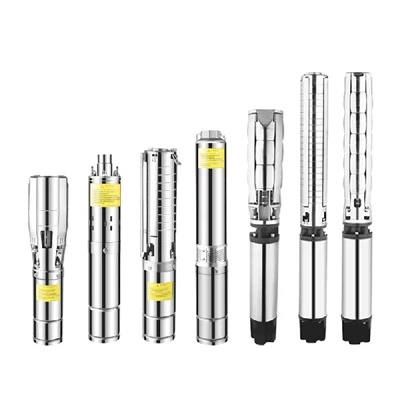
If you’re currently dealing with pump issues, unexpected downtime, or rising energy costs due to air in your centrifugal pumps, I can help. We specialize in centrifugal pump design, maintenance, and troubleshooting, and we’ll work with you to identify the root cause of your problem and find a solution that fits your needs. Reach out to start a conversation about your pump challenges, and let’s get your equipment back to peak performance.
High Flow Stainless Deep Well Pump References:
- Karassik, I.J., Messina, J.P., Cooper, P., & Heald, C.C. (2007). Pump Handbook (4th ed.). McGraw-Hill.
- Geslin, P. (2019). Centrifugal Pump Operation and Maintenance. Elsevier.
- US Department of Energy. (2021). Pump System Improvement Guidelines for Industrial Applications. Office of Energy Efficiency and Renewable Energy.
- Brennen, C.E. (1995). Cavitation and Bubble Dynamics. Oxford University Press.
Longbiao Pump Industry Co., Ltd.
We are one of the most professional pipeline pump manufacturers and suppliers in China, featured by quality products and low price. Please rest assured to buy discount pipeline pump for sale here from our factory. We also accept customized orders.
Address: Unit 101, Building 11, Pan’ao Entrepreneurship Park, Daxi Town, Wenling City, Taizhou City, Zhejiang Province, P.R. China
E-mail: 1653746797@qq.com
WebSite: https://www.cnlongbiao.com/
