If you’re in the market for conveying equipment—whether you’re moving bulk materials in a mining operation, packaged goods in a distribution center, or delicate components in a food processing plant—you’ve probably heard the phrase “quality standards” tossed around a lot. But as someone who’s spent 12 years supplying conveying solutions to businesses across North America, I can tell you that quality isn’t just a buzzword on a spec sheet. It’s the difference between a system that runs 20 years with minimal downtime and one that requires a full replacement every five. Let me break down what those quality standards actually mean, why they matter, and how they show up in the equipment I deliver. Conveying Equipment
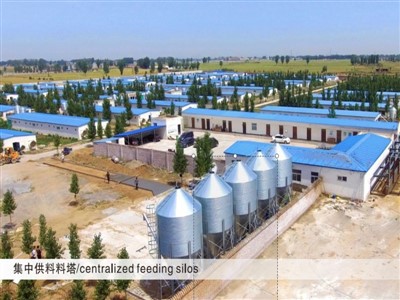
First, let’s start with the basics: conveying equipment quality standards aren’t one-size-fits-all. They’re tailored to the application, the material being moved, and the environment the system will operate in. For example, a conveyor handling raw grain for animal feed has vastly different needs than one moving corrosive chemicals in a manufacturing plant. But there are core, non-negotiable standards that apply across every type of conveying system I work with.
One of the first non-negotiables is structural integrity. A conveyor isn’t just a series of belts and rollers; it’s a load-bearing structure that has to support thousands of pounds of material, sometimes for miles at a time. Early in my career, I worked with a small construction company that bought a cheap conveyor from a no-name supplier for their gravel yard. Within six months, the main support beam snapped under the weight of a full load of rock, shutting down their operation for three weeks and costing them over $70,000 in lost productivity. That’s the kind of mistake you avoid when you prioritize structural engineering standards set by groups like the Conveyor Equipment Manufacturers Association (CEMA)—the leading body for conveying equipment guidelines in North America. CEMA’s standards dictate everything from the thickness of support beams to the spacing of rollers based on load, speed, and material type. When I design a conveyor for a new client, we always align with CEMA’s latest specifications because I know that skipping those calculations leads to failure, not just for the equipment, but for the customer’s bottom line.
Next, material compatibility is make-or-break. This isn’t just about using stainless steel because it sounds industrial; it’s about matching the material of every component to what it’s moving. Let’s say you’re handling food-grade products—even a tiny amount of contamination from a conveyor component can get your product recalled, which is a nightmare for any food business. I once had a bakery client who switched to a cheaper conveyor that used carbon steel rollers coated in a cheap paint. Within a year, the paint chipped, and metal shavings were ending up in their cookie dough. They had to throw out three batches of product, face a health inspection fine, and lost two major retail clients. Since then, I only use food-grade stainless steel (304 or 316 grade, depending on acidity) for all contact parts when working in food and beverage. For corrosive materials like fertilizer or mining ore treated with chemicals, I use galvanized steel or specialized alloys that resist pitting and rust. Even belts matter here: a rubber belt with a nylon core works for most general materials, but a heat-resistant belt with aramid fibers is non-negotiable for moving hot metal parts or baked goods fresh from an oven. I always work closely with my clients to test their materials’ properties before recommending components—because a conveyor that can’t handle what you’re putting on it isn’t quality, it’s a liability.
Then there’s performance reliability, which is measured by uptime and efficiency. No business wants a conveyor that stops every other hour for maintenance. That’s why another key quality standard is component durability and precision engineering. Take bearings, for example: a cheap bearing might last 12 months in mild conditions, but a precision-engineered bearing from a reputable supplier can last 10 years. I source all my bearings from manufacturers that meet ISO 9001 standards, which govern consistent production quality—so every bearing that arrives at my facility is identical, with no defects that would cause premature wear. I also build redundancy into every system where it makes sense. For a distribution center handling e-commerce packages, that might mean extra rollers to prevent jams; for a bulk mine conveyor, that might mean a backup drive motor. I once installed a system for a logistics company that thought redundancy was “overkill.” Six months later, a belt snapped during peak holiday season, and they were stranded for 10 hours. Now, they’re one of my repeat clients, insisting on redundancy as a standard feature. Reliability isn’t just about parts—it’s about designing the system to run in the real world, not just on paper.
Safety is another quality standard that can’t be overlooked, and it’s not just a nice-to-have; it’s a legal requirement in most industries. OSHA (Occupational Safety and Health Administration) in the U.S. sets strict standards for conveying equipment, and cutting corners here puts workers at risk and opens your business up to fines. For example, all moving parts on a conveyor need guardrails to prevent entanglement, emergency stop buttons need to be placed every 50 feet along the system (and clearly labeled), and belts need to have tension monitors to prevent slippage or breakage. I’ve seen suppliers skip guardrails on conveyors for small parts to save a few dollars, and a worker’s glove got caught in a roller, leading to a severe injury. That’s a preventable mistake, and it’s why I make safety a non-negotiable part of every system I supply. We also test every conveyor before it leaves my facility, running it at full speed with a simulated load to check that all safety features work as intended. No system gets shipped out without passing that test—because my reputation depends on my clients keeping their teams safe.
Maintenance accessibility is a quality standard that many buyers don’t think about until it’s too late. If a conveyor is impossible to repair without a crane or special tools, you’re looking at hours of downtime every time a part needs replacing. That’s why I design every system with easy access points: removable guardrails, modular components that slide out instead of being bolted in place, and clear labeling for every part so maintenance teams know exactly what to order. I also provide clients with a detailed maintenance schedule tailored to their specific system—how often to lubricate rollers, when to replace belt sections, and what signs of wear to look for. Last year, a small manufacturing client called me panicking because their old conveyor required cutting the main beam to replace a broken roller, which cost them two days of production. Since then, all my new systems have hinged access panels for roller replacements, so a single worker can swap a roller in 10 minutes. That’s the kind of practical quality that separates a good supplier from one that just sells equipment.
Now, let’s talk about how these standards translate to value for my clients. I know that price is a factor, but choosing a cheaper conveyor that doesn’t meet these standards ends up costing more in the long run. A system that follows CEMA, ISO, and OSHA standards might cost 15% more upfront, but it will last twice as long, have 75% less downtime, and avoid the costly fines and safety risks of non-compliance. For example, a mining client I worked with recently ran the numbers: their old cheap conveyor had an average of 12 hours of downtime per month, costing them $12,000 per day in lost production. The new conveyor I supplied, built to CEMA standards, has less than 2 hours of downtime per month, saving them over $100,000 a year in just lost productivity. That’s not a sale—it’s an investment that pays for itself in a matter of months.
I also do things differently than many other suppliers because I know conveying equipment isn’t a one-time purchase. I don’t just drop off a conveyor and disappear. I provide ongoing support, from initial consultation and custom design to installation guidance and post-sales maintenance. Last quarter, a client had a problem with their conveyor’s belt tension, and I had a technician on site within 24 hours to fix it, no extra cost for service calls. That’s part of the quality standard too: the supplier’s commitment to the equipment throughout its life cycle, not just when it leaves the warehouse.
At the end of the day, the quality standards for conveying equipment boil down to this: the equipment should work when you need it, keep your workers safe, protect your products, and not cost you more in the long run than it’s worth. I’ve built my business on delivering that, and every system I supply is a reflection of that promise.
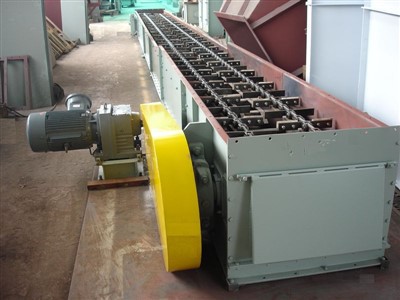
If you’re in the market for a new conveying system, or you’re looking to replace an old one that’s costing you time and money, let’s talk. I can walk you through your specific needs, explain how our systems meet all the necessary quality standards, and help you find a solution that fits your budget and your operations. Don’t settle for equipment that will let you down—work with a supplier that stands behind their products. Reach out to start the conversation.
Silo References
- Conveyor Equipment Manufacturers Association (CEMA). (2021). CEMA Standard for Conveying Systems, 7th Edition.
- International Organization for Standardization (ISO). (2022). ISO 9001:2015 – Quality Management Systems Requirements.
- Occupational Safety and Health Administration (OSHA). (2023). Safety Standards for Conveying Equipment, 29 CFR 1910 Subpart E.
- American Society of Mechanical Engineers (ASME). (2020). ASME B20.1 – Safety Standards for Conveyors and Related Equipment.
Henan Oumu Intelligent Storage Equipment Co., Ltd.
As one of the most professional conveying equipment manufacturers and suppliers in China, we’re featured by quality products and good service. Please rest assured to buy customized conveying equipment made in China here from our factory. For quotation, contact us now.
Address: No. 681, Xinzhong Avenue, Hongqi District, Xinxiang City, Henan Province
E-mail: luna@oumu-silo.com
WebSite: https://www.oumu-silo.com/
