If you’re here, odds are you’re dealing with a pole-changing two-speed three-phase motor—either maintaining one you already have, troubleshooting a wonky performance issue, or spec’ing a new one to fit your industrial, commercial, or agricultural needs. As someone who’s supplied these motors for over a decade, I’ve seen way too many shops skip a critical step that prevents 90% of unexpected motor failures down the line: checking winding resistance. Pole-Changing Two-Speed Three-Phase Motor

Winding resistance might sound like a super technical term, but it’s actually one of the simplest, most cost-effective tests you can do. It tells you if your motor’s internal copper windings (the parts that turn electricity into motion) are healthy. Bad resistance readings can point to loose connections, broken wires, or even insulation damage before they turn into a full motor swap that costs you days of downtime. The best part? You don’t need fancy lab gear—just a basic multimeter, a little patience, and a working knowledge of how pole-changing two-speed motors are wired.
First, let’s break down why this test is different for these motors, because that’s where most people mess up. A standard single-speed motor has just one set of windings. But a pole-changing two-speed? It has two separate winding sets, each built for a different speed (think 1800 RPM for low speed, 3600 RPM for high speed, for example). Those winding sets are wired to a terminal box, usually with six main leads plus a common lead, right? Wait, no—let’s get that straight. Most of the two-speed motors I supply for fans, conveyors, and machine tools use a 9-lead terminal setup: three leads for the low-speed winding, three for the high-speed, and three for the parallel connection that lets you switch speeds. If you mix up which lead goes to which winding, your resistance test will give you all the wrong numbers. That’s why step one is always: label your terminal box before you do anything. Don’t just trust the faded labels on the box—rewrite them with a marker so you know which set is which. I’ve seen techs skip this step, test the wrong winding, and end up thinking their motor’s dead when it was just a mix-up.
Next, prep your tools. You’ll need a digital multimeter (the cheap $20 one from the hardware store works, as long as it has an ohms setting, labeled Ω) and a pair of insulated alligator clips, because holding two wires with your fingers is a recipe for a wrong reading (and a minor shock, if you’re not careful). Important safety note: Always disconnect the motor from power and lockout/tagout the breaker before you start. I can’t tell you how many times I’ve had a service tech get hurt because they forgot this rule. Power off, pull the plug, lock the breaker—no exceptions.
Now, how to actually run the test. Let’s walk through it step by step, because this is where it’s easy to fumble. First, set your multimeter to the lowest ohm range (usually 200 Ω, or 2k Ω if you’re working with larger motors). Lower ohm numbers mean more current, so smaller, lower-power motors will have higher resistance than big industrial ones. For example, a 1HP two-speed motor might have winding resistances between 2 and 20 Ω, while a 10HP one will be under 2 Ω. If your readings are way outside that range, you’ve got a problem.
Start with the terminal box: strip a tiny bit of insulation off each lead so your multimeter probes make good contact. First test the windings themselves. For the low-speed winding: take two leads from the low-speed set (say, L1 and L2) and touch the multimeter probes to them. Jot down the number that pops up. Do the same for L2 and L3 of the low-speed, then L1 and L3. The readings should be almost identical—within 5% of each other. If one is way higher (like 10 Ω vs. 2 Ω for the others), that winding has a break, a loose connection, or even a burnt spot from overheating. Repeat that for the high-speed winding: same three tests, same rule. The three readings should be super close.
Then test the common leads, which are the ones that connect the two winding sets. For a pole-changing two-speed motor, there’s usually a common terminal that ties all the windings together. Take each lead from the low-speed winding and test it against the common terminal, then do the same for the high-speed. Again, these readings should be consistent—within 5% of each other. If one is off, that’s a sign of a bad joint or broken wire between the winding and the common terminal.
Wait, what about the ratio between the two speeds? That’s another key check. For pole-changing motors, the winding resistance should follow a predictable pattern: the low-speed winding will have higher resistance than the high-speed one. Why? Because low speed uses more poles, which means the wire is longer and thinner, so more resistance. If your low-speed winding has lower resistance than the high-speed? That’s a red flag—you might have a wrong winding, or a wiring mix-up that’ll make your motor run hot and burn out fast. I see this a lot with motors that are rewound by unqualified shops; they swap out the wrong wire size, throw off the resistance ratio, and the motor dies in a few weeks.
Let’s talk about what to do if you get a bad reading. Don’t panic first. Sometimes it’s just a dirty terminal—scrub the contacts with a wire brush, re-strip the insulation, and retest. If the reading is still off, check the wiring inside the motor’s housing. A loose terminal nut, a frayed wire, or even a damaged winding from vibration (super common on motors mounted to fans or pumps) will throw off your numbers. If all the connections look good and the resistance is way outside the normal range, that’s a sign the winding itself is bad. For pole-changing two-speed motors, unlike single-speed ones, you can’t just rewind half the winding—they’re designed as a matched set, so a bad winding usually means a full replacement, or a repair that’s almost as expensive as a new motor.
Here’s a pro tip from someone who supplies hundreds of these motors every year: do this test as part of your regular maintenance, not just when the motor is already acting up. If you test the resistance every 6 months, you can catch tiny issues before they turn into big, costly problems. I had a customer last year who checked his motor’s resistance ahead of a scheduled shutdown, found a 1 Ω difference in the low-speed winding, tightened the terminal, and avoided a 3-day downtime that would’ve cost him $50k in lost production. That’s the value of this test right there.
Wait, common mistakes to avoid: Don’t test the leads with the motor connected to anything, even if it’s turned off. There’s still residual power in the capacitors or windings that can mess up your multimeter and give wrong readings. And don’t rely on the multimeter’s auto-range setting—for small motors, auto-range might jump to a higher ohm range that’s too sensitive, so you’ll get a reading that’s way off. Always manually set it to the lowest Ω range first.
Another thing: if you’re a small shop owner, don’t try to test the motor under load. Winding resistance tests are done on unloaded, de-energized motors—you’re just checking the wire itself, not how it performs when it’s pushing a fan or a conveyor. Loading the motor will give you different resistance readings that don’t mean anything.
Let’s wrap this up with why this matters for you, specifically, if you’re looking for a new pole-changing two-speed motor or maintaining an existing one. Winding resistance is the baseline for motor health. When I supply a new motor, we test each winding at the factory to make sure the resistance is within 2% of the spec, so you don’t have to worry about problems out of the box. But if you’re working with a motor you already have, this test is the fastest way to know if it’s worth keeping or if you need a replacement.
If you’re reading this and you’re not sure how to run the test on your specific motor, or you’ve gotten a weird reading and you’re not sure if it’s a problem, reach out. We supply pole-changing two-speed three-phase motors for all kinds of applications, and our team can walk you through the test, help you interpret your readings, or help you source a replacement if your motor is too far gone. We get that downtime kills your business, so we make it easy to get the right motor when you need it.
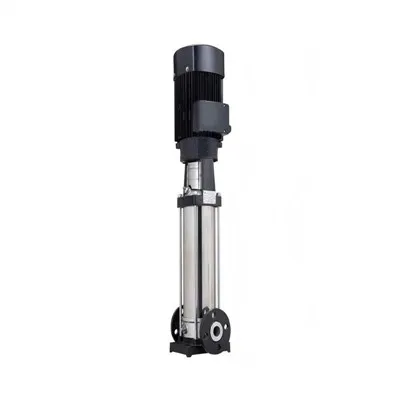
Don’t skip the winding resistance check. It’s a 10-minute test that can save you thousands in repairs, downtime, and premature motor replacement.
Pole-Changing Two-Speed Three-Phase Motor References
- National Electrical Manufacturers Association (NEMA) Standards for Rotating Electrical Machinery, MG 1-2021
- Institute of Electrical and Electronics Engineers (IEEE) Guide for Testing and Maintenance of Polyphase Induction Motors, IEEE Std 112-2021
- Electric Motor Repair and Maintenance, 5th Edition, by Robert Rosenberg
Taizhou Goodpump Trading Co., Ltd.
We’re well-known as one of the most professional pole-changing two-speed three-phase motor enterprises in China, featured by quality products and good service. Please rest assured to buy discount pole-changing two-speed three-phase motor in stock here from our factory. For quotation, contact us now.
Address: No.38, District 6, Zhengye Village, Lunan Street, Luqiao District, Taizhou City, Zhejiang Province, China
E-mail: tabvip666@163.com
WebSite: https://www.goodpump-cn.com/
