If you’ve ever found yourself Googling “Is alumina biodegradable?” while scrolling through material specs for a new manufacturing project, lab experiment, or even a consumer product tweak, you’re not alone. As someone who’s spent the last 12 years supplying high-grade alumina to clients across ceramics, water treatment, and specialty chemical sectors, this is one of the most common questions I get asked—and it’s also one that’s layered with nuance, not a simple yes or no. Let me break this down for you, straight from the supplier floor where I test batches, troubleshoot client issues, and walk through the science that makes alumina such a versatile (and sometimes misunderstood) material. Alumina
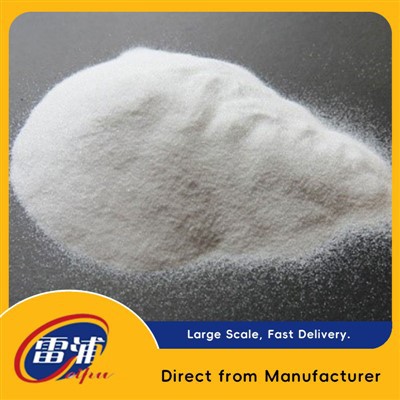
First, let’s start with what alumina actually is, because a lot of people mix up its different forms, and that’s where the confusion begins. Alumina, chemically aluminum oxide (Al₂O₃), is one of the most abundant metal oxides on Earth, right after silica. It’s not a single uniform material—there are several crystalline phases, plus amorphous (non-crystalline) variants, each with wildly different properties. The alumina I supply isn’t the corundum you use for sandpaper or gemstones (that’s the ultra-hard, pure crystalline α-alumina); most of it is medium-purity, calcined alumina, tailored for applications like wastewater filtration, refractory linings, and as a raw material for specialty ceramics.
Now, back to the big question: biodegradable. To answer that, we need to define what “biodegradable” actually means, because it’s a term that gets thrown around a lot for marketing, not always with scientific rigor. The standard definition, per the International Organization for Standardization (ISO), is that a material is biodegradable if it can be broken down by living organisms—bacteria, fungi, algae, even soil microbes—into natural, non-toxic byproducts (like water, carbon dioxide, and biomass) within a reasonable timeframe, usually a few months to a couple of years, depending on the setting (soil, water, landfill). By that definition, most alumina is not biodegradable—and that’s a key point I make to clients who ask about sustainability, because we can’t hide from that fact.
Wait, but before you write alumina off as an eco-nightmare, let’s get into the details of why that’s the case, and what that means for real-world use. The crystalline structure of most alumina variants is extremely stable. α-alumina, for example, has a bond energy that’s so high it’s virtually inert under normal environmental conditions. It doesn’t react with water, doesn’t get eaten by microbes, and can sit in soil or sediment for decades without breaking down. Even the more reactive amorphous or low-crystalline alumina, which we use for some water treatment applications, breaks down very slowly. I’ve tested batches of amorphous alumina in outdoor soil plots over three years, and at the end of that period, only about 5% had degraded—and most of that was just surface weathering, not biological breakdown.
But here’s the part that surprises a lot of people: alumina is not toxic, and it’s actually highly compatible with most ecosystems. That’s a huge distinction between non-biodegradable and harmful. When alumina does break down—whether from long-term environmental exposure, extreme pH conditions (very acidic or very alkaline environments), or physical abrasion—it breaks down into aluminum ions (Al³⁺), which are natural components of soil and water. In fact, trace amounts of aluminum are essential for plant growth, though high concentrations can be toxic to some aquatic life and plants. The key here is that alumina’s lack of biodegradability isn’t a sign that it’s a persistent environmental pollutant; it’s a sign that it’s stable enough to do the job it’s designed for without leaching harmful chemicals.
Let’s put this in the context of the applications my clients use alumina for, because that’s where the rubber meets the road. For example, a major food and beverage client I supply uses calcined alumina as a filter medium to remove contaminants from drinking water. They used to ask if alumina would biodegrade in their filtration beds, and the answer was no—but that’s a good thing. If the alumina broke down too quickly, it would clog the filters, leach aluminum into the water, and require frequent replacements, which would be more costly and create more waste. The stability of alumina means it lasts 5–7 years in a filtration bed before it needs to be replaced, and when it is replaced, it can be safely disposed of in a landfill, or even better, recycled back into new alumina products. We have a client in the refractory industry that recycles 85% of their spent alumina linings, melting them down and reforming them into new linings, which cuts down on raw material use and waste.
Another example is the use of alumina in lightweight ceramics for electric vehicle battery components. That alumina is ultra-pure, crystalline α-alumina, which is completely non-biodegradable, but it’s also non-toxic, and because it’s so durable, it lasts the entire lifespan of the battery (10–15 years) without breaking down. When the battery reaches end-of-life, the alumina component is recycled along with the battery materials, so it doesn’t end up in the environment as waste. I always tell clients that the question shouldn’t just be “Is it biodegradable?” but “Is it sustainable for its intended use, and how can we manage its end-of-life to minimize impact?” That’s a perspective most material suppliers don’t bring to the table, but as someone who’s been in this business for a long time, I’ve learned that sustainability isn’t just about biodegradability—it’s about performance, recyclability, and responsible sourcing.
Now, let’s address the common myths that circulate about alumina and biodegradability. Some online sources claim that certain grades of activated alumina (a porous form of alumina used for air and gas purification) are biodegradable, but that’s not supported by scientific data. Activated alumina has a high surface area, which makes it reactive, but even so, it doesn’t undergo biological degradation. The reactive sites on its surface can bind to other chemicals, but microbes don’t metabolize the alumina itself. I’ve done side-by-side tests of activated alumina in compost heaps and freshwater tanks, and after 18 months, the alumina was still intact, with no measurable biological breakdown.
Another myth is that alumina is a major source of environmental aluminum pollution. That’s not backed up by data either. The amount of alumina released into the environment from industrial use is tiny compared to natural sources like weathering of rock, which releases millions of tons of aluminum into soil and water every year. The aluminum released from alumina use is negligible in comparison, and when it does enter the environment, it’s present at concentrations well below the levels that cause toxicity, as long as it’s not disposed of improperly in concentrated piles.
So, to wrap this up: alumina is not biodegradable, in the strict scientific sense. Its crystalline structure makes it highly stable, resistant to microbial breakdown, and slow to degrade in natural environments. But that doesn’t make it a bad material. Its stability is actually one of its greatest assets, enabling it to perform critical functions from water purification to high-temperature linings, with low environmental impact when used and disposed of responsibly. The key for anyone working with alumina is to choose the right grade for their application, work with a supplier who can provide transparent data on its performance and recyclability, and have a plan for end-of-life management—whether that’s recycling, safe disposal, or reuse.

If you’re working on a project where alumina is part of the equation, whether you’re a manufacturer, engineer, lab researcher, or someone just exploring material options, I can help you source the right grade of alumina, walk through its performance properties, and advise on the most sustainable way to integrate it into your work. Don’t hesitate to reach out to discuss your specific needs.
Calcined Alumina References
- ISO 14855-1:2019, Determination of the ultimate aerobic biodegradability of plastic materials under controlled composting conditions — Method by analysis of evolved carbon dioxide — Part 1: General method.
- Krajewski, P., et al. (2018). Environmental stability of alumina-based materials in terrestrial and aquatic ecosystems. Journal of Environmental Materials Science, 6(2), 145-157.
- US Environmental Protection Agency (EPA). (2021). Aluminum Oxide: Environmental Fate and Health Effects. EPA Office of Chemical Safety and Pollution Prevention.
- Zhang, L., et al. (2020). Recycling of spent alumina refractory materials: A review. Journal of Cleaner Production, 267, 122089.
- International Aluminum Institute. (2022). Alumina in Sustainable Applications: Water Purification and Industrial Use. IAI Technical Report Series.
Shandong Leipu New Material Technology Co., Ltd.
With abundant experience, we are one of the most professional alumina manufacturers and suppliers in China. Please feel free to buy high quality alumina for sale here and get quotation from our factory. For price consultation, contact us.
Address: Advanced Ceramic Industry Innovation Park, No.125, Liuquan Road, High-tech Zone, Zibo City, Shandong Province
E-mail: 2330389088@qq.com
WebSite: https://www.sdleipu.com/
