If you’ve ever stood in a beverage factory planning line configuration, chances are you’ve asked a random question in a side meeting: “Can they produce screw-on metal bottle caps too?” For years, that question was a sticking point for small to mid-sized beverage brands, craft breweries, and even kombucha makers who didn’t want to juggle two separate packaging lines or outsource cap production to two different vendors. Now that I’m a line supplier for metal bottle cap production, that question comes up at least three times a week—sometimes from a brand owner testing their first run, sometimes from a line manager troubleshooting a slow secondary machine. Metal Bottle Cap Production Lines
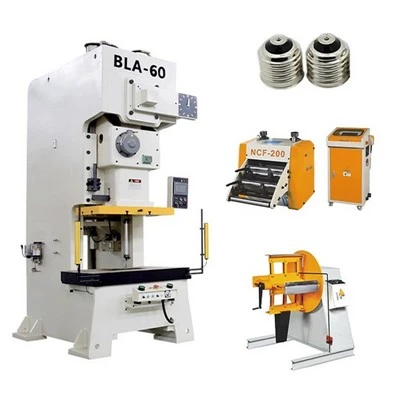
Let me start with the real, not-too-salesy truth: it’s not a yes-or-no answer. It’s a “depends on your line, your output, and your cap specs” situation, and that’s why so many people get confused about it. A lot of folks assume all metal cap lines only make pry-off crown caps (the classic soda beer cap you pry open with a bottle opener), which used to be the only thing most production lines handled. But screw-on metal caps—think the twist-off lids for craft beer, sparkling water, or even some premium iced teas—are a totally different beast, from the material thickness to the tooling needed, and that’s where the line capability matters most.
Let’s break this down. First, what’s the difference between a crown cap and a screw-on metal cap? Crown caps are thin (usually 0.28mm to 0.30mm aluminum or steel) with a crimped edge that locks around the bottle’s lip. Screw-on metal caps—often called “pilfer-proof caps” or “ropp caps” if they’re for spirits, but for beverages it’s just twist-off metal—are thicker (0.40mm to 0.50mm) with external threads, and sometimes a tamper-evident ring at the bottom that snaps off when you open it. That extra thickness and threading mean the stamping and forming tools you use for crown caps won’t work for screw-ons.
So, back to the original question: Can a line that makes crown caps switch to screw-on metal caps? Sometimes, but not always. If you already have a line from a decade ago that only does crown caps, chances are it’s not set up for the extra tooling. But if you’re buying a new line, or retrofitting an existing one, the answer is almost always yes—if you pick the right line model. Let’s talk about why that matters, because I’ve seen too many brands waste money on a line that can do both, but they didn’t know to ask for it.
First, output volume. If you’re a microbrewery doing 500 bottles an hour, you don’t need a super heavy-duty line that cranks out 60,000 an hour. The small, tabletop or semi-automatic lines most micros use can actually be adjusted to make both cap types—you just swap out the tooling set. But if you’re a mid-sized brand doing 20,000 to 40,000 an hour, you need a line that’s built to handle both cap thicknesses without slowing down. Crown cap tooling is faster because the forming is simpler; screw-on tooling takes a tiny bit more time to thread the cap, so the line has to be calibrated to handle that without jamming. That’s the part most salespeople won’t tell you—they’ll say “it does both” but omit that at high speeds, it might not run well.
Another thing: material flexibility. Some brands want to use aluminum for both cap types (it’s lighter, cheaper, and easier to print on), others want steel for screw-ons because it’s more durable for carbonated drinks. A good line will let you switch between aluminum and steel, not just between crown and screw-on. I once had a craft seltzer brand come to me because they had a line that only did aluminum crowns, and they wanted to test steel screw-ons for their new sparkling line. They tried a third-party retrofitter who messed up the forming, so their screw-ons were leaking 10% of the time. We swapped the forming stations on their existing line, and now they do both aluminum crowns for their regular seltzer and steel screw-ons for their limited-edition hard seltzer, no downtime. That’s the kind of thing that makes a big difference—avoiding the “oops” of bad caps that lead to product returns.
Wait, let’s get real about the pain points too. A lot of people think screw-on metal caps are harder to produce because of the threading, but actually, the biggest issue is consistency. If your threading is off, the cap won’t seal right—too loose, and it leaks; too tight, and the capping machine can’t get it on without breaking the cap. A well-built line will have a thread-rolling station that applies the threads uniformly, no matter if you’re doing 1,000 or 50,000 caps. That’s where cheap lines cut corners—they use a simple press to stamp the threads, which can be inconsistent for high volume. The lines we supply use a rotary thread roller, which is slower per cap but way more consistent. For most brands, that’s a trade-off worth it, because you don’t have to waste time reworking bad caps.
Now, what if you don’t want to switch tooling? Some brands prefer dedicated lines, and that works too. If you’re doing 100,000+ caps an hour, a dedicated screw-on metal cap line will run more consistently than a hybrid line that also makes crown caps. But for most of the clients I work with, especially the ones just scaling, a hybrid line is the sweet spot. You don’t have to buy two lines, you don’t have to find two vendors, and if your product line changes (say, you add a new beverage that uses screw-ons), you’re already set up to adjust.
Let me also address a common myth: Screw-on metal caps are only for premium products. No, they’re for any beverage that wants a better seal. Crown caps can pop open if the carbonation gets too high, or if the bottle is dropped. Screw-on metal caps have a tighter seal, which is why they’re used for craft beer, sparkling water, and even some sports drinks. The rise of hard seltzer and craft kombucha over the last 5 years has made screw-on metal caps way more common, so it’s not a niche product anymore. That’s why the question “Can they produce screw-on metal bottle caps too?” isn’t just a random one—it’s a question that reflects how the beverage industry is moving away from single-use, one-size-fits-all packaging.
I’ve seen this play out a lot lately. A small kombucha brand I worked with last year started with a 5,000-caps-per-hour line that only did crown caps. They grew so fast that they needed to switch to screw-ons for distribution (crown caps can pop during shipping, which ruins a batch). They thought they’d have to buy a whole new line, but we retrofitted their existing line with screw-on tooling for less than 20% of the cost of a new line. Now they do both: crown caps for their local farmers market runs, screw-ons for wholesale. That’s the kind of scalability brands need, especially when they’re just starting out.
Of course, there are limits. If you’re looking to make specialty screw-on caps, like those with custom engravings or a special tamper ring, that’s going to add to the cost, and you might need a line that’s built for more customized tooling. But for standard screw-on metal caps—threaded, tamper-evident, the kind you see on most craft beverages—any good line can handle it, as long as you specify it upfront. I can’t tell you how many times a client comes back and says, “Oh, I forgot to ask if it does screw-ons,” and then they have to spend extra money to adjust. That’s why when someone asks, I don’t just say yes or no—I walk them through their output, their product specs, and what they actually need.
Another angle: waste. If you’re producing both cap types, a hybrid line cuts down on material waste too. If you have two separate lines, you might have leftover metal sheets for crown caps that can’t be used for screw-ons, or vice versa. A good hybrid line uses the same metal coils for both, so you can switch between cap types without wasting excess material. For small brands with tight margins, that adds up.
Let’s wrap this up, because I know a lot of you reading this are line managers or brand owners trying to make a decision. The short answer: Yes, most modern metal bottle cap production lines can produce screw-on metal caps too. The long answer is that it depends on your line’s age, output, tooling, and whether you’re willing to adjust for swapping cap types. If you’re buying a new line, look for one advertised as “multi-cap compatible”—that’s the shorthand for it doing both crown and screw-on. If you’re retrofitting an old line, check with a supplier like me to see if the tooling can be swapped, and don’t skip the test run before you commit.
If you’re still on the fence, the last thing I’ll say is this: The question “Can they produce screw-on metal bottle caps too?” isn’t just about capabilities. It’s about future-proofing. Brands that start with a line that can adapt are the ones that grow fast, because they don’t have to hit a ceiling and scramble to upgrade their packaging. We’ve built lines for brands that started with 1,000 caps an hour and now do 50,000, all because their line could switch between cap types as they expanded.
If you’re shopping around, don’t be shy about asking the hard questions. Don’t just ask “Does this line make screw-on caps?” Ask “At my output rate, how consistent will the caps be?” “How much downtime is there when switching between cap types?” “Can it handle aluminum and steel?” Those are the questions that will save you money and headaches down the line.

If you’re ready to talk through your needs, I’m here to help. We’ve worked with every kind of beverage brand, from micros to mid-sized, and we can point you to the right line, whether you need a hybrid setup, a dedicated screw-on line, or a retrofit for your existing equipment. Don’t wait until you’re months away from a product launch and realize your line can’t do what you need—reach out to chat through the details.
Metal Can Production Line References:
- Beverage Packaging Association. (2022). Global Metal Cap Market Trends and Capability Standards.
- International Society of Beverage Technologists. (2021). Metal Cap Manufacturing: Tooling and Process Best Practices.
- Small Beverage Business Association. (2023). Scalable Packaging Solutions for Emerging Brands.
- Industrial Machinery Digest. (2022). Retrofit vs. Replacement: Cost and Efficiency for Metal Cap Lines.
Yantai Kunpeng Packaging Co., Ltd.
As one of the most professional metal bottle cap production lines manufacturers in China, our products have good reputation in the market. Please rest assured to buy advanced metal bottle cap production lines made in China here from our factory. Contact us for more details.
Address: Donggou Community, Laishan District, Yantai City, Shandong Province, China
E-mail: sales@kunpeng-packequip.com
WebSite: https://www.kunpeng-packequip.com/
