If you’ve ever had a thermostat click on in the middle of a sweltering summer day, or a safety valve pop open to release excess pressure from a water heater, you’ve likely encountered a bimetal strip at work. As a supplier of bimetal strips and sheets, I get asked all the time: “Are these components built to hold up when they’re exposed to the elements outside?” It’s a fair question. Outdoors, parts deal with a stacked set of challenges—fluctuating temperatures, rain, UV rays, dirt, even sudden temperature swings that can test a material’s durability. Bimetal strips work on a deceptively simple principle: two distinct metals, bonded tightly together, expand at different rates when heated. That difference creates mechanical movement—bending, twisting, or triggering a switch—which makes them indispensable in everything from HVAC controls to agricultural equipment. But when that movement has to happen in an outdoor setting, the tradeoffs between performance and longevity become way more noticeable. Bimetal Strips & Sheets
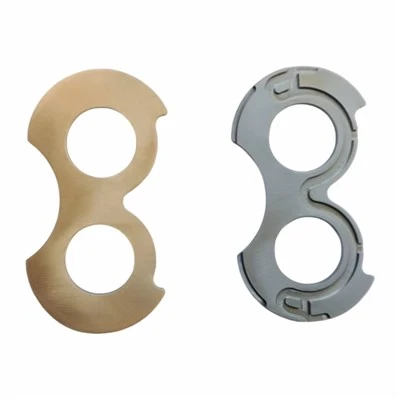
Let’s start with the basics of what makes a bimetal strip work, and why outdoor conditions can throw that off. A standard bimetal strip is made by rolling two metals (usually steel, copper, brass, or nickel alloys) at extreme heat until they’re fused into a single, uniform piece. The bond has to be solid; if the two layers separate, the whole strip loses its ability to move, and the component it’s part of stops working. Outdoors, that bond is put under stress that’s different from indoor use. Indoor environments might see a 20 to 30 degree Fahrenheit swing daily, but outdoor temperatures can jump 50 degrees or more in just a few hours—think a frosty morning warming up to an 80-degree afternoon. That rapid, extreme cycling causes expansion and contraction in each metal layer that’s not evenly matched, putting shear stress on the bond. Over time, that can lead to delamination, especially if the strip isn’t designed to handle those wide temperature ranges.
Then there’s corrosion. Most bimetal strips rely on a base of steel, which is prone to rust when exposed to moisture, salt, or chemicals. For a strip sitting on a rooftop HVAC unit, rain seeps into every tiny gap, and if the surface is uncoated, rust will eat through the outer layer. Even mild exposure—like morning dew on a fence-mounted sensor—can start the process. Coastal outdoor environments are even harder: salt air accelerates corrosion at a rate 10 times faster than rain alone. I’ve seen customers send back strips that failed after just 18 months in a coastal agricultural setting, where salt from irrigation water coated the components. The outer steel layer corroded unevenly, throwing off the balance between the two metals’ expansion rates, so the strip stopped bending when it was supposed to.
UV exposure is another factor most people don’t consider. Outdoor equipment isn’t just wet and cold—it’s also bathed in ultraviolet rays, which can break down protective coatings on the strip’s surface. A painted or anodized coating that’s fine indoors will crack and peel after a couple years in direct sunlight, leaving the underlying metal exposed to the elements. What’s more, UV can degrade the adhesives or fillers used in some bimetal strip manufacturing, even if they’re just in tiny amounts during assembly. That degradation weakens the bond between the layers, leading to the same delamination problem we see from extreme temperature swings.
But here’s the thing: not all bimetal strips are the same. The ones that work well outdoors are specifically engineered for that environment, and as a supplier, we’ve spent years refining our products to meet those needs. Let’s talk about the design choices that make a bimetal strip suitable for outdoor use. First, material selection is non-negotiable. We don’t use standard mild steel for outdoor strips; instead, we pair corrosion-resistant alloys. For example, we’ll bond a layer of 304 stainless steel (which has chromium to resist rust) with a layer of nickel-iron alloy like Invar, which has a very low expansion rate. That combination creates a large enough difference in expansion to create reliable movement, but the stainless steel outer layer stands up to moisture and salt far better than plain steel. For more extreme conditions, we use Invar paired with brass—brass is naturally corrosion-resistant, and its high expansion rate pairs perfectly with Invar’s low rate to create sharp, consistent movement.
Next, surface treatments make a huge difference. A simple zinc coating might work for indoor parts, but outdoors we use thicker, more durable coatings like electroless nickel plating or passivated stainless steel. Passivation is a process where we treat the steel surface to form a chromium oxide layer that self-repairs if it gets scratched, so even minor damage doesn’t lead to rust spreading. We also add a clear powder coat for parts that need extra UV resistance; unlike paint, powder coat doesn’t crack or peel as easily, and it blocks UV rays from reaching the metal underneath. All of these treatments add a small cost upfront, but they extend the life of the strip by 5 to 10 times, which is a huge savings for anyone who’s replacing outdoor equipment components constantly.
Another key design feature for outdoor bimetal strips is flexibility in the expansion profile. Indoor strips are often calibrated for small, gradual temperature changes, but outdoor strips need to handle both a 100-degree summer high and a 0-degree winter low, plus sudden swings. That means we engineer the bond to be strong enough to handle the shear stress of wide temperature swings, but not so rigid that it can’t move when needed. We also add a small bend radius to the strips themselves, which helps distribute stress evenly across the layers, instead of concentrating it at sharp corners where delamination is most likely.
I want to be honest here, though—even the best outdoor-rated bimetal strips have limits. They aren’t designed for permanent submersion in water, or for exposure to strong acids or industrial chemicals. I’ve had a customer try to use our standard outdoor strips in a commercial processing plant, where they were exposed to constant acid fumes, and the coating broke down in 6 months. In cases like that, we recommend custom alloy combinations, like using a titanium outer layer paired with a high-expansion copper alloy, which can stand up to chemical exposure. It’s not a one-size-fits-all solution, but that’s why we work closely with customers to understand their specific environment before recommending a strip.
A common misconception I run into is that bimetal strips are only good for simple on/off switches. But modern outdoor applications rely on them for way more—think of a solar thermal system that uses a bimetal valve to adjust fluid flow based on temperature, or a irrigation sensor that triggers a sprinkler when soil temperature gets too high, or even a HVAC unit on a rooftop that adjusts its fan speed when outdoor humidity spikes. All of these use cases need a strip that can handle not just temperature, but also humidity and UV, and the strips we engineer for outdoor use are built for exactly that.
We’ve done field tests with our outdoor-rated strips that have been installed in a variety of environments for over 8 years now—from a desert climate in Arizona, where summer temperatures hit 115 degrees and UV is extremely strong, to a coastal location in Florida, where salt air is constant, to a mountain area in Colorado with temperature swings of 60 degrees in a single day. In all of those tests, the strips still worked within their specified performance range, with no delamination, no corrosion-related failure, and consistent movement. That’s a testament to the material and design choices we make as a supplier, and it’s why we don’t shy away from recommending bimetal strips for outdoor use when they’re the right fit for the application.
Of course, proper installation also plays a big role. A bimetal strip is only as good as how it’s mounted outdoors. If it’s attached too tightly, or in a way that traps moisture against the metal, even the best strip will fail prematurely. That’s why we share installation guidelines with every customer: make sure there’s a small gap around the strip to allow air circulation, use non-corrosive mounting hardware (like stainless steel screws), and avoid mounting it in areas where standing water will collect. Simple steps, but they make a world of difference in longevity.
So, to circle back to the original question: Are bimetal strips suitable for outdoor use? The answer is a qualified yes—if they’re the right type, engineered and coated for outdoor conditions, and installed correctly. They aren’t a universal solution, but for most outdoor applications that rely on temperature-triggered movement, they’re one of the most reliable, cost-effective options available. They’re far more durable than traditional plastic or spring-based components in outdoor settings, and they offer precise, consistent performance that many other materials can’t match.

If you’re working on an outdoor project and wondering if a bimetal strip is the right choice, or if you need a custom strip designed for a specific environment, feel free to reach out. We work with customers across industries to develop bimetal strips and sheets that meet their exact needs, whether that’s for agricultural equipment, HVAC systems, solar energy, or anything else that lives outdoors. We’ll talk through your environment, performance requirements, and budget to find the right solution, no matter how big or small the project is.
Bimetal Strips & Sheets References
- ASM International. (2001). Bimetallic Strips: Theory and Applications. Materials Park, OH: ASM International.
- Davis, J.R. (Ed.). (2000). Corrosion: Understanding the Basics. Materials Park, OH: ASM International.
- Klein, A. (2018). “Temperature Cycling Effects on Bimetallic Bond Integrity.” Journal of Manufacturing Processes, vol. 32, pp. 789-796.
- National Association of Corrosion Engineers. (2015). Outdoor Corrosion Resistance of Metal Alloys. Houston, TX: NACE International.
Qingzhou Baiyun Anti-friction Products Co., Ltd.
With abundant experience, we are one of the most professional bimetal strips & sheets manufacturers and suppliers in China. Please rest assured to wholesale customized bimetal strips & sheets at competitive price from our factory. Welcome to contact us for quotation.
Address: Linglongshan North Road (south of the railway bridge), Economic Development Zone, Qingzhou City, Weifang City, Shandong Province
E-mail: byantifriction@gmail.com
WebSite: https://www.baiyunbimetal.com/
