Hey everyone, and welcome back to the shop floor! I’m Jake, one of the guys who’s been selling hydraulic plugs out of this warehouse for the last eight years—funny enough, I still get asked this question at least three times a week: “What even is a hydraulic plug?” If you’re here because you saw a part number on a parts list and Googled it, or if you’re a new mechanic wondering why your boss keeps yelling about sealing a port, this post’s for you. No stuffy textbook jargon, just straight talk, real-world examples, and why the ones we stock aren’t like the cheap stuff you’ll find at the big-box hardware store. Hydraulic Plug
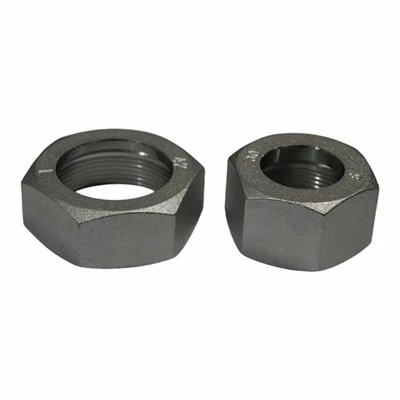
First off, let’s cut through the confusion. A hydraulic plug is a simple little part, but it’s got one huge job: sealing off unused ports, holes, or fittings in a hydraulic system so fluid doesn’t leak out and contaminants don’t get in. Wait, but why not just use a regular old pipe plug or a bolt? Oh, that’s the thing—hydraulic systems run at way higher pressures than your home’s plumbing, like, hundreds to thousands of PSI, and they’re way more finicky about debris. A regular pipe plug might work for a low-pressure garden hose, but crank that up to 3,000 PSI in a construction excavator’s lift arm, and that flimsy plug will blow out faster than a bad tire on the highway.
Let me break down the types you’ll actually run into. The most common ones we sell are NPT plugs—National Pipe Thread, right? These are tapered, so when you twist them into a threaded port, the threads get tighter as you go, creating a metal-to-metal seal if you get them tight enough. But wait, don’t over-tighten them, or you’ll strip the threads, and that’s a headache you don’t want. Then there’s O-ring face seal (ORFS) plugs—these are flat on the end, with a groove for an O-ring, so the seal comes from the O-ring squishing against the face of the port, not the threads. Those are great for higher pressures and applications where you take ports apart a lot, because you don’t have to fight tapered threads every time. We also have ball plugs for some specialized systems, like those in aerospace or heavy machinery where you need a super secure, no-leak seal without even threading—they use a ball that gets pressed into a machined seat.
Now, here’s where a lot of people mess up: hydraulic systems are a team, every part has to play nice. A leak in a hydraulic plug doesn’t just mean a puddle on the floor—if you’re running a crane that lifts 20 tons, a slow leak in a plug on the boom’s cylinder could lead to a sudden drop, or if you’re on a farm, a leaking plug on your tractor’s hydraulics means you’re not powering your plow or baler. And contaminants? Hydraulic fluid is basically the blood of the system—if dirt, metal shavings, or moisture get in, they’ll wear out pumps, valves, and cylinders way faster than anything else. A good hydraulic plug keeps that blood clean and where it’s supposed to be.
Let me tell you a story that stuck with me a few years back. We had a guy come in panicking at 2 p.m. on a Friday—his construction company had a crane on a job site 45 minutes away, and one of the plugs on the swing cylinder blew out mid-lift. They had a cheap plug from the local hardware store, tried to use that, and it couldn’t handle the 4,500 PSI the system runs at. He needed a replacement stat, and he grabbed an NPT plug from our heavy-duty line. We drove it over to the job site ourselves, and that crane was back up and running by the end of the day. That’s the difference: our plugs are rated for those pressures, made from heat-treated steel, not the soft cast iron that bends or blows out.
Another thing people don’t always realize is that hydraulic plugs aren’t one-size-fits-all. You’ve got to match the size, thread pitch, and pressure rating to the port and system. If you’re working on a John Deere tractor, the plug for the hydraulic ports is way different from the one for a Komatsu mining excavator. We stock over 200 different sizes and types here, so no matter what you’re working on, we’ve got something that fits. I’ve even had guys come in with a port they measured, and I can grab a plug off the shelf in 10 seconds.
Wait, let’s talk about common mistakes we see. Number one: using a regular plug from the hardware store. Like I said, those are made for low pressure, often not even rated for hydraulic use. Number two: over-tightening. A lot of mechanics think if a little is good, more is better, but that strips threads, cracks the plug, or breaks the port housing, which is way harder and more expensive to fix than just a leaking plug. Number three: not checking for O-rings or seals. If you’re using an ORFS plug, a worn O-ring means a leak, just like a flat tire. We always include a spare O-ring with every ORFS plug we sell, and I tell every customer to stock a few extras—better to swap a $0.50 O-ring than a $500 plug or worse, a whole cylinder.
I get asked too, “Can I reuse a hydraulic plug?” Sometimes, but not always. If you take a plug out, check the threads for stripping, the seal (O-ring or whatever) for cracks or wear, and the plug itself for dents. If it looks good, you can reuse it, but if it’s got any damage, chuck it and grab a new one. Cheaper than dealing with a leak down the line.
Now, why should you care who you buy your hydraulic plugs from? Like I said earlier, there’s a ton of cheap stuff out there. We test every batch of plugs we get here—we pressure test them up to 150% of their rated PSI to make sure they don’t blow out. A lot of the no-name plugs you’ll find online or at discount stores skip that step, so a plug that says it’s rated for 3,000 PSI might blow at 2,500, which is exactly when you don’t want it to. We also have guys here who know their stuff—if you walk in and tell me what system you’re working on, I can tell you exactly which plug you need, no guesswork. I’d rather you grab the right plug the first time than have to come back next week because you bought the wrong size or wrong pressure rating.
Let me wrap this up so it’s not a super long read, but here’s the main takeaway: a hydraulic plug isn’t just a random bolt with a hole in it. It’s a critical component that keeps your hydraulic system safe, efficient, and working. Whether you’re a mechanic on a construction site, a farmer fixing your tractor in the barn, or a machinist working on industrial equipment, don’t cut corners on these. The cheap plug might save you $2 today, but it could cost you thousands in downtime, repairs, or even safety issues.

If you’re in the market for hydraulic plugs, whether you need one for a quick fix or a bulk order for a fleet of machines, hit us up to chat. We can help you pick the right type, size, and pressure rating for your specific system, no pressure, no confusing sales talk. Just guys who know hydraulics and want you to get the job done right.
Screw Nut References:
Hydraulic Seals and Components Handbook, 2nd Edition, Fluid Power Society, 2019
National Pipe Thread (NPT) Standards, American National Standards Institute (ANSI) B2.1, 2020
Hydraulic System Maintenance Guidelines, Occupational Safety and Health Administration (OSHA), 2021
Yuyao Huiqiang Fluid Connectors Co., Ltd.
As one of the most professional hydraulic plug manufacturers and suppliers in China, we also support customized service with low price. Please feel free to wholesale cheap hydraulic plug in stock here from our factory. Welcome to view our website for more information.
Address: No. 102, Wenwei Road, Zhangting Town, Yuyao City, Ningbo City, Zhejiang Province
E-mail: huiqiangliuti@aliyun.com
WebSite: https://www.huiqiangfitting.com/
