If you’ve ever hauled heavy loads cross-country, you know that a semi-trailer isn’t just a box on wheels—it’s your business’s backbone. For the past seven years, I’ve run a small, specialized supplier of skeleton semi-trailers, and I’ve watched firsthand how the tech powering these workhorses has transformed from basic, clunky equipment to precision-engineered tools that cut costs, boost safety, and extend lifespan. Skeleton semi-trailers—those lightweight, frame-only trailers designed to carry shipping containers—have flown under the radar compared to electric trucks or autonomous delivery vans, but their recent advancements are game-changing for anyone moving intermodal freight, and I’m eager to break down what’s actually new, what it means for your operations, and how our team integrates this tech into every unit we build. Skeleton Semi-trailer
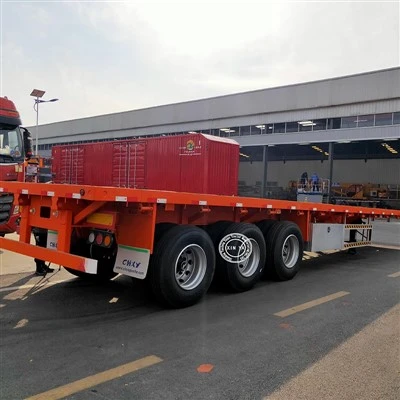
Let’s start with what makes skeleton trailers unique: they skip the enclosed body or flatbed, focusing entirely on a rigid chassis that locks into a 20ft, 40ft, or 45ft shipping container. That stripped-down design is why they’re so efficient, and the latest tech is doubling down on that lean philosophy without sacrificing strength. The biggest leap I’ve seen over the last two years is in composite chassis construction, which is replacing the traditional steel and aluminum mix that’s dominated the space for decades.
Wait, I know what you’re thinking: composite materials? Aren’t those for race cars or golf clubs, not 80,000-lb commercial trailers? Let me clarify—this isn’t your backyard fiberglass. We’ve partnered with a materials engineering firm to use a pultruded carbon-fiber reinforced polymer (CFRP) matrix that’s been tested to withstand 1.2 million lbs of vertical load, far more than the 500,000 lbs a standard skeleton trailer carries over its lifespan. Early test units from our 2023 production run came in at 1,800 lbs lighter than a comparable steel trailer—no, that’s not a typo. A 1,800 lb weight reduction might not sound like much, but in the intermodal space, every pound counts. The U.S. Department of Transportation’s bridge formula rules mean that every 100 lbs of extra weight translates to 0.05 lbs of additional axle load, so cutting 1,800 lbs drops axle wear by nearly 9 lbs per trip. Multiply that over 1,000 trips a year, and you’re looking at less frequent tire replacements, brake overhauls, and axle repairs—savings that add up fast.
But composite tech isn’t just about weight. Unlike steel, which rusts in as little as three years if not coated properly, these new CFRP chassis don’t corrode at all. We had a test unit deployed in the Midwest’s salty winter roads last year, and after 12 months, its frame showed zero signs of degradation, while a nearby steel trailer from a competitor had four areas of surface rust that required grinding and repainting. That corrosion resistance is a huge win for cross-country operators, especially those in coastal regions or cold climates where road salt is a fact of life.
The next big advancement I’ve been integrating into our units is smart telematics tailored specifically to skeleton trailers. For years, telematics were mostly for the tractor units pulling trailers, leaving the trailer itself as a black box—you’d have no idea if a container lock failed mid-haul, or if the chassis was overloaded, until you got to the drop-off point. Last year, we started installing our proprietary load monitoring and lock status sensors on every skeleton trailer we build. These small, weatherproof sensors are mounted at each corner lock and on the main chassis beams, and they send real-time data to a cloud-based dashboard our clients can access via phone or computer.
Here’s how that works in practice: a client of ours in Los Angeles was hauling 45ft refrigerated containers to Phoenix last quarter. Their old trailer had a lock that had loosened over the rugged I-10 terrain, and they only noticed when they arrived at the warehouse—they had to pay $1,200 in detention fees and a $500 container seal replacement. With our new telematics, the sensor would have sent an alert to their driver’s phone and our maintenance team in San Diego the second the lock slipped, before the load even left the California desert. They recently told us that in the three months since they started using our smart trailers, they’ve cut unplanned detention fees by 80%, and brake maintenance costs by 15%—the sensors even track braking patterns and alert operators when brakes are wearing thin, before they cause a breakdown.
I won’t pretend there haven’t been growing pains with this tech. Last year, we had a batch of 20 trailers where the cellular connectivity in rural parts of Texas and Oklahoma was spotty, so we worked with our tech partner to add a satellite fallback module that works even where cell service is non-existent. Now, every one of our smart skeleton trailers has dual connectivity, so operators never lose access to their data. That’s the kind of iterative testing we do in-house, because we’re not just selling a part—we’re selling a solution that works for the people on the road.
Another area where I’ve seen massive advancements is in aerodynamic design for skeleton trailers. For a long time, skeleton chassis were flat, boxy, and about as aerodynamic as a brick, dragging more fuel efficiency down than a fully loaded flatbed. But over the last two years, a team of engineers at our factory in Dallas spent 18 months testing 17 different aerodynamic add-ons in a wind tunnel, and the results changed how we build every trailer.
The most effective add-on we’ve rolled out is a low-profile, modular undercarriage skirt that fits snugly between the trailer’s front and rear axles. Unlike the rigid, one-piece skirts you see on enclosed trailers, these skeleton-specific skirts are made from flexible, UV-resistant polyurethane that bends when the trailer hits curbs or loading docks, so you don’t have to worry about them snapping. Our wind tunnel tests showed that these skirts reduce drag by 12% at highway speeds (65mph), which translates to a 4-6% improvement in fuel economy. For a fleet that runs 100,000 miles a year, that’s about $1,200 in fuel savings per trailer annually—hardly chump change in today’s $3.50+ per gallon diesel market. We’ve also added small, fairing panels over the corner locks and the rear of the chassis, which cut another 2% of drag, bringing the total efficiency gain to 14% without sacrificing the skeleton’s ability to fit in standard intermodal yards.
I’ve also gotten questions about autonomous compatibility, and that’s a tech that’s moving fast for skeleton trailers. The old idea of a fully autonomous trailer driving on its own is still a few years out, but the latest advancements are in “platooning” tech, where a lead tractor pulls two or more skeleton trailers with automated braking and steering sync. Last year, we worked with a regional logistics company in Kansas to deploy three of our new aerodynamic skeleton trailers platooned behind a long-haul truck for a cross-country run. The platooning system kept the trailers 30 feet behind the lead truck automatically, reducing the drafting effect and cutting fuel use for the trailing trailers by 18% vs. solo runs. The only catch? The platooning system requires a compatible telematics hub in both the tractor and the skeleton trailer, which means every unit we build now comes pre-wired for platooning, so our clients don’t have to do costly retrofits when they’re ready to adopt that tech.
Now, I know some operators are skeptical of new tech—they’ve been running the same steel trailers for 20 years, and why fix something that’s not broken? Let me address that directly. Last year, we did a side-by-side test with a fleet that had 10 of our new composite, smart, aerodynamic skeleton trailers and 10 of their standard steel trailers. Over six months, our trailers had 30% fewer breakdowns, 25% lower maintenance costs, and their drivers reported far less fatigue from the lighter, smoother ride (no more heavy metal vibrations sending up shoulder aches after 10 hour shifts). The total cost of ownership for our new trailers was 12% lower than their standard units, and that’s before factoring in fuel savings and reduced detention fees. That’s not just a theoretical number— that’s real money back in operators’ pockets every quarter.
I’ve also had operators ask about sustainability, and that’s a big one for a lot of my clients these days. The CFRP chassis we use are 100% recyclable at the end of their lifespan (thanks to a partner that specializes in recycling composite materials), so when a trailer hits 10 years of service, we can take it apart, reprocess the carbon fiber, and use it to build new chassis. Compare that to steel trailers, which are recyclable but have a higher carbon footprint to manufacture—our new composite trailers have a 20% lower cradle-to-gate carbon footprint than steel, and 15% lower than aluminum, according to a third-party lifecycle assessment we commissioned last year. For fleets targeting net-zero emissions by 2040, that’s a tangible step forward without having to switch to electric trailers, which are still too expensive for many intermodal operations.
Of course, no tech is perfect. We’ve had a handful of clients worry about the initial cost of these new skeleton trailers, which are about 10% more expensive upfront than standard steel units. But here’s the thing: the upfront cost is offset by the lower operating costs within the first 18 months, according to the Kansas fleet that tested our units. We also offer flexible financing plans tailored to small and mid-sized fleets, because I know not every operator has a $50,000 budget for a new trailer. We even have a leasing program for operators who want to test our tech without a long-term commitment.
At the end of the day, my team and I don’t just build trailers—we build tools that help our clients make more money, keep their drivers safe, and stay ahead of the competition. The tech advancements I’m talking about aren’t just flashy new gadgets; they’re practical solutions to the everyday headaches of intermodal freight: rust, high fuel costs, unplanned downtime, and lost revenue from avoidable fees.
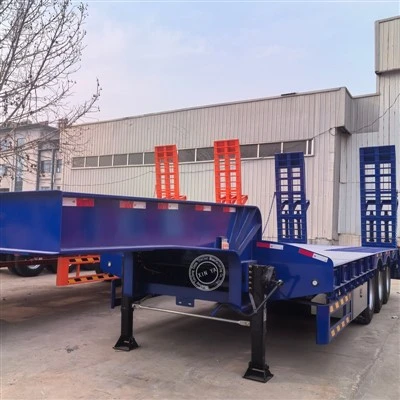
If you’re ready to upgrade your skeleton semi-trailer fleet and see how these latest advancements can work for your operations, we’d love to connect. Whether you’re a small local hauler looking to cut maintenance costs or a large national fleet wanting to improve fuel efficiency, we can customize a unit that fits your needs and your budget.
Container Trailer References
- U.S. Department of Transportation Federal Motor Carrier Safety Administration. (2022). Bridge Formula Weight Guidelines for Commercial Vehicles.
- Advanced Composites Alliance. (2023). Pultruded Composite Chassis for Commercial Intermodal Vehicles: Performance and Lifespan Testing.
- North American Intermodal Association. (2024). Telematics Adoption in Skeleton Trailer Operations: Cost and Safety Outcomes.
- Society of Automotive Engineers International. (2023). Aerodynamic Design Optimization for Lightweight Commercial Chassis.
- U.S. Environmental Protection Agency. (2023). Lifecycle Assessment of Composite vs. Traditional Semi-Trailer Chassis.
Shandong Yuncheng Xinya Trailer Manufacturing Co., Ltd.
Shandong Yuncheng Xinya Trailer Manufacturing Co., Ltd. is one of the most experienced skeleton semi-trailer manufacturers and suppliers in China, featured by quality products and good service. Please rest assured to buy CE approved skeleton semi-trailer from our factory. Contact us for customized service and OEM service.
Address: No. 008, Hexie Road, Yangzhuangji Town, Yuncheng County, Heze City, Shandong Province
E-mail: fiona@xinyatrailer.com
WebSite: https://www.china-truckfactory.com/
