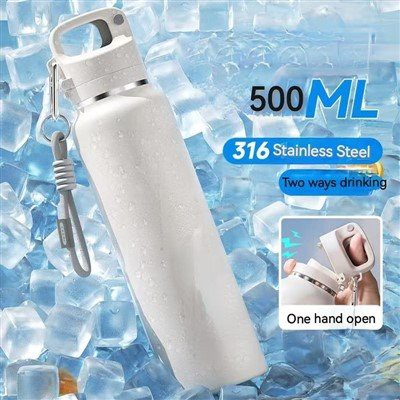
When it comes to choosing a water bottle, the material plays a crucial role in determining its durability, weight, and overall performance. Two popular materials for water bottles are titanium and aluminum. As a titanium water bottle supplier, I have a deep understanding of the unique properties of titanium and how it compares to aluminum. In this blog post, I will delve into the strength aspects of titanium and aluminum water bottles, exploring their differences and advantages. Titanium Water Bottle
Understanding the Basics: Titanium and Aluminum
Titanium is a chemical element with the symbol Ti and atomic number 22. It is a transition metal known for its high strength-to-weight ratio, corrosion resistance, and biocompatibility. Titanium is widely used in various industries, including aerospace, medical, and sports equipment. On the other hand, aluminum is a chemical element with the symbol Al and atomic number 13. It is a lightweight metal that is highly malleable and ductile. Aluminum is commonly used in the manufacturing of beverage cans, automotive parts, and construction materials.
Strength Comparison: Titanium vs. Aluminum
One of the key factors to consider when comparing the strength of titanium and aluminum water bottles is their tensile strength. Tensile strength is the maximum amount of tensile stress that a material can withstand before breaking. Titanium has a higher tensile strength than aluminum, which means it can withstand more force without deforming or breaking. This makes titanium water bottles more resistant to impacts and dents, making them a better choice for outdoor activities and rough handling.
Another important aspect of strength is the yield strength, which is the stress at which a material begins to deform plastically. Titanium also has a higher yield strength than aluminum, which means it can withstand more stress before it starts to deform permanently. This makes titanium water bottles more durable and long-lasting, as they are less likely to develop cracks or fractures over time.
In addition to tensile and yield strength, the hardness of a material is also an important factor to consider. Hardness is a measure of a material’s resistance to scratching, abrasion, and indentation. Titanium is harder than aluminum, which means it is more resistant to scratches and wear. This makes titanium water bottles look better for longer, as they are less likely to show signs of damage or wear and tear.
Weight Comparison: Titanium vs. Aluminum
While titanium is stronger than aluminum, it is also heavier. The density of titanium is approximately 4.5 g/cm³, while the density of aluminum is approximately 2.7 g/cm³. This means that a titanium water bottle of the same size and capacity will weigh more than an aluminum water bottle. However, the weight difference may not be significant for most users, especially if they are using the water bottle for everyday activities.
Corrosion Resistance: Titanium vs. Aluminum
Another important factor to consider when comparing titanium and aluminum water bottles is their corrosion resistance. Corrosion is the process by which a metal is gradually destroyed by chemical reactions with its environment. Titanium is highly resistant to corrosion, even in harsh environments such as saltwater and acidic solutions. This makes titanium water bottles ideal for outdoor activities and travel, as they can withstand exposure to various elements without rusting or corroding.
Aluminum, on the other hand, is also resistant to corrosion, but it is not as resistant as titanium. Aluminum forms a thin layer of oxide on its surface, which protects it from further corrosion. However, this oxide layer can be damaged by scratches or abrasion, which can expose the underlying metal to corrosion. This means that aluminum water bottles may require more maintenance and care to prevent corrosion.
Biocompatibility: Titanium vs. Aluminum
Biocompatibility is the ability of a material to interact with living tissues without causing any adverse reactions. Titanium is highly biocompatible, which means it is safe to use in contact with the human body. This makes titanium water bottles a popular choice for people who are sensitive to certain metals or have allergies.
Aluminum, on the other hand, is not as biocompatible as titanium. Aluminum can leach into the water stored in the bottle, especially if the bottle is exposed to acidic or alkaline solutions. This can be a concern for people who are sensitive to aluminum or have health issues related to aluminum exposure.
Cost Comparison: Titanium vs. Aluminum
The cost of a water bottle is an important factor to consider for most users. Titanium water bottles are generally more expensive than aluminum water bottles. This is because titanium is a more expensive material to produce and process. However, the higher cost of titanium water bottles is offset by their superior strength, durability, and corrosion resistance.
Conclusion
In conclusion, titanium water bottles are stronger, more durable, and more corrosion-resistant than aluminum water bottles. While they are heavier and more expensive, they offer superior performance and longevity. If you are looking for a water bottle that can withstand rough handling, outdoor activities, and harsh environments, a titanium water bottle is the better choice.
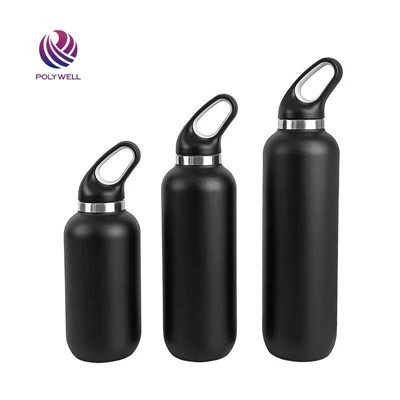
As a titanium water bottle supplier, I am committed to providing high-quality products that meet the needs of our customers. Our titanium water bottles are made from the highest quality titanium, ensuring maximum strength and durability. We offer a wide range of sizes and styles to choose from, so you can find the perfect water bottle for your needs.
Stainless Steel Water Bottle If you are interested in purchasing titanium water bottles for your business or personal use, please contact us to discuss your requirements. We would be happy to provide you with more information and answer any questions you may have.
References
- ASM Handbook Volume 2: Properties and Selection: Nonferrous Alloys and Special-Purpose Materials. ASM International.
- Callister, William D., Jr. Materials Science and Engineering: An Introduction. John Wiley & Sons, Inc.
- Shackelford, James F. Introduction to Materials Science for Engineers. Pearson Education, Inc.
Polywell International
Polywell International is one of the most professional titanium water bottle manufacturers and suppliers in China, featured by quality products and good price. Please rest assured to buy advanced titanium water bottle made in China here and get quotation from our factory. Customized orders are welcome.
Address: Building 3, Chengzhou Industrial Zone, No.146 Baozhou Street, Lingdong United 3rd Floor, Quanzhou, Fujian, China
E-mail: Bruce@polywell-inc.com
WebSite: https://www.cndrinkware.com/
