As a supplier of Inconel Coil, I’ve witnessed firsthand the profound impact that the microstructure of Inconel Coil can have on its performance and applications. In this blog, I’ll delve into the various effects of microstructure on Inconel Coil, exploring how different microstructural features influence its mechanical, physical, and chemical properties. Inconel Coil

1. Microstructure Basics of Inconel Coil
Inconel is a family of nickel – chromium – based superalloys known for their excellent corrosion resistance, high – temperature strength, and oxidation resistance. The microstructure of Inconel Coil is complex and can be influenced by factors such as alloy composition, heat treatment, and manufacturing processes.
Typically, the microstructure of Inconel Coil consists of a matrix phase, which is usually a face – centered cubic (FCC) nickel – based solid solution. In addition to the matrix, there are often secondary phases such as carbides, intermetallic compounds, and precipitates. These secondary phases play a crucial role in determining the properties of the Inconel Coil.
2. Effects on Mechanical Properties
Strength and Hardness
The presence of secondary phases like carbides and intermetallic compounds can significantly enhance the strength and hardness of Inconel Coil. Carbides, for example, act as barriers to dislocation movement. When a load is applied to the coil, dislocations are impeded by these hard carbide particles, making it more difficult for the material to deform. This results in an increase in the yield strength and ultimate tensile strength of the Inconel Coil.
Heat treatment processes can also be used to control the precipitation of these secondary phases. For instance, aging heat treatment can cause the formation of fine – scale precipitates in the matrix, which further strengthen the material through a mechanism known as precipitation hardening. This is particularly important in applications where high strength is required, such as in aerospace components and power generation equipment.
Ductility and Toughness
While the presence of secondary phases can increase strength, it can also have an impact on ductility and toughness. In some cases, an excessive amount of hard and brittle secondary phases can reduce the ductility of the Inconel Coil. This is because these phases can act as crack initiation sites under stress. However, proper heat treatment and control of the microstructure can help balance strength and ductility.
For example, a well – designed heat treatment process can ensure that the secondary phases are uniformly distributed and have an appropriate size and shape. This can improve the toughness of the Inconel Coil by allowing it to absorb more energy before fracture. In applications where the coil may be subjected to impact or cyclic loading, good ductility and toughness are essential to prevent catastrophic failure.
3. Effects on Corrosion Resistance
Grain Boundary Corrosion
The microstructure of Inconel Coil can have a significant impact on its corrosion resistance. Grain boundaries are regions where the crystal structure changes, and they can be more susceptible to corrosion compared to the grain interiors. In some cases, the presence of certain elements at the grain boundaries can lead to the formation of corrosion – prone phases.
For example, in Inconel alloys, the formation of chromium – depleted zones at the grain boundaries can occur during certain heat treatment processes. These chromium – depleted zones are more likely to corrode in the presence of aggressive environments, such as those containing chloride ions. By controlling the microstructure, for example, through proper heat treatment to reduce the formation of these chromium – depleted zones, the corrosion resistance of the Inconel Coil can be improved.
Pitting and Crevice Corrosion
The size and distribution of secondary phases in the microstructure can also affect the susceptibility of Inconel Coil to pitting and crevice corrosion. Pitting corrosion occurs when small pits form on the surface of the material, while crevice corrosion occurs in narrow gaps or crevices.
Some secondary phases can act as initiation sites for pitting and crevice corrosion. For example, certain intermetallic compounds may have a different electrochemical potential compared to the matrix, which can lead to the formation of local galvanic cells. By optimizing the microstructure to reduce the presence of these potentially corrosive secondary phases, the resistance of the Inconel Coil to pitting and crevice corrosion can be enhanced.
4. Effects on High – Temperature Performance
Oxidation Resistance
At high temperatures, the microstructure of Inconel Coil plays a crucial role in its oxidation resistance. The formation of a protective oxide layer on the surface of the coil is essential for preventing further oxidation. The microstructure can influence the composition and structure of this oxide layer.
For example, the presence of certain alloying elements in the matrix can promote the formation of a dense and adherent oxide layer. Additionally, the grain size of the Inconel Coil can affect the diffusion of oxygen through the material. A fine – grained microstructure can provide more grain boundaries, which can act as diffusion paths for oxygen. However, if the grain boundaries are properly engineered, they can also help in the formation of a more protective oxide layer.
Creep Resistance
Creep is the slow deformation of a material under a constant load at high temperatures. The microstructure of Inconel Coil has a significant impact on its creep resistance. The presence of secondary phases can impede the movement of dislocations at high temperatures, which helps to reduce creep deformation.
For example, the precipitation of fine – scale carbides and intermetallic compounds can pin dislocations and prevent them from moving, thereby increasing the creep resistance of the Inconel Coil. Heat treatment processes can be used to optimize the size, distribution, and type of these secondary phases to enhance the creep performance of the coil.
5. Influence on Weldability
The microstructure of Inconel Coil also affects its weldability. During the welding process, the heat input can cause changes in the microstructure of the base metal and the weld zone. These changes can lead to the formation of undesirable phases, such as brittle intermetallic compounds, which can reduce the mechanical properties and corrosion resistance of the welded joint.
By understanding the microstructure of the Inconel Coil, appropriate welding procedures can be developed to minimize these negative effects. For example, pre – heating and post – welding heat treatment can be used to control the microstructure of the weld zone and ensure the formation of a sound and reliable welded joint.
6. Conclusion and Call to Action
In conclusion, the microstructure of Inconel Coil has a far – reaching impact on its mechanical, physical, and chemical properties. By carefully controlling the alloy composition, heat treatment, and manufacturing processes, we can optimize the microstructure to meet the specific requirements of different applications.
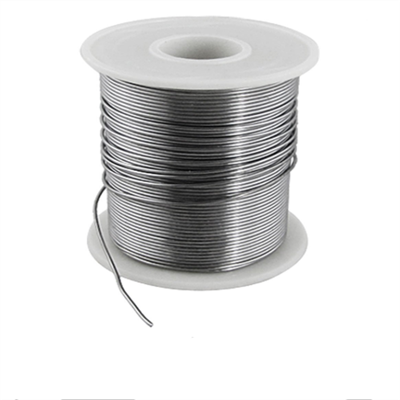
As a supplier of Inconel Coil, we are committed to providing high – quality products with well – controlled microstructures. Our team of experts has extensive experience in understanding and manipulating the microstructure of Inconel Coil to ensure that our products meet the highest standards of performance and reliability.
Duplex Steel If you are in need of Inconel Coil for your project, we invite you to contact us for a detailed discussion. We can provide you with samples, technical specifications, and pricing information. Our goal is to work closely with you to find the best Inconel Coil solution for your specific needs.
References
- ASM Handbook, Volume 2: Properties and Selection: Nonferrous Alloys and Special – Purpose Materials.
- “Nickel and Nickel Alloys” by John R. Davis.
- Research papers on Inconel alloys published in journals such as “Metallurgical and Materials Transactions” and “Journal of Materials Science”.
Jiangsu Cunrui Metal Products Co., Ltd.
As one of the most experienced inconel coil manufacturers in China, we also support customized service. Please rest assured to buy cheap inconel coil for sale here from our factory. If you have any enquiry about pricelist and free sample, please feel free to email us.
Address: 32-117,119, Nanfang Stalnless Steel Trading Conter, Wuxi,Jiangsu, China
E-mail: karen@cunruimetal.com
WebSite: https://www.cunruimetals.com/
