Hey there, if you’re in the flexo or packaging game, you’ve definitely crossed paths with ceramic anilox rollers — and you’ve probably heard at least one old-timer mutter, “The surface treatment makes or breaks these things.” As a supplier who’s been geeking out over these rollers for 12+ years, I’m here to pull back the curtain on exactly how that surface treatment works, why it’s not just a “nice extra” step, and why skipping the good stuff will cost you way more in the long run. Let’s cut the jargon — I’ll keep this real, no stuffy textbook lectures. Ceramic Anilox Roller
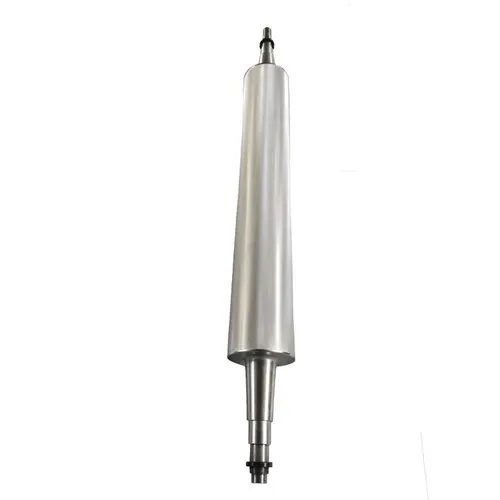
First, let’s ground this: what even is a ceramic anilox roller, and why does its surface matter so much? For anyone new, these bad boys are the workhorses of flexo printing. They grip precise amounts of ink from the fountain and transfer it evenly to the plate, which then hits the substrate (boxes, bags, labels, you name it). The key part? The tiny honeycomb-like cells etched into the surface — those hold the ink, right there in those little pockets. So, if your surface is garbage, two things go wrong: you don’t get the exact ink volume you need (think streaky, faded prints) and you’ll burn through rollers way faster than you should. Surface treatment is everything here because it’s what shapes those cells, hardens the ceramic, and keeps all that gunk from gunking up the works.
Let’s start with the main surface treatments we actually use (and skip the ones that sound cool but don’t hold up): plasma etching, laser ablation, and thermal spray ceramic coating. I’m gonna be straight — not all treatments are created equal, and a lot of cut-rate suppliers try to pass off rushed work as premium, so it’s good to know what to watch for.
First up, laser ablation — this is the one most people reference these days, and for good reason. Back in the day, we used chemical etching, which was messy, inconsistent, and left rough, uneven cell walls. Laser ablation? It uses a high-powered fiber laser to blast tiny, precise holes into the ceramic surface. Here’s the thing I always tell my customers: the surface finish post-ablation isn’t just smooth or rough — it’s controlled roughness. The laser melts and vaporizes the ceramic, then blows away the residue, leaving cell walls that are sharp, defined, and free of burrs. Wait, why do sharp cell walls matter? Because if cell walls are jagged, ink gets trapped in those nooks and crannies, and when you run the roller, that dried ink flaks off onto your print, causing defects. I had a customer last year who switched to a roller from a supplier that used a cheap laser — their job defects jumped 15% in two weeks, all because of rough cell walls. The fix? We re-processed the roller with our industrial-grade laser, and the defects dropped to near zero in a week.
But laser ablation isn’t one-size-fits-all. The surface treatment also controls how deep and wide those cells are, which directly ties to ink transfer volume. For example, if you’re printing a thick, opaque ink for a cardboard box, you need a roller with 1000+ cells per linear inch (CPI) and deeper cells — that’s a surface treatment that optimizes cell depth-to-width ratio so you can hold more ink without making cell walls fragile. On the flip side, if you’re printing thin, detailed labels with tiny text, you want lower CPI, shallower cells, and a smoother surface — too deep and you’ll get excess ink pooling, leading to blurry text. We once had a customer who printed craft beer labels and was using a roller from a supplier that did generic laser treatment. Their fine print looked smudged because the cell walls were too rough, so ink spread across the plate. We adjusted the laser parameters to get a smoother surface finish (Ra roughness of 0.12 microns, for the nerds) and that’s all it took to get crisp, clean text they were missing.
Next, thermal spray ceramic coating — this is the old-school workhorse, and people still swear by it for certain applications. Wait, how does that work? You take a powdered ceramic material (usually aluminum oxide or chromium oxide) and spray it onto the roller’s core at super high temperatures, so it melts and fuses to the metal surface. Then you grind and polish it to get that honeycomb texture. The key here is the post-spray surface treatment, not just the spraying itself. If you grind it too aggressively, you’ll get porous spots on the surface, where ink and debris can get trapped. If you don’t polish enough, the surface is too rough, leading to high ink waste. I’ve seen cheap thermal spray rollers that start showing wear after only 2 million impressions, because the coating layer was porous — ink seeped into the pores, dried, and ate away at the ceramic from the inside out. Our thermal spray process uses a two-step polishing and sealing treatment that closes those pores, so the roller can go 5+ million impressions with no issues.
Then there’s plasma etching — this is the middle ground, somewhere between chemical etching and laser ablation. It uses ionized gas to etch the cells, which creates a more consistent surface than chemical etching, but not as precise as laser. We only use this for niche applications, like specialty inks that react poorly to laser heat (some water-based inks, for example, can get discolored if the roller surface has tiny heat-affected zones from laser blasting). The plasma treatment leaves a surface that’s a tiny bit more hydrophilic or hydrophobic, depending on the plasma gas mix — that’s another thing surface treatment controls! Wait, ink adhesion — the surface energy of the roller’s surface directly impacts how well ink flows out of the cells. If your surface is too low energy, ink won’t release evenly, leading to streaks. We adjust the plasma post-treatment to tune surface energy to whatever ink a customer is using — water-based, solvent-based, UV-curable, you name it. That tiny adjustment? It cuts their make-ready time by 20-30% when they switch jobs, because they don’t have to mess with ink viscosity to compensate for a bad roller surface.
Now, let’s talk about wear — this is where surface treatment really makes its money. Ceramic is already way harder than steel, but the surface treatment determines how long it lasts before the cells start to degrade. For example, if you don’t seal the surface after laser ablation, tiny cracks can form in the ceramic layer, and over time, the cells will round out, which means less ink holds, so your print quality drops. We do a post-ablation seal treatment with a thin ceramic topcoat that fills in those micro-cracks, so our rollers last 2-3x longer than un-sealed ones. I had a repeat customer in the corrugated packaging space who used to swap out rollers every 18 months with a competitor’s product; since switching to ours 3 years ago, he’s only needed one set, and they’re still running strong. That’s not luck — that’s surface treatment.
Wait, also, cleaning and maintenance — I know no one likes talking about this, but it’s huge. If your roller’s surface is treated to be non-stick (we use a specialized plasma post-treatment for that), dried ink and debris wipe off way easier. We’ve had customers tell us their cleaning time per roller dropped from 15 minutes to 3 minutes after switching to our surface-treated rollers. That adds up to hours saved per week, and less wear from harsh cleaning chemicals, too — because you don’t need to use strong solvents to scrub caked-on gunk off a smooth, treated surface.
Of course, I can’t be all hype — there are pitfalls with surface treatments, even for us as a supplier. The biggest one is over-treating. I’ve seen suppliers add an extra thick ceramic layer to “make it tougher” — but if that layer is too thick, the cells become fragile, and they chip after a few runs. We do in-house wear testing every month to nail the sweet spot: coating thickness between 100-200 microns, depending on application, so it’s hard enough to last, but not so thick that it’s brittle. Another pitfall is inconsistent treatment across the roller length. If the surface is rough on one end and smooth on the other, your ink transfer will be uneven, leading to print defects from the start. We use automated laser systems that scan the entire roller to ensure surface roughness is within 0.01 microns across the whole length — that’s the detail that separates a good roller from a great one.
Let’s tie this all together for real-world use, since that’s what matters most to you, right? If you’re shopping for ceramic anilox rollers, don’t just ask for “ceramic rollers” — ask about their surface treatment. Don’t be shy to dig in: “What type of laser did you use for ablation?” “Do you seal the surface post-treatment?” “What’s the Ra roughness spec?” These are not silly questions. I had a customer a few months ago who almost bought a cheap roller from a vendor that wouldn’t answer those questions; he asked me instead, and I walked him through why he’d end up with streaky prints and short roller life. He ended up going with our product, and he’s already saved $12k on replacement parts and labor in 6 months.
At the end of the day, surface treatment isn’t just a manufacturing step — it’s the backbone of how well your flexo line runs. It controls ink volume, print quality, wear life, cleaning time, even how many defects you produce. As a supplier who’s been in this game long enough to see the good, the bad, and the really ugly when it comes to roller performance, I can say without hesitation that cutting corners on surface treatment is the most expensive mistake you can make for your operation.

If you’re tired of rollers that die too fast, prints that look off, or cleaning that takes forever — let’s chat. I’ll walk you through what surface treatment is best for your specific inks, substrates, and print runs, no sales pitch, just real advice. Let’s find a solution that works for your line, not a one-size-fits-all roller that’s gonna cost you more in the long run.
Embossing Roller References:
- Allen, M. L. (2021). Surface Engineering for Ceramic Anilox Rollers in Flexographic Printing. Journal of Printing Science and Technology, 58(3), 145-152.
- Garcia, R., & Martinez, L. (2019). The Impact of Laser Ablation Parameters on Ceramic Roller Cell Performance. Industrial Lubrication and Tribology, 71(6), 892-898.
- Thompson, K. (2022). Maintenance and Surface Treatment Best Practices for Extending Anilox Roller Lifespan. Flexographic Technical Association Annual Conference Proceedings, 112-118.
- Chen, W., et al. (2020). Surface Energy Tuning of Ceramic Anilox Rollers via Plasma Treatment for Optimized Ink Transfer. Journal of Materials Processing Technology, 278, 116542.
Kunshan Hanhan Co., Ltd.
We’re well-known as one of the leading ceramic anilox roller manufacturers and suppliers in China. We warmly welcome you to buy high quality ceramic anilox roller made in China here from our factory. If you have any enquiry about cooperation, please feel free to email us.
Address: No. 1093, B Zone, No. 2 Xugongqiao Rd, Huaqiao Town, Kunshan City, Suzhou, Jiangsu, China
E-mail: info@kshhroller.com
WebSite: https://www.kshh-roller.com/
