Hey everyone, let’s cut to the chase – if you’re an electrical installer, facility manager, or anyone dealing with power monitoring, you’ve probably stared at a multi-function meter (MFM) and wondered, “Can this thing actually measure reactive power, or is it just for show?” As someone who’s been supplying these meters for over a decade, I get this question all the time, and the answer isn’t as simple as a yes or no. Let’s break this down like we’re chatting over a coffee, no jargon overload. Multi Function Meter
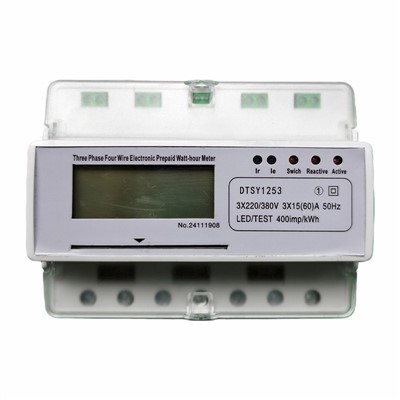
First, let’s remind ourselves what reactive power even is, because half the confusion starts here. You know how your fridge, AC, or even those big industrial motors don’t just use the electricity they need to do work? They also create a “back-and-forth” power between their coils and the grid – that’s reactive power (usually written as kVAR, just a tiny shorthand for kilovolt-ampere reactive). The bad news? This reactive power doesn’t actually do useful work, but it still makes your electricity bill higher because utilities charge for total power (active + reactive). The good news? That’s exactly where multi-function meters come in.
Wait, but let’s get specific: not every MFM on the market is built the same. When I first started selling these, there were a lot of cheap, budget models that only did the basics – voltage, current, frequency – and couldn’t touch reactive power. You’d have installers come back saying, “Your meter doesn’t measure kVAR,” and I’d have to explain it wasn’t the meter’s fault, it was the model they picked. Nowadays, though, almost every modern multi-function meter we supply is engineered to measure reactive power, but how? Let’s talk the science, but keep it real.
Reactive power is tied to phase difference, right? Active power (the good work stuff) is when voltage and current are perfectly in sync. Reactive power is when they’re out of step – that’s the angle you hear about called power factor (cos θ). So to calculate reactive power, the meter just needs two key readings: total apparent power (kVA) and active power (kW). The formula is reactive power = √(kVA² – kW²), or you can get it directly from that phase angle. The trick is, the meter has to be able to accurately measure that phase shift, not just average out voltage and current.
Here’s where our experience as a supplier matters. We’ve worked with two main types of multi-function meters for different use cases: residential/commercial models and industrial heavy-duty ones. For small shops or office buildings, our entry-level MFMs measure reactive power through voltage and current transducers that pick up the phase difference on AC lines. They’re calibrated to handle the standard 120/240V or 480V three-phase systems most people use, and they give you real-time kVAR readings, plus cumulative data over time. That data is super useful for utility bill disputes – if a utility ever says your power factor is too low, you can pull the exact numbers from your MFM to prove it.
Then there’s the industrial side. Factories with huge motors, welding equipment, or data centers have way more volatile reactive power needs. Our industrial MFMs don’t just calculate reactive power – they track every second of it, even during peak load times. For example, if a factory turns on its 100HP motor, the reactive power spikes, and the meter logs that. Some even flag when power factor drops below a set threshold, so facilities managers can adjust equipment (like adding power factor correction capacitors) to cut costs. I remember a guy from a car manufacturing plant coming to us last year – his old meter was missing reactive power readings, and he was overpaying $12,000 a year in utility fees. Our MFM fixed that for him instantly.
But wait, let’s address the myth that all MFMs can do this. A lot of people still think “multi-function” just means more functions, but no – some cut corners to keep prices low. They might have a display that looks like it shows kVAR, but it’s actually just estimating it from a rough power factor reading, or even pulling it from the active power number instead of measuring it directly. We test every meter before it leaves our warehouse, and if it can’t accurately measure reactive power to within 1% margin, it doesn’t go out. That’s why we’ve built a reputation with clients who need reliable data, not guesswork.
Another thing: reactive power measurement isn’t just for billing. If you’re having equipment issues, the MFM’s reactive power data can tell you a lot. For example, if a motor is drawing more reactive power than usual, that’s a sign it’s wearing out – the coils are getting inefficient, so they’re creating more of that back-and-forth power. Our clients in maintenance use that to schedule repairs before the motor breaks down, which saves them way more money than the cost of the meter.
Let’s also clear up a common mistake people make: mixing up reactive power and apparent power. Apparent power is kVA, which is what your utility uses to size transformers and lines, but reactive power is the wasted part. A lot of cheap meters will show kVA, but not break out kW and kVAR. That’s why you need to check the specs before you buy. If a multi-function meter’s product description says it has “power factor monitoring,” that’s a good sign, but if it says it measures “active, reactive, and apparent power,” that’s the one you want.
We also get asked, “Can a multi-function meter measure reactive power on single-phase systems?” Yep, no problem. Single-phase is actually simpler for the meter, because there’s only one voltage and current to compare. Our entry-level residential MFMs do this all the time – they’re perfect for small businesses that want to track their reactive power without hiring a big engineer. For three-phase systems, it’s just as accurate, as long as the meter is calibrated for the system voltage.
Now, here’s the part that’s personal for us as a supplier: we don’t just sell meters – we help people pick the right one. A lot of our competitors will push a high-end industrial meter for a small café, which is overkill and more expensive. We ask questions: what’s your system voltage? Do you need real-time data or just monthly totals? Are you tracking for billing or equipment maintenance? That’s how we make sure the meter you get actually measures reactive power (and does everything else you need) without paying for extra features you don’t use.
I should also mention calibration. Any meter that measures power (active or reactive) needs to be calibrated regularly, right? That’s not just a hassle – it’s required for legal billing in most places. Our meters are NIST-traceable calibrated when they’re shipped, and we offer calibration services if you need it down the line. A few years ago, a school district came to us because their old meter’s reactive power readings were 15% off, so they were overpaying $8,000 a year. We replaced their meter, calibrated it, and they saved that same amount every year after.
Wait, let’s talk about what reactive power measurement can’t do. It can’t fix your power factor, obviously, but it can tell you where the problem is. If your MFM shows that reactive power spikes happen at the same time every day (like when the assembly line turns on), you can add power factor correction capacitors right at that equipment, instead of adding a big system for the whole building. That’s a huge cost saver for industrial clients.
Another myth: multi-function meters are too hard to use for small applications. Our entry-level models have a backlit display that scrolls through all the readings – voltage, current, frequency, power factor, kVAR – with the push of a button. You don’t need a degree in electrical engineering to read it. For larger systems, we also offer remote monitoring, so you can check reactive power data from your phone or laptop, which is perfect if you manage multiple locations.
I’ve been in this game long enough to see the bad meters, the confusing specs, and the people who get burned by buying a meter that doesn’t do what it says. That’s why when someone asks, “Can a multi-function meter measure reactive power?” my answer is: “Most of the ones we supply can, and here’s how to make sure you get one that does it right.”

Let’s wrap this up. If you’re in the market for a multi-function meter, don’t just go for the cheapest one. Check the specs for reactive power measurement, ask if it’s calibrated, and work with a supplier who knows the difference between a meter that estimates kVAR and one that measures it accurately. We’ve helped hundreds of clients cut their utility bills, avoid equipment breakdowns, and get the exact power data they need.
Smart Energy Meter If you’re ready to talk through what you need – whether it’s for a small office, a factory, or a data center – hit us up. We’ll walk through your setup, show you the right meter, and even answer any last-minute questions you have about reactive power or anything else power-related. Don’t waste money on a meter that doesn’t do what you need.
References
- Electrical Power Systems Quality, Second Edition. Dugan, R.C., McGranaghan, M.F., Santoso, S., Beaty, H.W. McGraw-Hill Professional, 2002.
- National Electrical Code (NEC) Handbook, 2023 Edition. National Fire Protection Association (NFPA), 2022.
- “Understanding Reactive Power and Power Factor Correction.” U.S. Department of Energy, Office of Energy Efficiency & Renewable Energy, 2021.
- Multi-Function Meter Applications Guide. Schneider Electric, 2022.
- “Calibration Requirements for Electrical Meters.” Institute of Electrical and Electronics Engineers (IEEE) Standard 1451, 2019.
Zhejiang Qunte New Energy Technology Co., Ltd.
As one of the most professional multi function meter manufacturers in China, we’re featured by quality products and good price. Please rest assured to buy discount multi function meter made in China here from our factory. We also accept customized orders.
Address: No. 56, Fengxi Road, Tang’ao Yu Village, Liushi Town, Yueqing City, Wenzhou City, Zhejiang Province
E-mail: 251951196@qq.com
WebSite: https://www.zjqtmeter.com/
