Hey everyone, 3 Watt Walkie Talkie

If you’ve ever been in charge of coordinating a team at a job site, event, or even a small outdoor adventure, you know how crucial reliable communication is. Last week, I had a builder hit me up asking, “Are your 3 watt walkie talkies actually good enough for a crew of 8 guys working across a 10-acre lot?” It got me thinking—so many folks fixate on wattage numbers like they’re the only thing that matters, but let’s cut through the noise today and talk straight: can 3 watt walkie talkies actually work for team comms? Spoiler: yes, but only if you use ‘em right. I’ve been selling these bad boys for 5 years, so let me break down what I see day-to-day.
First, let’s get one thing out the way: wattage isn’t just a random marketing number. It’s how much power the radio uses to send a signal. Most consumer-grade walkie talkies are 1-2 watts, and heavy-duty ones jump to 5+ watts. So 3 watts is that sweet spot between “lightweight enough to carry all day” and “has enough oomph to cut through noise.” I see so many customers skip over the 3 watt models because they think they need a bigger number, but that’s not how real-world use works.
Let’s start with the common scenarios where teams actually need these. Construction sites are the biggest one for me. I supply a lot of small to mid-sized crews doing residential builds, office renovations, and road prep. Their sites aren’t massive—usually 5 to 15 acres, with a few buildings, maybe a stack of lumber or heavy equipment in the way. I had a crew in Dallas last month using our 3 watt models to coordinate a roof replacement: one guy on the roof, two on the ground handling materials, one running a truck for debris. They reported clear commos the whole time, no dropouts, even when the roof blocked line of sight between the top and ground. Wait, but what about longer ranges? Let’s be real—wattage isn’t the only factor here. Frequency, terrain, and even how high you hold the radio matter way more than people think. If you’re on flat, open ground with no obstacles, a 3 watt will push roughly 2-3 miles. But if you’re in a valley or surrounded by trees, that drops to like 1 mile max. For most teams, that’s perfect—they don’t need 5 miles of range when their whole job is the same site.
Another big user: event teams. Festival organizers, wedding crews, pop-up shops—they’re always on the hunt for comms that don’t cost a fortune and are easy to grab. I supplied a local music festival last summer with 40 of our 3 watt models, and their team worked across the entire fairgrounds (about 12 acres, with stages, food trucks, and crowds everywhere). The security team used ‘em to patrol different gates, the stage crew to switch acts, and the info booths to relay questions. They said the only time they had a tiny issue was when two guys were standing right next to a big speaker stack, but even that was just a little static, not a full drop. And way better than cell phones here—no dead zones, no bad service when thousands of people are using their phones at once. That’s the real win for team comms: walkie talkies don’t rely on cell towers, so they work when everything else is fried.
But wait, let’s get honest about the limits. I had a customer in Colorado last year who tried to use our 3 watt models for a ski patrol team covering 20 acres of mountain. He came back complaining they weren’t working, and it turned out he was comparing ‘em to a friend’s 5 watt model on the same terrain. The mountain had tons of elevation changes and snow cover, which kills signal. For a small ski patrol, that’s too much. But for a local hiking guide group covering 5 miles of trail? They worked great, because there’s not a ton of obstacles. The key is matching the radio to your team’s actual needs, not what some TikTok influencer says is “the best.”
Let’s talk about why 3 watts is better than higher watts for most teams, too. First, battery life. If you’re using a 5 watt radio, it’s draining way more power every time you talk. Our 3 watt models last a full 12-hour workday on a single charge—even with constant use. A 5 watt? You’re lucky if you get 8 hours. That’s a huge deal for construction crews or event teams that are on their feet from sunup to sundown. Second, size and weight. Our 3 watt walkies are pocket-sized, not bulky like those big military-grade ones. Guys can clip ‘em to their belt, throw ‘em in a tool pouch, or even strap ‘em to a backpack—no one wants to carry a brick around all day. Third, legal stuff. Wait, can you just use any walkie talkie? In the US, if you’re using FRS (Family Radio Service) frequencies, most 3 watt models are FCC-approved for commercial use. I always make sure to tell customers this—nothing kills a job faster than getting a fine for using an unapproved radio. Higher watt radios might require a license, which is a hassle for small teams. 3 watt FRS models? No license needed, easy to set up, just turn ‘em on and go. I’ve had first-time users pick one up and be communicating with their team in 30 seconds.
I also see people mixing up “range” and “coverage.” A lot of customers ask, “How far will this go?” But the real question should be, “How many people do I need to talk to, and where are they?” If your team is spread across 10 acres, 2-3 mile range is more than enough. If you’re planning a 10-mile hike, yeah, you might need something bigger. But 90% of the teams that hit me up are dealing with small to mid-sized workspaces, and our 3 watt models check that box perfectly.
Let’s chat about real feedback I get. Last quarter, I sent a batch of 3 watt models to a landscaping crew in Atlanta. They texted me a pic of them lined up on their work truck, and said they used ‘em to coordinate mowing 8 different yards in a day. One guy driving the truck, one doing the front yard of a big house, one the backyard—they’d relay when to move to the next spot, no yelling across neighborhoods, no missing instructions because cell service was spotty in some of the areas. Another customer is a kids’ summer camp director. She uses our 3 watt models for her 6 counselors when they’re taking groups hiking, doing crafts, or running activities. She said it’s way better than having everyone on their phones—no one is scrolling, they can just talk straight, and when a kid goes missing (thankfully only once), they can relay that to all counselors in 2 seconds. That’s the kind of practical use that makes a radio worth it.
But let’s not gloss over the mistakes people make. I see it all the time: guys holding the radio wrong. If you cup your hand over the antenna, or hold it so it’s blocked by your body, the signal drops. Or they’re on the wrong channel—if two teams are close by, switching to a specific channel for your crew makes a huge difference. We include a cheat sheet with every order that says how to set up channels, test signal, and fix common issues, and most people say they never even need to use it because it’s so simple. Another common mistake: buying cheap no-name 3 watt models off Amazon. Yeah, they’re $20 a piece, but they break after a month, have terrible battery life, and the signal is garbage. I sell our models for a little more, but they’re built with durable plastic, solid antennas, and we offer a 1-year warranty. That’s the difference between a radio that works all season and one that dies on your first job.
So here’s the takeaway: 3 watt walkie talkies are absolutely usable for team communication—for the right teams. If your crew is working in a small to mid-sized area, no super extreme terrain, you need long battery life, easy setup, and no hassle with licenses, they’re perfect. If you’re covering huge open spaces or super mountainous terrain, maybe bump up to a higher watt, but for 9 out of 10 team scenarios, 3 watts is all you need.
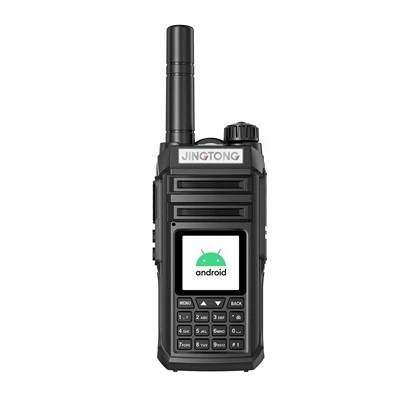
I’ve been in this game long enough to know that there’s no one-size-fits-all, but I stand by our 3 watt models because they solve the exact problems most teams actually have. No confusing tech jargon, no overpaying for features you’ll never use, just reliable commos when you need ‘em. If you’re running a crew, event, or any team that needs to stay connected without relying on cell phones, hit me up to chat about what you need. We can figure out if our 3 watt walkie talkies are a fit, or if you need something else. I’m always happy to answer questions, no pressure.
Analog Radio References:
- Federal Communications Commission. (2023). FRS Channel Allocations and Power Limits.
- Professional Grounds Management Society. (2022). Communication Tools for Small-Scale Landscape Teams.
- Event Safety Alliance. (2021). Radio Communication Best Practices for Mid-Sized Outdoor Events.
- Construction Owners Association of America. (2023). Job Site Communication Equipment Guide for Small Commercial Crews.
Jingtong (Quanzhou) Electronics Co., Ltd.
We are one of the most professional 3 watt walkie talkie manufacturers and suppliers in China, specialized in providing high quality customized service. We warmly welcome you to buy durable 3 watt walkie talkie made in China here from our factory. For price consultation, contact us.
Address: No.288, Si Huang Industry Zone, Xia Mei Town, Nan An, Quanzhou, Fujian province, China 362302
E-mail: jtdjj@jtdjj.com
WebSite: https://www.jteradio.com/
