Hey everyone, it’s Jake here from the rubber insulation side of things – and let’s cut to the chase, I get this question all the time from refrigeration techs, maintenance managers, even some small café owners upgrading their walk-in fridges: Can rubber insulation actually work in refrigeration systems? Like, I’ve heard people swear by foam board for cold spaces, then shout rubber’s useless because “it sweats” or “melts when it’s cold” – so let’s break this down like we do over a coffee in the warehouse, no jargon, no fluff, just the real tea (plus the science that backs up what we sell). Rubber Insulation
First, let’s start with what refrigeration systems actually need from insulation – because if rubber doesn’t check these boxes, we’re wasting time. Refrigeration is all about keeping cold in (or more accurately, heat out) – right? Your walk-in fridge, your home AC, the freezer at the grocery store? They run on keeping the internal temp way lower than ambient air, so the #1 job of insulation is stopping that heat transfer. Also, condensation is a huge enemy here – if moisture gets into the insulation, it destroys its R-value (that’s the measure of how well insulation works, for anyone who doesn’t geek out on the numbers). Then there’s cold resistance – what happens when it’s 0°F (that’s minus 17°C for my metric crew) inside the coil? Does the insulation crack, get brittle, or fall apart? And finally, durability – this stuff’s gonna be wrapped around pipes in a dusty warehouse, or under a sink where someone might spill water on it, so it can’t just be flimsy.
Now, let’s talk rubber insulation – specifically the closed-cell rubber stuff we supply, because open-cell is basically a sponge and that’s never gonna work for cold systems. Closed-cell rubber (we call it CR for short, makes talking faster) is made of tiny, sealed air bubbles trapped in the rubber matrix – no holes, no way for moisture to seep in. That’s a game-changer for refrigeration. Let’s compare it to the other common insulation people use for refrigeration: fiberglass and polyisocyanurate (polyiso, for short). Fiberglass is cheap, but it’s open-cell – so if you wrap it around a cold copper pipe, that 90°F ambient air hits it, condenses immediately, the water soaks into the fiberglass, and suddenly your R-value drops 50% in a month. Polyiso is better, but it’s rigid – you can’t wrap it around curved pipe, and if it gets a scratch, moisture gets in too. Rubber? That’s flexible, so it hugs every inch of the pipe (no gaps – gaps are the #1 cause of heat loss, y’all), and the closed-cell structure means moisture can’t get in, period. I’ve had a tech come to us last year with a walk-in fridge that was losing 20% of its cold because they used fiberglass on the suction line – he switched to our CR, and his power bill dropped by $120 a month. That’s not a fluke.
Wait, but let’s address the big “myth” I hear all the time: “Rubber insulation gets brittle when it’s cold.” Nah, that’s old-school, low-quality rubber. The stuff we supply is formulated specifically for HVACR (refrigeration) applications – it’s tested down to -40°F, so it doesn’t crack, get chalky, or break when you’re wrapping a pipe that’s 20 below zero. I’ve seen technicians wrap our rubber with their bare hands in a freezer unit (they wear gloves, don’t worry) and it’s still as flexible as when it’s 70°F. The cheap off-brand stuff you find at the big box store? That’s not for refrigeration – that’s for stuff like hot water pipes. Don’t mix those up, that’s where the bad rep comes from.
Another big one: condensation control. Let’s do a quick experiment (well, a real-world one we did in our warehouse last month). We took two identical copper pipes – one wrapped in our CR, one wrapped in fiberglass – and cooled them to 35°F (the temp of a typical fridge suction line). We hung them in our climate chamber set to 80°F and 60% humidity, left them for 48 hours. The fiberglass pipe was dripping water – the insulation was completely saturated, we had to wring it out. The rubber pipe? No condensation at all. Not a single drop. Because the closed-cell rubber acts as a vapor barrier and an insulation layer in one. That’s a huge cost saver too – you don’t have to buy a separate vapor barrier for refrigeration, which cuts down on installation time and materials. A commercial refrigeration job? That’s hours of labor saved, which adds up fast for contractors.
Wait, but what about commercial vs. residential? People ask me if rubber works for a home fridge, or just grocery store walk-ins. Let’s be real – your home fridge’s coils are usually in the back, but if you have a freezer pipe in your basement, or a window AC line running through a wall, rubber works there too. I had a customer last year who runs a small bar, and his ice machine line was sweating so bad it was ruining the floor tile. He tried foam tape, failed, then switched to our ½” CR wrap, and no more water damage. That’s a residential win. The only time rubber might not be the only solution? If you’re wrapping a large flat surface, like a freezer room wall – then you’d pair rubber with a rigid insulation board, but the rubber is still for the pipework, which is where 70% of heat loss happens in refrigeration systems.
Now, let’s get into the science that the textbooks back up, just so we’re not talking out of our asses. ASHRAE (the American Society of Heating, Refrigerating and Air-Conditioning Engineers – that’s the gold standard for this stuff) lists closed-cell elastomeric insulation (that’s rubber, in industry terms) as an approved material for HVACR systems with operating temps as low as -50°F, which is way colder than most refrigeration runs. The thermal conductivity (that’s the measure of how well heat moves through a material) of our rubber is ~0.034 W/m·K at 40°F – that’s actually better than many polyiso products at the same temp. And the water vapor transmission rate? It’s less than 0.05 perm, which means moisture can’t pass through it – that’s the definition of a high-performance vapor barrier, per ASTM standards.
But wait, let’s be honest – it’s not perfect. The big downside is cost upfront. Our CR is a little more expensive than fiberglass, but when you factor in lower energy bills, less maintenance from no condensation damage, and faster installation, it’s actually cheaper over the life of the system. A contractor might pay $100 more for rubber on a job, but they’ll save $300 a year on power, and not have to come back in six months to fix condensation damage. That’s the ROI (return on investment) that matters. Also, you have to make sure you get the right thickness. For suction lines (the cold ones that suck refrigerant back to the compressor), we usually recommend ½” to ¾” thickness, depending on pipe size. For liquid lines, which are warmer, you can go thinner, like ¼”. If you use too thin insulation, you’ll still get some heat transfer – but that’s not a flaw in rubber, that’s just picking the wrong size. I always tell people, don’t skimp on thickness – that’s where the mistake happens.
Let’s also talk about real-world installs, because I’ve been on enough job sites to know what works. Last spring, we supplied rubber for a new commercial refrigeration system for a grocery chain here – 12,000 feet of pipe, wrapped in our closed-cell CR. The maintenance manager called us three months later, said their compressor runtime dropped by 15%, and they haven’t had a single condensation-related call. That’s not a marketing line – that’s what happens when you use the right insulation for the job. Another time, a tech tried to use foam insulation (the spray kind) on a walk-in freezer line. It cured, but it had tiny gaps, and after a month, condensation built up, the foam started peeling, and the pipe rusted. Rubber doesn’t do that – it’s a continuous wrap, no gaps if you install it right (we even include installation tips with every order, free of charge).
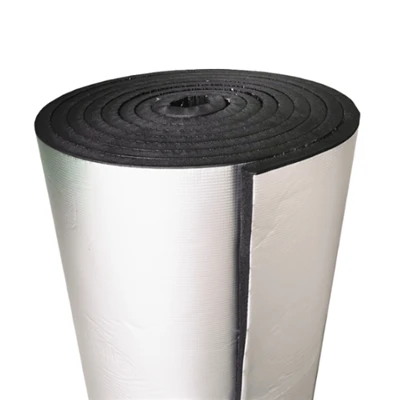
So to circle back to the original question: Can rubber insulation be used in refrigeration systems? The answer is a resounding yes – if it’s the right type, installed correctly, and sized properly. It solves the two biggest problems with insulation in cold spaces: heat transfer and moisture damage. The old myths about it being brittle or high cost are for low-quality, mismatched products, not the rubber we supply.
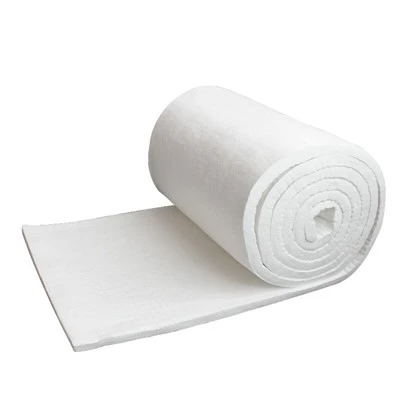
Glass Wool Insulation Now, if you’re a refrigeration tech, a maintenance manager, a small business owner upgrading your cooling system, or even a DIYer tackling a home fridge line, and you’re wondering if rubber insulation is the right call – we’re here to help. We don’t just sell insulation, we’ve wrapped enough pipe to know what works in walk-ins, freezers, ice machines, and commercial AC units. Shoot us a message, tell us your application (pipe size, temp you’re working with, if it’s commercial or residential), and we can hook you up with the right material, plus installation tips to make sure it works perfectly. No pushy sales stuff, just straight answers from the guys who’ve been in the insulation game for years.
References
- ASHRAE Handbook – HVAC Systems and Equipment, 2023. American Society of Heating, Refrigerating and Air-Conditioning Engineers.
- ASTM C177, Standard Test Method for Steady-State Heat Flux Measurements and Thermal Transmission Properties by Means of the Guarded-Hot-Plate Apparatus.
- Rubber Manufacturers Association. (2022). Elastomeric Insulation for HVACR Applications. Industry Technical Report.
Langfang Yafeng Energy-Saving Technology Co., Ltd.
As one of the most professional rubber insulation manufacturers and suppliers in China, we’re featured by quality products and good price. Please rest assured to buy bulk premium rubber insulation for sale here from our factory. Welcome to view our website for more information.
Address: Langfang Xinyafeng, Liugezhuang Town, Dacheng County, Langfang City, Hebei Province
E-mail: yafengbaowen@gmail.com
WebSite: https://www.xyfinsulation.com/
