As a supplier of robot reducer components, I’ve spent a significant amount of time delving into the intricacies of these essential parts. One of the most critical aspects that often comes up in discussions with customers is the vibration level of robot reducer components. In this blog, I’ll share my insights on what the vibration level means, why it matters, and how we, as a supplier, ensure the quality of our products in terms of vibration. Robot Reducer Components

Understanding Vibration in Robot Reducer Components
Vibration in robot reducer components refers to the oscillatory motion that occurs during the operation of the reducer. It is a complex phenomenon influenced by multiple factors, including the design of the reducer, the quality of the materials used, and the manufacturing processes. When a robot reducer is in operation, various forces act on its components, such as gears, bearings, and shafts. These forces can cause the components to vibrate, which may have both immediate and long – term effects on the performance of the robot.
The vibration level is typically measured in terms of amplitude and frequency. The amplitude represents the maximum displacement of the vibrating component from its equilibrium position, while the frequency indicates how often the vibration occurs per unit of time. High – amplitude vibrations can lead to excessive wear and tear on the components, reduced efficiency, and even mechanical failures. On the other hand, vibrations at certain frequencies can cause resonance, which can amplify the vibration and cause significant damage to the reducer and the entire robot system.
Why Vibration Level Matters
The vibration level of robot reducer components is of utmost importance for several reasons. Firstly, it directly affects the accuracy and precision of the robot’s movements. Excessive vibration can cause the robot to deviate from its intended path, leading to errors in tasks such as pick – and – place operations, welding, and assembly. This can result in lower product quality and increased production costs.
Secondly, high vibration levels can have a negative impact on the lifespan of the reducer components. The constant stress caused by vibration can lead to fatigue failure of the gears, bearings, and other parts. This not only requires frequent replacement of the components but also increases the downtime of the robot, which can be costly for manufacturers.
Thirdly, vibration can generate noise. In a manufacturing environment, excessive noise can be a nuisance to workers and may even pose health risks. By reducing the vibration level, we can also reduce the noise generated by the robot reducer, creating a more comfortable and safe working environment.
Factors Affecting Vibration Level
Several factors can influence the vibration level of robot reducer components.
Design
The design of the reducer plays a crucial role in determining the vibration level. A well – designed reducer should have proper gear ratios, tooth profiles, and bearing arrangements. For example, the helix angle of the gears can affect the smoothness of the gear meshing, which in turn affects the vibration. A larger helix angle can reduce the impact force during gear meshing, resulting in lower vibration.
Material Quality
The quality of the materials used in the reducer components is also a significant factor. High – quality materials with good mechanical properties, such as high strength and low friction, can help reduce vibration. For instance, using high – grade steel for gears can improve their wear resistance and reduce the likelihood of vibration caused by uneven tooth contact.
Manufacturing Processes
The manufacturing processes used to produce the reducer components can have a profound impact on the vibration level. Precision machining techniques, such as grinding and honing, can ensure the accurate dimensions and surface finish of the components. Any deviation from the design specifications can lead to increased vibration. For example, if the gears are not properly aligned during the manufacturing process, it can cause uneven loading and increased vibration.
Assembly
Proper assembly of the reducer components is essential for minimizing vibration. The components must be assembled with the correct clearances and pre – loads. Incorrect assembly can lead to misalignment, which can cause excessive vibration. For example, if the bearings are not installed correctly, it can result in uneven distribution of forces and increased vibration.
How We Ensure Low Vibration Levels
As a supplier of robot reducer components, we take several measures to ensure that our products have low vibration levels.
Advanced Design
Our team of experienced engineers uses state – of – the – art design software to optimize the design of the reducer components. We conduct extensive simulations to analyze the vibration characteristics of the components under different operating conditions. By adjusting the design parameters, such as gear geometry and bearing arrangements, we can minimize the vibration level.
High – Quality Materials
We source high – quality materials from reputable suppliers. Our materials undergo strict quality control checks to ensure that they meet the required standards. We use advanced materials testing techniques, such as hardness testing and material analysis, to verify the quality of the materials.
Precision Manufacturing
We invest in the latest manufacturing equipment and technologies to ensure the precision of our components. Our manufacturing processes are highly automated, which reduces the human error and ensures consistent quality. We also have a comprehensive quality control system in place to monitor the manufacturing process at every stage.
Rigorous Testing
Before our products are shipped to customers, they undergo rigorous testing to ensure that they meet the vibration requirements. We use advanced vibration testing equipment to measure the vibration level of the components under different operating conditions. If the vibration level exceeds the specified limits, we take corrective actions, such as re – machining or adjusting the assembly.
The Importance of Vibration Testing
Vibration testing is a crucial step in ensuring the quality of robot reducer components. It allows us to identify potential problems early in the manufacturing process and take corrective actions before the products are shipped to customers. There are several types of vibration testing methods, including sinusoidal vibration testing, random vibration testing, and shock testing.
Sinusoidal vibration testing involves subjecting the component to a single – frequency vibration. This type of testing is useful for simulating the vibration that occurs during normal operation. Random vibration testing, on the other hand, involves subjecting the component to a random vibration spectrum, which can simulate the more complex vibration environment in real – world applications. Shock testing is used to evaluate the component’s ability to withstand sudden impacts.
By conducting comprehensive vibration testing, we can ensure that our products are reliable and can perform well in various operating conditions.
Conclusion
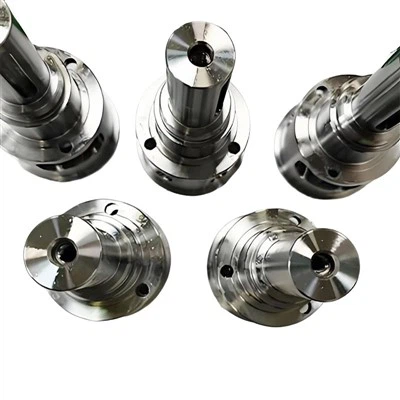
The vibration level of robot reducer components is a critical factor that affects the performance, accuracy, and lifespan of the robot. As a supplier, we are committed to providing high – quality components with low vibration levels. Through advanced design, high – quality materials, precision manufacturing, and rigorous testing, we ensure that our products meet the highest standards.
Robot Joint Actuators If you are in the market for robot reducer components and are concerned about the vibration level, we would be more than happy to discuss your requirements. Our team of experts can provide you with detailed information about our products and how they can meet your specific needs. Contact us to start a conversation about your procurement needs and let’s work together to find the best solutions for your robot applications.
References
- "Mechanical Vibration Analysis and Prediction" by Rao, S. S.
- "Design of Machine Elements" by Shigley, J. E. and Mischke, C. R.
- "Gear Design and Application" by Dudley, D. W.
Jiangsu Zhengfang Dynamics Technology Co., Ltd.
As one of the most professional robot reducer components manufacturers and suppliers in China, we’re featured by quality products and good price. Please rest assured to buy customized robot reducer components made in China here from our factory. Contact us for pricelist.
Address: Building 3, No. 69 Feitian Avenue, Jiangning District, Nanjing City, Jiangsu Province
E-mail: hanks.liu@zfdynamics.com
WebSite: https://www.zhengfangdongli.com/
